
Max Verstappen criticized the Monaco Grand Prix once again after the 2025 race, emphasizing the persistent difficulty of overtaking on the Monte Carlo Circuit. Despite Formula 1’s new two-stop rule intended to boost race excitement, Verstappen argued that no number of pit stops could change the inevitable lack of on-track battles at Monaco.
The Monaco Grand Prix is one of Formula 1’s oldest and most famous events, held around the tight and narrow streets of Monte Carlo since 1950. Over the decades, while Formula 1 cars have evolved significantly in design and technology, the compact circuit has remained virtually unchanged in its layout, continuing to limit overtaking opportunities. Verstappen, the reigning world champion, has long been vocal about his frustrations with the race’s lack of action, and the 2025 edition only reinforced his view.
Verstappen points to inherent limits on overtaking in Monaco
In a bid to encourage more pit stop strategies and thus, potentially, more overtaking at Monaco, Formula 1 introduced a regulation requiring every driver to make at least two pit stops during the race. However, this change did little to alter the racing dynamics. Teams were forced to use more tire sets without gaining any overtaking advantages. Verstappen, who started the race from fourth position and ended up finishing in the same place without passing anyone, found little value in the new rule.
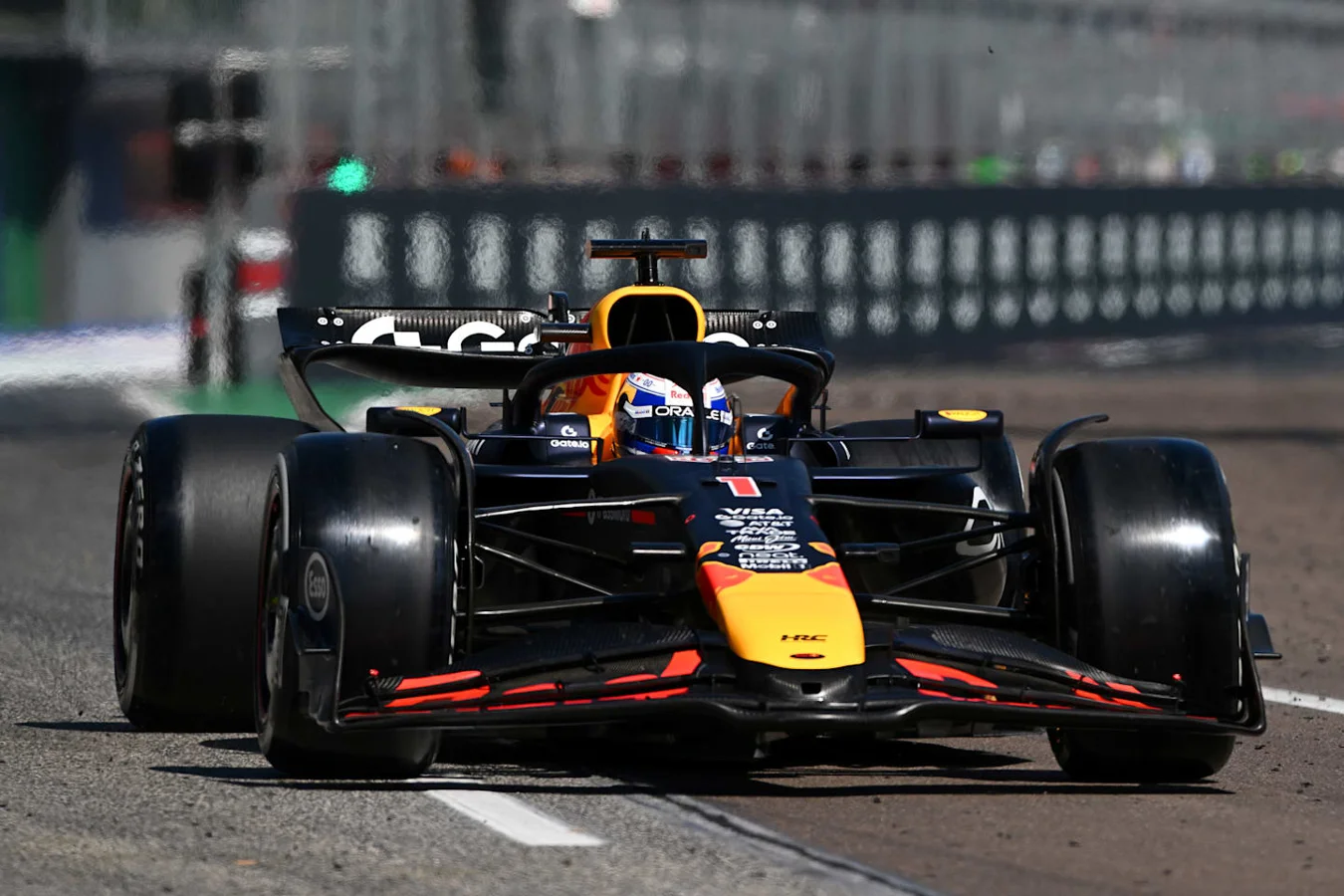
The Dutch driver made it clear that even his prolonged use of medium compound tires—lasting over 40 laps—did not allow Lando Norris, chasing him on fresher tires, to pass. This underscored Verstappen’s belief that overtaking is nearly impossible on this circuit, even if the cars or strategies change.
“You can’t race here anyway, one stop, ten stops. I was even in the lead with my tyres gone, and you can’t overtake. You can just about overtake an F2 car here.” — Max Verstappen, post-race interview
Verstappen’s remark highlights the unique challenges posed by Monaco’s tightly packed streets, where even a significant tire advantage does not guarantee a successful pass. He pointed out the contrast between the difficulty of overtaking in Formula 1 and the noticeably easier passing seen in the smaller Formula 2 cars on the same circuit.
More pit stops won’t alter finishing positions, says Verstappen
Verstappen’s frustration extended to the idea that multiple pit stops might improve race excitement or his own chances. He joked that even adding four extra pit stops would not have helped him advance from his starting fourth place. His comments reflect a deeper criticism of Monaco’s racing nature, where external factors such as crashes or safety cars are often the only ways positions change.
“There was nothing more, I could have done four stops and still finish where I did, that’s Monaco for you, if you don’t have something happen.” — Max Verstappen
For the 27-year-old Red Bull driver, this reality is not new. Each year, the narrow streets, tight corners, and absence of high-speed straights make overtaking so difficult that races can become processional. Verstappen’s remarks suggest an acceptance that Monaco will consistently deliver limited overtaking, regardless of adjustments to race weekend regulations.
The impact on race strategy and future expectations
The forced two-stop rule, although intended to shake things up at Monaco, ended up creating unnecessary tire usages without improving the spectacle. Verstappen’s experience of leading while heavily worn on mediums yet unable to be passed by rivals demonstrates how inherent the track’s limitations are. Teams face a strategic conundrum: pit more often and lose track position, or try to conserve tires and survive behind slower cars.
Looking ahead, Verstappen and others will move on to the Spanish Grand Prix, where the track characteristics favor overtaking and where Verstappen has previously recorded successful performances. The contrast between circuits like Monaco and Spain will again highlight the unique difficulties faced on street circuits versus more open layouts. For Red Bull and Verstappen, finding ways to optimize performance on such diverse tracks remains critical to their championship aspirations.
The broader context of driver frustrations and race dynamics
Monaco’s challenges also contrast with highlights from the race weekend, such as Lando Norris’ strong competition and Charles Leclerc’s acceptance of defeat in front of the home crowd, showing the human drama beyond the lack of overtakes. Meanwhile, other sporting figures linked to the weekend and broader sports narratives—such as Alexander Zverev and Aryna Sabalenka at the French Open—remind fans how high stakes and tough competition can play out across disciplines.
For Verstappen, the Monaco GP remains a point of contention regarding Formula 1’s entertainment value. Despite technical and regulatory efforts, the nature of the circuit imposes strict limits on race development, forcing drivers and teams to adapt to a style of racing that is often more about survival and strategy than aggressive track battles.
As Formula 1 continues its evolution, the pressures to enhance overtaking opportunities, especially at classic venues like Monaco, remain a central topic of debate among drivers, teams, and fans alike.
