
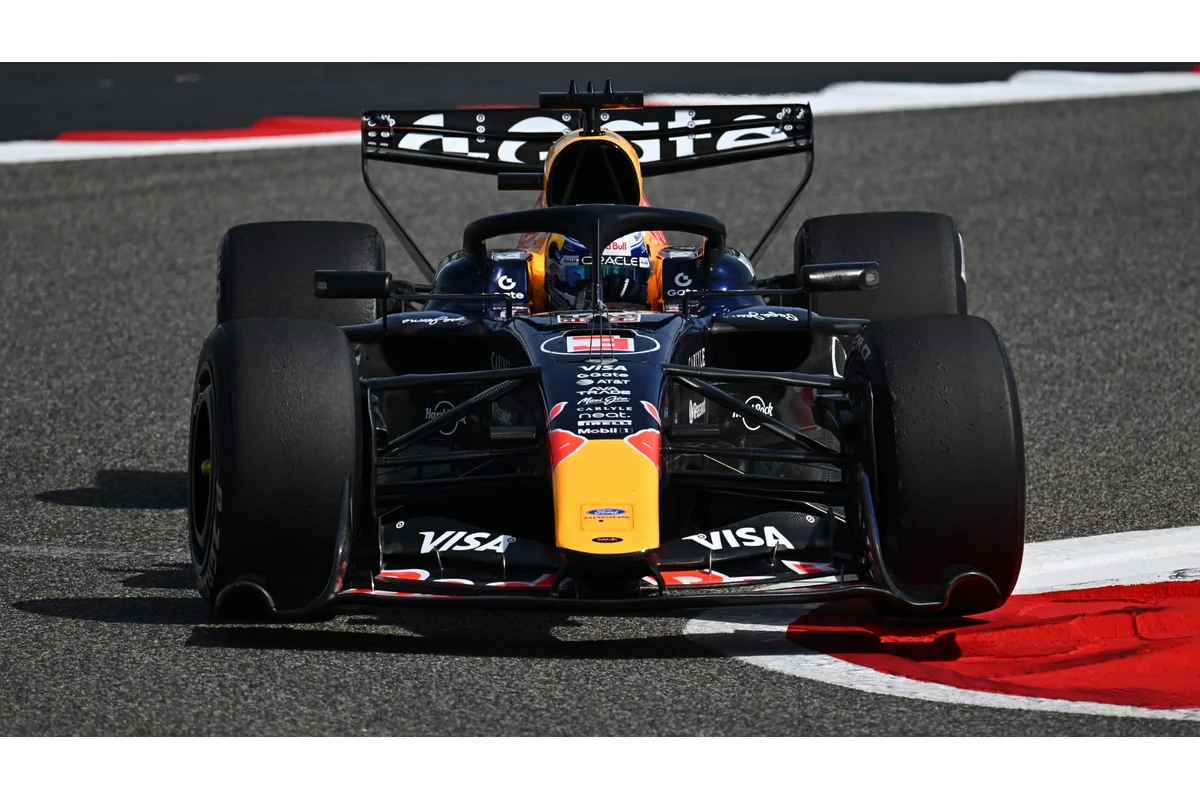
Max Verstappen has openly criticized the new generation of Formula 1 cars introduced for the 2026 season, calling them a “Formula E on steroids.” The Dutch driver made these remarks during pre-season testing in Bahrain, where drivers are still adjusting to the significant changes in car design and powertrain technology aimed at promoting sustainability and closer racing. Verstappen’s comments highlight ongoing concerns about how these modifications are impacting the pure driving experience in Formula 1.
New Car Design and Powertrain: A Shift Toward Sustainability and Cost Reduction
The 2026 Formula 1 cars feature a simpler aerodynamic setup with streamlined front and rear wings and active aero systems designed to improve overtaking opportunities. A major change comes with the power units, which are now less complex following the removal of the MGU-H system to reduce costs. Another key update is the battery, which has been enlarged to balance electric energy deployment roughly equally with the internal combustion engine.
This shift aims to enhance the sport’s sustainability by increasing electric power usage. However, managing the battery energy is proving critical to performance, as drivers must recharge it by braking into corners. When the battery depletes, the engine’s output drops sharply, forcing drivers to adopt a more calculated and conservative driving style.
Challenges of Energy Management Affect Driving Style and Race Dynamics
During Bahrain’s testing sessions, drivers often lifted off the throttle on straights to conserve battery energy, resulting in straight-line speeds barely reaching 170 mph. This cautious approach contrasts with traditional F1 driving, which is centered on aggressive, full-throttle racing. The need to balance battery recharge with race pace raises concerns that lap times could increase and that circuits such as Monza may require drivers to repeatedly “lift and coast,” increasing accident risks.
This emphasis on energy management resembles the racing format in Formula E, where drivers must carefully monitor and conserve battery charge throughout a race to avoid disqualification. This departure from the classic F1 driving ethos has drawn criticism from several top drivers, including Lewis Hamilton, who described the new cars as “ridiculously complex.” Verstappen echoed this sentiment, emphasizing how the energy management aspect diminishes the traditional racing feel.
Verstappen’s Perspective: Balancing Realism with Driving Enjoyment
The right words is management, but in the other hand I also know how much work has been going on in the background,
said Verstappen to the media in Bahrain. “Also, from the engine side, for the guys, it’s not always the nicest thing to say.” – Max Verstappen, F1 Driver
Verstappen acknowledged the enormous effort from engineers and teams to adapt to the new rules but stressed that the current driving experience feels less authentic to Formula 1’s core identity. He said,
“But I want to be realistic as well as a driver; the feeling is not very Formula 1-like. It feels a little bit like Formula E on steroids. The rules are the same for everyone, so you have to deal with that, and that’s also not my problem, as I am all for equal chances.”
– Max Verstappen, F1 Driver
He went on to describe how the necessity to constantly monitor energy usage restricts the ability to drive flat-out. For him, this means a significant loss of the enjoyment typically associated with racing in Formula 1.
“For me, that’s just not Formula 1, because then maybe it’s better to drive Formula E, right? Because that’s all about energy, efficiency, and management, and that’s what they stand for. Driving-wise, not so fun, but at the same time, I also know what’s at stake with the team and our new engine and seeing the excitement of the people.”
– Max Verstappen, F1 Driver
Of course, when I sit in the car, I will also give it my very best; they know that, but excitement levels are not so high.
– Max Verstappen, F1 Driver
Red Bull’s Progress Amidst Uncertainty About Competitiveness
Despite his reservations about the new regulations, Verstappen expressed optimism about Red Bull Racing’s winter development. The team, which has introduced a new Ford power unit manufactured near their Milton Keynes facility, has completed extensive testing. Over three days in Barcelona, the Red Bull and its sister team, Racing Bulls, logged 300 laps each, indicating a strong preparation phase.
In Bahrain, Verstappen accumulated 136 laps, demonstrating reliability, while new teammate Isack Hadjar managed 87 laps, even overcoming a technical issue. However, Verstappen remains cautious about interpreting these testing results as a guarantee of competitive dominance at the season opener in Melbourne.
You never know, right? Of course, I’ve visited the factory next to the car [factory], so you see what they’re doing, they have all the tools,
said Verstappen. “Of course, the people working there have good experience, but the start we’ve had is very nice, everyone is very happy with that.” – Max Verstappen, F1 Driver
He further emphasized the uncertainty inherent in testing data, given other teams may be holding back to conceal their true performance level. Verstappen said,
“The lap count we did yesterday, for example, that’s just great, that’s exactly what we wanted to do, but it’s not a given. At the same time, they’ve, of course, worked for many years now to try to be here and beady.”
– Max Verstappen, F1 Driver
“But if it’s going to be enough to win, I don’t know. We don’t have a clue if that’s the case, and also, what you see here in testing, you won’t see in Melbourne for many cars and many engines as well.”
– Max Verstappen, F1 Driver
It’s normal, of course, other people are hiding and trying to make us look really good, and at the same time, we don’t care, we just focus on ourselves, we just try to do the best we can. But yeah, I am happy with how everything started, but there is still such a massive room for improvement as well because of how complicated everything is.
– Max Verstappen, F1 Driver
Looking Ahead: Adaptation and Competition in 2026 F1 Season
As the 2026 season progresses, drivers and teams will need to adapt to these significant technical and strategic challenges. Verstappen’s remarks underscore a broader tension within Formula 1 between technological innovation, environmental goals, and maintaining the sport’s traditional appeal. The emphasis on battery management may redefine on-track competition, requiring a shift from instinctive driving toward strategic energy conservation.
How teams like Red Bull and competitors respond in upcoming races, particularly at classic high-speed circuits like Monza and the opening race in Melbourne, will be closely watched. Verstappen’s approach reflects a balance between recognizing the sport’s evolving technical landscape and retaining the core thrill that draws drivers and fans alike.
