
Mercedes began the 2026 Formula 1 season with a commanding display at the Australian Grand Prix qualifying session in Albert Park, securing the entire front row. George Russell claimed pole position, followed closely by teammate Kimi Antonelli in second, while newcomer Isack Hadjar impressed by achieving third place in his debut qualifying for Red Bull. Mercedes dominates 2026 qualifying by showcasing both driver skill and car performance in challenging conditions.
Mercedes’ Commanding Performance and Driver Perspectives
George Russell described the updated 2026 Mercedes car as exceptionally agile, comparing it to a go-kart, a marked contrast to last year’s vehicle, which he found difficult to handle. Russell admitted the gap of eight-tenths of a second to the nearest competitor surprised him, crediting the cooler track temperatures and the team’s comprehensive engineering package for their dominance. However, he cautioned that despite their evident pace advantage, the new regulations make race-day execution highly complex, with starts, pit stops, and energy management demanding precise coordination.
Kimi Antonelli echoed Russell’s approval of the new chassis, emphasizing the car’s lighter weight and improved agility, which he found much more enjoyable to drive. Despite suffering a crash in FP3 that severely damaged his car, Antonelli commended his mechanics for an extraordinary rebuild under tight time constraints, allowing him to participate in qualifying without a chance for setup adjustments. His clean and focused driving earned him second place on the grid, highlighting both resilience and team effort.
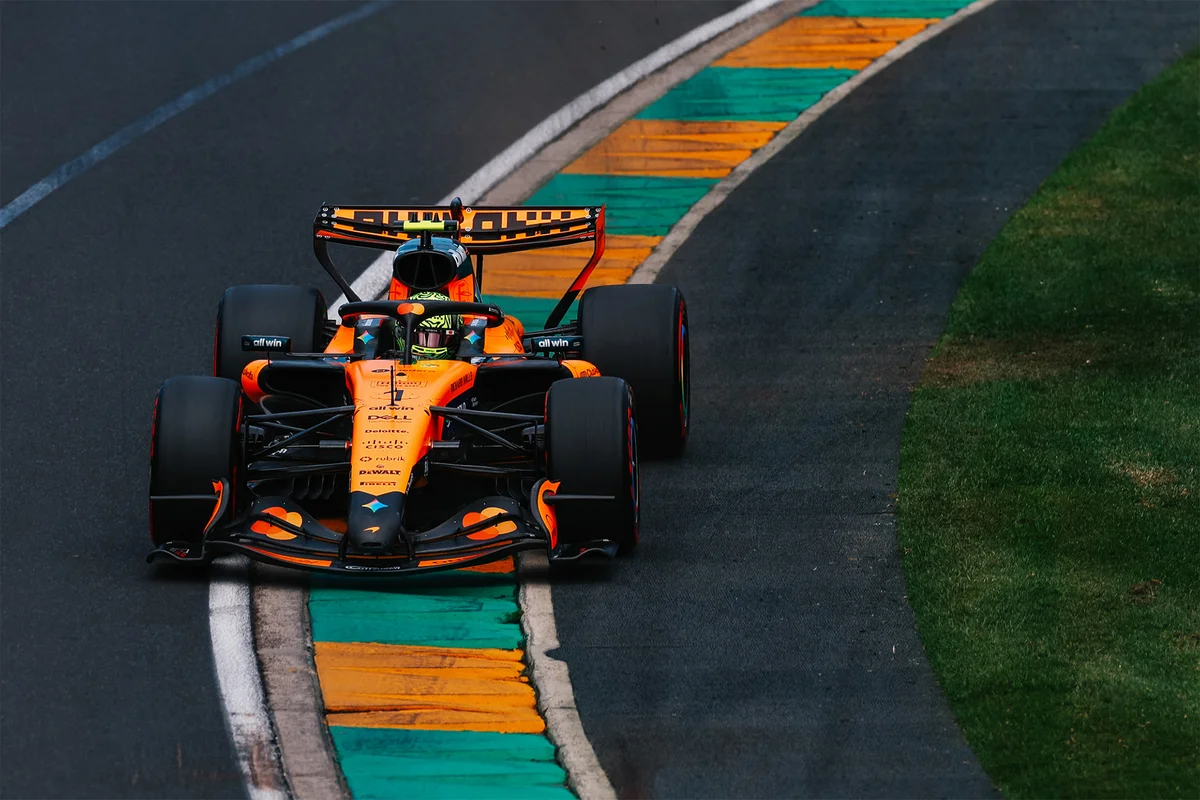
Breakout Qualifying by Red Bull’s Isack Hadjar
In his first qualifying session with Red Bull, Isack Hadjar impressed by securing third position with a smooth and consistent performance. He acknowledged that Red Bull currently lacks the raw pace to challenge the Mercedes duo but expressed satisfaction with his result. Hadjar stated he does not expect to match Mercedes’ speed during the race, instead aiming to maintain his grid position and secure a second career podium finish.
Insights on the 2026 Formula 1 Cars and Technical Challenges
All three drivers agreed that the 2026 cars deliver more nimble handling and offer a better driving experience compared to previous models. They noted, however, that managing energy harvesting and power units under the new regulations remains a tough challenge. Russell highlighted that procedures which once felt straightforward, like race starts and pit stops, have become significantly more demanding, amplifying the uncertainty teams face on race day.
Expectations and Strategy Ahead of Sunday’s Race
Mercedes remains confident in their pace advantage but is prioritizing clean execution amid procedural complexities and unknown factors arising from new rules. Hadjar suggested that Red Bull’s trajectory through the season will depend heavily on car development, expecting noticeable improvements beyond the early races. The drivers foresee a race shaped not just by speed but by effective energy management, reliability, and precise adherence to operational procedures.
Detailed Remarks from the Post-Qualifying FIA Press Conference
The press conference, conducted by Jolyon Palmer following qualifying, offered candid insights from the top three drivers.
George Russell (Mercedes):
“Yeah, it was a great day. We knew there’s a lot of potential in the car but until we get to this first Saturday of the season, you never know. But it really came alive this afternoon, especially as the track temps cooled. We know we sort of tend to favour those conditions. And also, really happy to have Kimi here next to me as well, because it’s been such hard work from all the team to deliver this car, and they did an amazing job in the garage as well today. So, all in all, mate, really good day.”
—George Russell, Mercedes Driver
Russell described driving the new car as challenging yet exciting:
“It’s not easy. It’s not easy to drive. It’s not easy, I think, for some of the fans to understand. However, I’m excited for the race tomorrow and I think it can bring some quite exciting racing.”
He emphasized the contrast with previous cars:
“It feels more like a go-kart compared to last year. It felt like a bouncing bus, to be honest. It wasn’t as fun to drive.”
On his surprise at the significant gap to rivals, Russell said:
“Yeah, definitely. I think the conditions also came into our favour. We know we’re better in these cooler conditions and as the track temp dropped, we always seemed to find more lap time. But, you know, I think we’ve got a really great engine beneath us. However, I think we’ve also got a really amazing car beneath us, and I think that probably hasn’t been highlighted enough in the press these past few weeks. I think the car, from the off, Kimi and I both said it felt great to drive. We’re enjoying the smaller cars, the lighter cars, and yeah, perfect way to start Melbourne.”
Addressing the complexity of race day under new rules, he commented:
“A lot of the simple things that were in the past, like race starts, pit stops, are a hell of a lot more challenging with these new cars. So, I said it to the team in the garage at the beginning of Q3: ‘Now let’s just have a clean session because who knows what’s going to happen tomorrow.’ Obviously, we’ll try and work hard tonight, but obviously a really great day where together we’re the best place possible.”
When asked about maintaining momentum throughout the season, Russell explained:
“You definitely have to make hay while the sun shines because my mentality coming into this race is, if we started on the front foot, it doesn’t guarantee anything. If we start on the back foot, it doesn’t guarantee anything. And the rate of improvement from everyone at this time of the year is going to be huge. I’ve said it a few times, the 2022 season, with Ferrari, three races in they looked clearly the dominant team and were going to easily win the championship, and they weren’t close. You even look at the 2009 season, that was a 17-race year. If that was a 24-race season, there might well have been a different winner. So, we’ve got to keep on pushing, keep on working hard, and it isn’t just about these upcoming races. It’s about making sure we’ve got a good car for these coming years, because that’s where we failed in ’22.”
—George Russell, Mercedes Driver
Kimi Antonelli (Mercedes): Antonelli’s day was marked by adversity, beginning with a crash in FP3 that put his qualifying hopes at risk.
“Yeah, it’s been a very, very stressful day. Unfortunately, in FP3, I went into the wall. But the guys, the mechanics today, were the heroes, you know, to put the car back on track. We couldn’t even set up the car, we just went out and managed to put it on the front row. So really happy with that.”
—Kimi Antonelli, Mercedes Driver
Despite limited time to adjust the setup, Antonelli produced a standout lap:
“I had a bad lap one in Q3. Obviously, I locked up into Turn 3 and went off, so just put myself a bit more under pressure. And yeah, just tried to have a clean lap. Of course, luckily, we have a really good car. The team has done an incredible job to give us such a good car. I just did a clean lap, and it was still good enough for P2.”
Reflecting on the car’s qualities, he said:
“Of course, it’s the best I could have asked for. We have a really good car and we look very, very competitive. That is because the team has done an incredible job on the engine side, but as well on the chassis side. I think the car, as George said, many people just talk about the engine, but the car itself is really, really strong.”
He added:
“The car, especially in these conditions when they’re lighter, is super fun to drive. It’s much more agile, the car is much better through the low speed, the ride is much better. Obviously, you’re lacking a little bit of high-speed downforce, but that’s going to come.”
—Kimi Antonelli, Mercedes Driver
Isack Hadjar (Red Bull Racing): Hadjar gave a smooth and consistent qualifying performance, stating:
“Yeah, I didn’t… I mean, thank you very much to all the fans cheering. Yeah, it was a very smooth qualifying. The run-up to qualifying, the whole weekend, was a bit difficult. We are not really in a position to fight for a top three. I felt like the Ferrari, the McLaren were a bit clear of myself, but we kind of built up to it the whole qualifying session and that was a very good last lap.”
—Isack Hadjar, Red Bull Racing Driver
He acknowledged Red Bull’s current performance gap:
“Yeah, take a better start, but then it’s going to be… they’re just too fast at the moment. So, I want to keep my position. A second podium could be good.”
Discussing his breezy pace improvement over the session, Hadjar said consistency in energy deployment was key:
“We did a very good job being consistent with the energy deployment management through the lap, so that was very consistent compared to yesterday, which was quite bad.”
Concerning Red Bull’s development outlook compared to Mercedes, Hadjar commented:
“Honestly, what happens in Melbourne, it just doesn’t really matter compared to the car we’re going to have at the end of the year. There’s going to be so many… the progression curve is so steep that it’s going to be a lot different.”
He stressed the importance of the season ahead:
“So, at the moment we know our weakness. We have a reliable car underneath, which is positive, but we’re just lacking pure performance at the minute.”
—Isack Hadjar, Red Bull Racing Driver
Technical Impressions and Adjustments Under New Regulations
When asked about their enjoyment of the new 2026 cars over a qualifying lap, opinions varied. Antonelli found the chassis superior to last season’s model, praising a softer suspension and improved handling through low-speed corners. He acknowledged that the cars lack some high-speed downforce compared to previous ground-effect designs but emphasized that improvements across the season should be substantial. He noted the critical role of power unit management and energy harvesting as differentiators for teams this year.
Hadjar offered a succinct view:
“I think the chassis is pretty good, and the rest, I’m not a fan.”
This highlights contrasting driver experiences regarding the complexity of managing power units and energy systems introduced with the new regulations.
Addressing Speculation and Team Strategy
Before qualifying, rumors circulated about possible sandbagging by Mercedes, fueled by the large advantage revealed in Saturday’s times. Russell dismissed these claims, explaining:
“Well, I think it wasn’t a case of sandbagging. I think it was more a case of some of the other teams showing more than we would have expected in winter testing. We’ve seen this on numerous occasions in the past. Obviously, the Red Bull looks quick and we know how incredible a driver Max is as well. So, I’m sure Isack’s done an amazing job to be in this position. Who knows where Max would have been? And I think we said this from the outset, they look to be one of the biggest threats.”
—George Russell, Mercedes Driver
Hadjar addressed the pressure of stepping into a Red Bull second seat known for its demanding expectations:
“I mean, we have the same car, so it’s who drives better that does the better job and has the better results. So yeah, that’s it.”
—Isack Hadjar, Red Bull Racing Driver
Broader Implications and Outlook for the Season
The qualifying results set the stage for what promises to be an intense opening race of the 2026 season, with Mercedes establishing a strong early advantage through car performance and driver adaptability. However, the intrinsic complexities of the new regulations mean that race execution—from energy deployment strategies to pit stop efficiency—will be decisive. George Russell’s caution about the season’s unpredictability underscores how reliability and strategic precision will be as vital as outright speed.
Meanwhile, Red Bull’s Isack Hadjar looks forward to navigating the performance gap through development and experience, targeting consistent results rather than immediate victory. Kimi Antonelli’s resilience after a crash and outstanding qualifying effort emphasize the importance of teamwork and adaptability in this new era.
As teams refine their understanding and management of energy harvesting and power unit parameters, incremental gains throughout the season will likely reshape the competitive landscape. The Australian GP qualifying results provide a snapshot of current form, but ongoing evolution in car software, parts, and racecraft could lead to shifts in dominance over the coming races.
