
For its eleventh straight year in MotoGP, Michelin Motorsport is revising its tire allocation rules for most of the 2026 Grand Prix calendar. The initiative reduces the variety of tire specifications offered while increasing the number of tires available per specification, aiming to optimize both sustainability and racing excitement. This adjustment aligns with Michelin’s focus on balancing environmental responsibility with high performance on the track.
Balancing Sustainability with Enhanced Racing Experience
Michelin’s updated approach lowers the total tire production, transportation, and recycling demands across the season, reducing the sport’s carbon footprint without sacrificing competitive intensity. By streamlining tire options, Michelin pursues its “do more with less” philosophy, seeking to minimize environmental impact in collaboration with MotoGP stakeholders, including teams, Dorna Sports, IRTA, and MSMA. The Grand Prix Commission has formally approved these changes, demonstrating consensus across the championship‘s governing bodies.
Details of the Revised Tire Allocation
Starting in 2026, riders will have only two front tire specifications to choose from at most Grands Prix, a decrease from three specifications in 2025. However, the number of tires per specification will increase from five to seven, resulting in a total of 14 front tires available per rider per event, down slightly from 15 in the previous year. This shift reduces nearly 500 tires in overall usage during the season, shrinking Michelin’s environmental footprint.
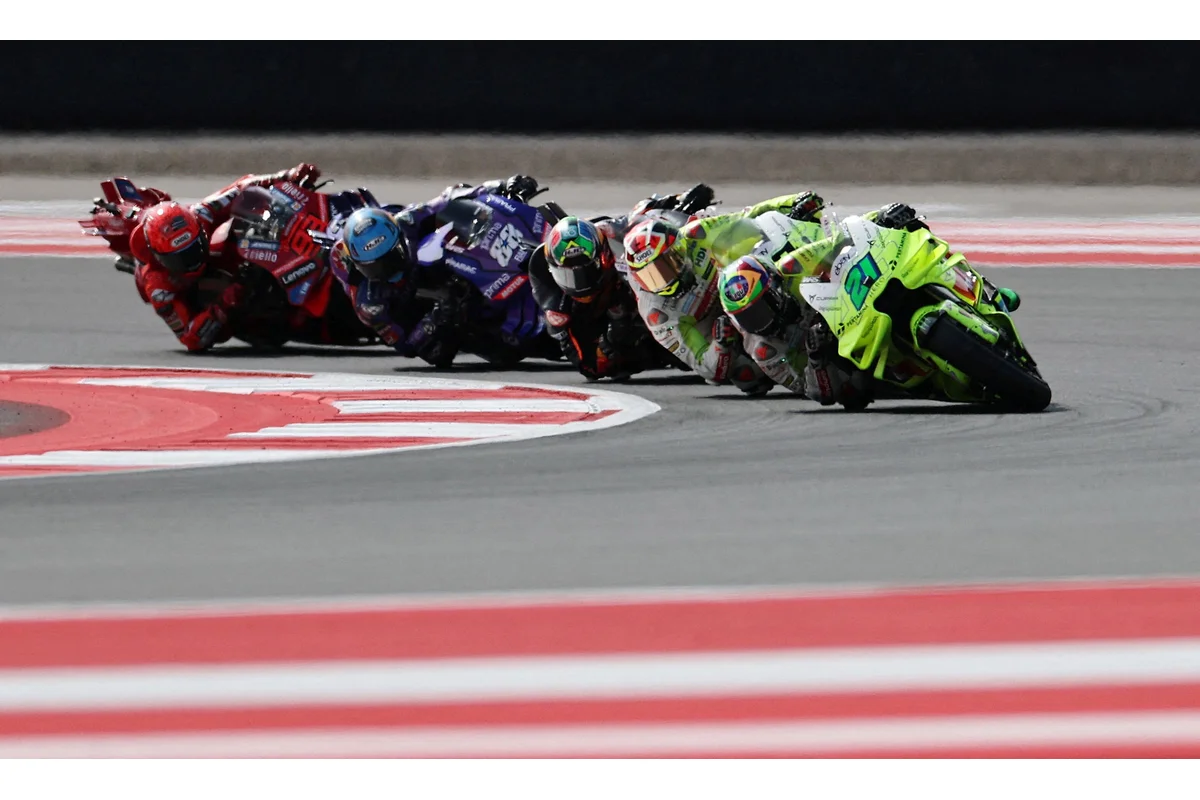
Despite fewer specifications, the increased quantity of tires per compound gives teams and riders more strategic freedom to tailor choices to their riding style and the unique demands of each track.
Michelin’s Ongoing Journey Toward Optimization
Piero Taramasso, Michelin’s Head of Two-Wheeled Competition, reflected on this progressive effort:
“With this new rationalization of front tire allocation, we are continuing work that began in 2018.”
He added,
“Over the past eight MotoGP seasons, Michelin has halved the number of tire specifications available to riders, while continuously improving safety and performance on an increasing number of circuits, as evidenced by the numerous records set. By comparison, the 2018 season featured 58 different front and rear tire specifications for 19 Grands Prix, compared to 27 specifications in 2026 for 22 races. This ongoing optimization has allowed us to progressively reduce the volume of tires manufactured, transported, and then recycled. Michelin thus reaffirms its commitment to reconciling technological innovation, sporting performance, and environmental responsibility.”
Composition of Tire Allocations for Different Race Conditions
Typically, each rider will receive 14 front tires—seven of each compound—and 12 rear tires, divided into seven soft and five hard compounds. Rain tire delivery remains steady, with six front and seven rear tires split between soft and medium options. Racers will be able to use 10 front and 12 rear tires during the three-day Grand Prix activities.
While rear tires are generally asymmetrical to handle different turning loads, front tires usually maintain symmetrical designs, except for three circuits—Sachsenring in Germany, Phillip Island in Australia, and Valencia in Spain—where the tread comprises two compounds in a 2/3 to 1/3 ratio.
Exceptions for Weather-Variable Circuits
Certain tracks prone to unpredictable weather and temperature shifts will maintain the 2025 tire allocation system to ensure safety, fair competition, and consistent performance. These venues include:
- Michelin Grand Prix of France at Le Mans
- British Grand Prix at Silverstone
- German Grand Prix at Sachsenring
- Australian Grand Prix at Phillip Island
- Grand Prix of the Valencian Community at Cheste
For these events, the original three front tire specifications remain, with five tires allocated per specification.
Insights from Michelin Motorsport’s Leadership
In an interview, Piero Taramasso shared the challenges Michelin faces designing tires that meet diverse track conditions and evolving race formats:
“MotoGP is probably one of the most demanding environments in motorsport. Since the introduction of Sprint races in 2023, riders have had to ride almost at qualifying pace over a distance equivalent to half a Grand Prix on Saturday, then manage a distance twice as long on Sunday, sometimes in different weather conditions. To meet these demands, we had to develop extremely versatile tires—capable of delivering a very high level of performance from the very first corners, while guaranteeing perfect consistency over time. These qualities may seem contradictory, but we rose to the challenge. This requires a high level of anticipation, a detailed analysis of both motorcycle and track data, and a precise understanding of the constraints. Ultimately, this dual race format perfectly showcases the robustness of our solutions.”
He also discussed ensuring equal performance opportunities despite the diversity of bikes and riding styles:
“This is undoubtedly one of our biggest challenges in MotoGP. Our goal has never been to favor one manufacturer or riding style, but to create the conditions for an open championship where everyone can express their potential. The bikes rely on a variety of technologies and the riders have very different profiles, yet we must provide a single, high-performing tire offering for everyone.”
The availability of multiple constructions and compounds plays a crucial role here: it allows teams and drivers to adapt their strategy, make technical choices, and make the most of the tire package. When victory is decided in the final corners, we can consider that this balance has been achieved—and Michelin is truly proud to contribute to it.”
Reflecting on Michelin’s MotoGP Journey
Looking back on Michelin’s long-term involvement, Taramasso emphasized the collaborative spirit driving their progress:
“Looking back, what I remember most is the human and collective dimension of this adventure. Of course, there’s the performance, the records, and the impressive technological progress. But none of this would have been possible without the total commitment of the Michelin Motorsport teams. The close relationship our teams have with everyone involved in MotoGP is crucial. This sincere and responsible commitment, serving one of the greatest spectacles in motorsport, combined with a constant desire to progress while respecting the spirit of competition, simply reflects the DNA of Michelin Motorsport.”
What This Means for MotoGP’s Future
Michelin’s refined tire allocation plan for 2026 promises not only a greener footprint but also enhanced tactical depth and racing thrill. By offering fewer but better-defined choices, teams can develop more focused strategies tailored to rider preferences and specific track challenges. The selective exceptions acknowledge the importance of safety and fairness where weather unpredictability matters most. As Michelin continues to innovate under Piero Taramasso’s leadership, the balance between cutting-edge performance, rider safety, and sustainable motorsport will remain at the heart of MotoGP’s evolving dynamics.
