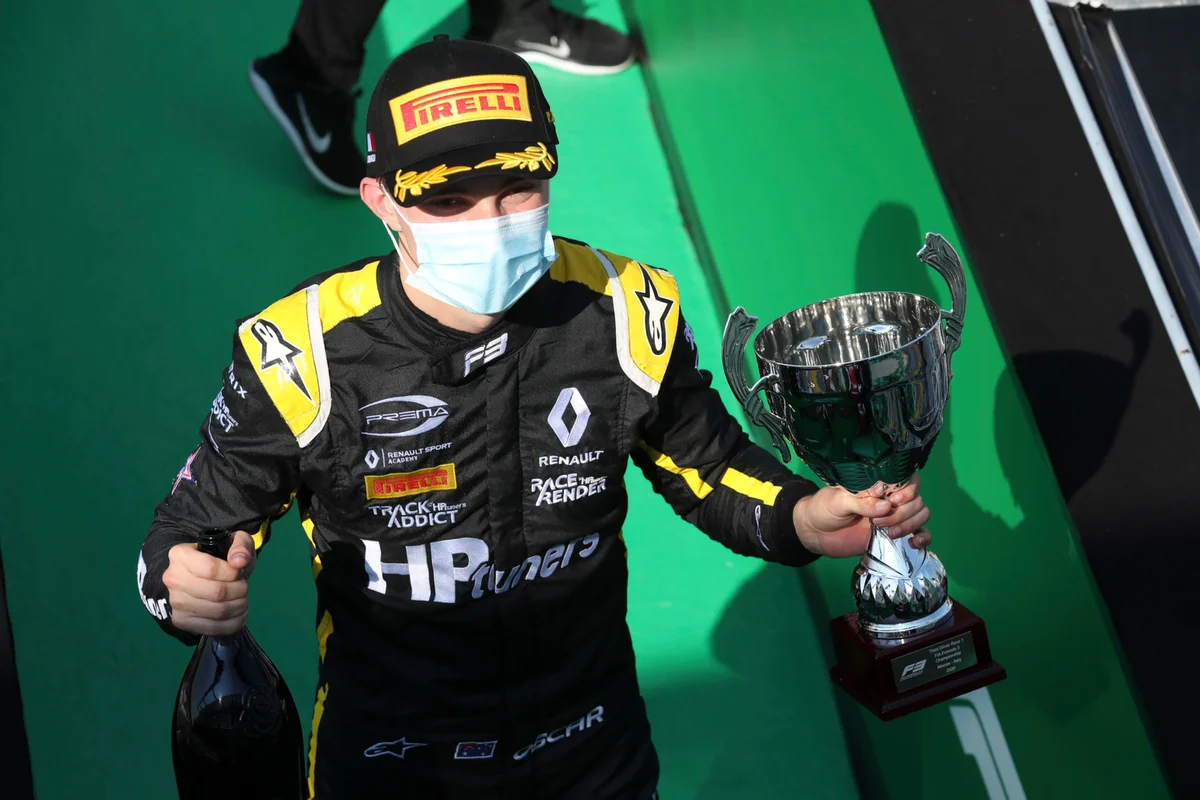
As the 2026 Formula 1season approaches, Australiandriver Oscar Piastri confronts a significant test with the introduction of radically changed low-grip cars. After narrowly missing out on the title last year, Piastri now must adapt his skills to a car that offers less downforce and grip, raising the question of whether he can overcome these new difficulties and reclaim his status among the sport’s top competitors.
New Car Design Brings Challenges for Drivers
The 2026 cars mark a departure from the high-downforce, ground effect machines that have been the norm, shifting to a design that produces less grip and more handling challenges. Sky F1 reporter Ted Kravitz pointed out concerns about Piastri’s adaptation during Bahraintesting, stating,
“Piastri, up against a confident Lando Norris, might find himself challenged by the new cars,”
and he added,
“With less grip across the board, it’s crucial to remember where Piastri faltered last season—on low-grip circuits.”
Historical Struggles on Low-Grip Surfaces
Piastri’s difficulties on low-grip tracks have been evident, particularly during last season’s Azerbaijan Grand Prix where a qualifyingcrash and race difficulties led to a six-race streak without podium finishes. Although he had once led the Drivers’ Championship by 34 points, these low-grip conditions revealed weaknesses that hindered his championship bid. Such episodes highlight the need for Piastri to enhance his ability to perform when traction is limited.
Team Insights on Areas for Improvement
McLaren’s team principal Andrea Stella acknowledged this challenge, emphasizing the necessity for Piastri to push the car harder in these demanding conditions:
Image of: Oscar Piastri
“We know that in low-grip situations, Oscar needs to challenge the car more. This is an area where he can improve rapidly.”
Following a disappointing qualifying session in Mexico where Piastri was notably slower than his teammate, Stella reiterated the importance of adapting quickly to the new car dynamics.
Piastri’s Own Reflections on Performance
Oscar Piastri has admitted that there were races where he struggled to find the right rhythm, saying,
“There were races where things didn’t click,”
and added,
“I realize I have opportunities to evolve my driving style and adapt better to different conditions.”
This acknowledgment reveals his awareness of the obstacles posed by low-grip situations and his commitment to growth ahead of the 2026 season.
Veteran Perspectives on the 2026 Car Handling
The new 2026 cars’ reduced downforce and increased sensitivity are set to challenge all drivers, with Lewis Hamilton explaining,
“We have significantly less downforce than before, making the cars more fun yet trickier to handle.”
The tendency for increased oversteer and sliding underlines the complexity of driving these models, suggesting that mastering them will require significant adjustment, especially for a driver like Piastri still early in his F1 career.
Implications of the 2026 Technical Changes on Driving
Observers note that the 2026 cars behave more unpredictably than their predecessors, particularly in achieving traction through slow corners. The braking and turn-in phases now demand heightened precision, placing additional strain on drivers’ adaptability. For Piastri, whose prior results show vulnerabilities in such scenarios, this transformation raises the stakes considerably.
Piastri’s Rising Profile Despite Challenges
Despite these difficulties, Oscar Piastri’s meteoric rise in Formula 1 cannot be overlooked. As a multi-time junior series champion who once led the Drivers’ Championship, he has demonstrated his high potential and rapid development. While the pressure is immense and expectations even higher, Piastri is viewed as a serious championship contender poised to solidify his place in the sport’s elite ranks.
Looking Ahead: The 2026 Season’s Crucial Test
As the 2026 campaign unfolds, all eyes will be on Oscar Piastri to see if he can conquer the low-grip challenges that have impeded his progress. His ability to adapt and thrive in these new conditions will determine whether he fulfills his promise and contends for championships, or if these innovations present hurdles too great to overcome. The Formula 1 community waits with anticipation to witness how this compelling narrative will develop.