
Oscar Piastri has cautioned that the new 2026 Formula 1 cars will bring about unusual challenges due to their design and technical specifications. The upcoming season will see a significant shift driven by the newly introduced regulations that aim to reshape the future of racing in F1.
The redefined technical framework incorporates a power unit featuring an even split between combustion and electrical components, adding a new dimension to how drivers approach race strategy. Managing energy harvesting efficiently will be critical, with battery oversight potentially influencing the outcome of races and the championship standings.
Insights from Early Testing and Upcoming Races
Having completed three pre-season runs, Piastri reflected on the insights gained and their implications for upcoming events, including his home Grand Prix in Australia. He pointed out that different circuits will present varying energy management demands.
I mean, from the simulator running I’ve done, it’s very different,
Piastri commented to Motorsport Week during Bahrain’s final pre-season evaluation.
I think at certain tracks we’re going to be much more harvest-limited than we are here. Here, depending on where you set your optimality, you don’t have to do much lift and coast, whereas in Melbourne, I think if you didn’t want to do any, you’d be running out of energy very, very quickly.
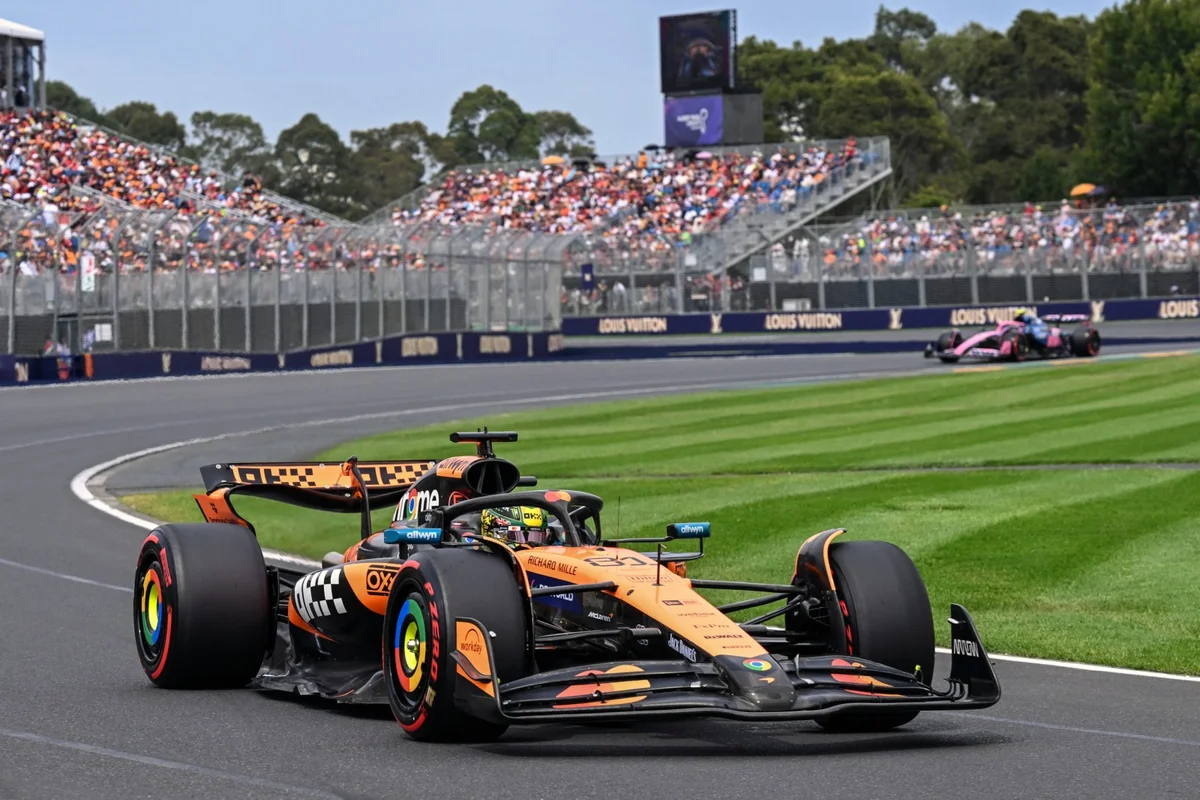
Circuit Layouts to Present Unique Energy Management Tests
With a 24-race schedule ahead, Piastri believes that several circuits will uniquely test drivers’ ability to manage the power units’ energy harvesting requirements. He described how certain tracks, such as the Jeddah Corniche Street Circuit, will result in atypical challenges due to their configuration and the demands they place on the modern cars’ recovery systems.
Again, it just depends on the layout of the circuit. Jeddah is another one,
he noted.
Places where you have a few straights linked together by vast corners where it’s very difficult to harvest, that’s where the most kind of abnormality is going to come.
Pre-Race Preparation and Engine Mapping Strategies
Piastri also explained that many of the critical energy and engine management settings will be decided prior to races rather than adjusted continually during driving. Collaboration between drivers and engineers will be key to defining these strategies before hitting the track.
So, yeah, there’s going to be some big differences, but it’s saying that, again, you can change things around a lot,
Piastri added. He further described how certain sections of circuits, such as Turn 12, have become more challenging under the new regulations but remain adjustable through pre-set configurations.
While real-time modifications can be made, the methods are evolving beyond simple throttle control, adding complexity to race management.
Melbourne is going to look quite different, I think, and it will be a challenge for us all, I’m sure.
The Broader Impact on the 2026 F1 Season and Championship
This shift towards a balanced combustion-electric power unit and the necessity for precise energy harvesting introduces a fresh layer of tactical depth to Formula 1 racing. Oscar Piastri’s observations highlight how drivers and teams must adapt both their technical approaches and racing styles to cope with these developments.
The ability to master battery usage and engine mapping could emerge as decisive factors in race results and potentially the championship race itself. As the season unfolds, fans and competitors alike can expect notable changes in the dynamics of race strategy and performance.
