
Oscar Piastri has voiced significant concerns regarding the new race start rules introduced for the 2026 Formula 1 season, highlighting potential safety hazards and technical difficulties. The Australian driver pointed out that the elimination of the MGU-H component in power units has complicated the process, increasing the risk of stalled cars during race starts.
The changes to the power unit mean drivers are required to wait for the engine to spool up before the turbo can engage. This modification led to problems during trial race starts, with several drivers, including Piastri, struggling to get their cars moving when the lights went out. The situation, as Piastri emphasized, could be hazardous on track and might result in dangerous situations.
Challenges for Teams Adapting to the Revised Start Process
Piastri described the current state of race starts as unpredictable, with teams still attempting to master the nuances of the new system. He acknowledged that there is a considerable learning curve, as competing squads experiment to determine which methods lead to successful launches and which do not.
The 24-year-old driver stressed the risks involved with the updated procedure, noting that the starts are significantly more challenging compared to previous years. Despite the increased power delivered when the MGU-K system activates after the turbo spools up, the entire process is more complex and demands greater precision.
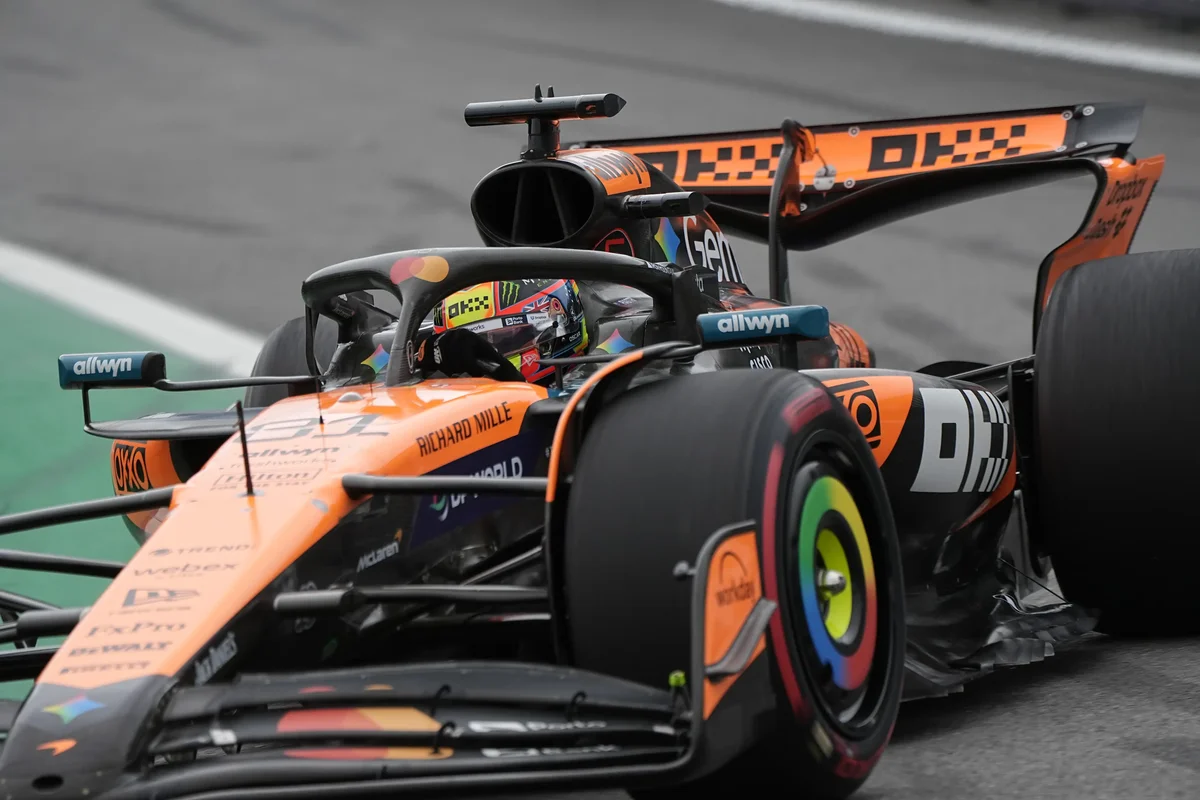
It’s just very random at the moment, and we’re all kind of learning what makes a good start, what makes a bad start, There are some pretty big pitfalls you can find if you get yourself in trouble. The procedure is one thing, but also just the way we do starts is much more difficult than last year. You’ve got a lot of power. The MGU-K kicks in at a certain point. It’s trickier from every single angle.
Oscar Piastri said, as reported by RacingNews365.
Anticipated Progress and Learning Curve for the 2026 Season
Looking ahead, Piastri conveyed hope that teams, including his own McLaren squad, will rapidly improve in managing the new start rules. He acknowledged that the initial races would likely see a wide range of success levels, with some drivers refining their starts effectively while others continue to struggle.
He predicted that as the season unfolds, there will be a convergence where most teams will align their performance closer to an optimal level, especially those currently facing difficulties with the new starts.
What we’re seeing at the moment is people just getting things right and other people getting them very wrong. Certainly, in the first few races, we could see some starts that look a bit like what we have this week. We’ll start to converge, hopefully pretty quickly, if you’re on the bad side of that.
Oscar Piastri noted.
Implications for Teams and Season Outlook
The 2026 Formula 1 season is expected to challenge teams extensively, particularly in refining their race start execution under the updated regulations. Mercedes is reportedly leading in power unit development, a competitive edge that may influence McLaren’s potential for a strong campaign. Despite this, McLaren remains cautious, managing expectations to avoid overconfidence amid the complexities introduced by the new rules.
Piastri’s remarks serve as a warning that, although technical progress will continue, the initial races could be marked by instability and increased risks during race starts, with safety concerns at the forefront. The coming months will be critical for teams as they adapt to these significant procedural and mechanical changes in pursuit of consistency and safety on the grid.
