
Ryan Blaney experienced an unexpected challenge during his Thunderbirds fighter jet ride a decade ago, which surprised even the seasoned NASCAR driver. Despite his familiarity with high-speed racing and G-forces, Blaney encountered a sudden physical reaction while soaring at 30,000 feet, shedding light on the raw intensity of the Ryan Blaney Thunderbirds experience.
A Close Encounter with Unexpected Intensity During the Thunderbirds Flight
The United States Air Force Thunderbirds offer an exclusive program that gives civilians a taste of flying in a fighter jet, pushing them through thrilling maneuvers and rapid altitude shifts. Given Ryan Blaney’s extensive background navigating NASCAR tracks and enduring high-speed racing conditions, he was confident in his ability to handle the demanding flight. However, in a candid discussion on SiriusXM Radio, Blaney described how one last maneuver from his pilot threw him off balance.
Before the ride began, the pilot checked Blaney’s comfort level, to which Blaney responded positively, encouraging the pilot to execute any moves he deemed fit. The flight initially went smoothly until an unexpected move left Blaney feeling unwell. He admitted:
The pilot asked me before, ‘Hey, what do you want to do? What is your comfort level?’ and I was like, ‘Hey, do whatever you want. I am in it with you. Whatever you do, I am cool with it.’ I was great the whole time, and then he did something unexpected that I wasn’t really ready for, and I got hot, I got queasy, and I threw up.
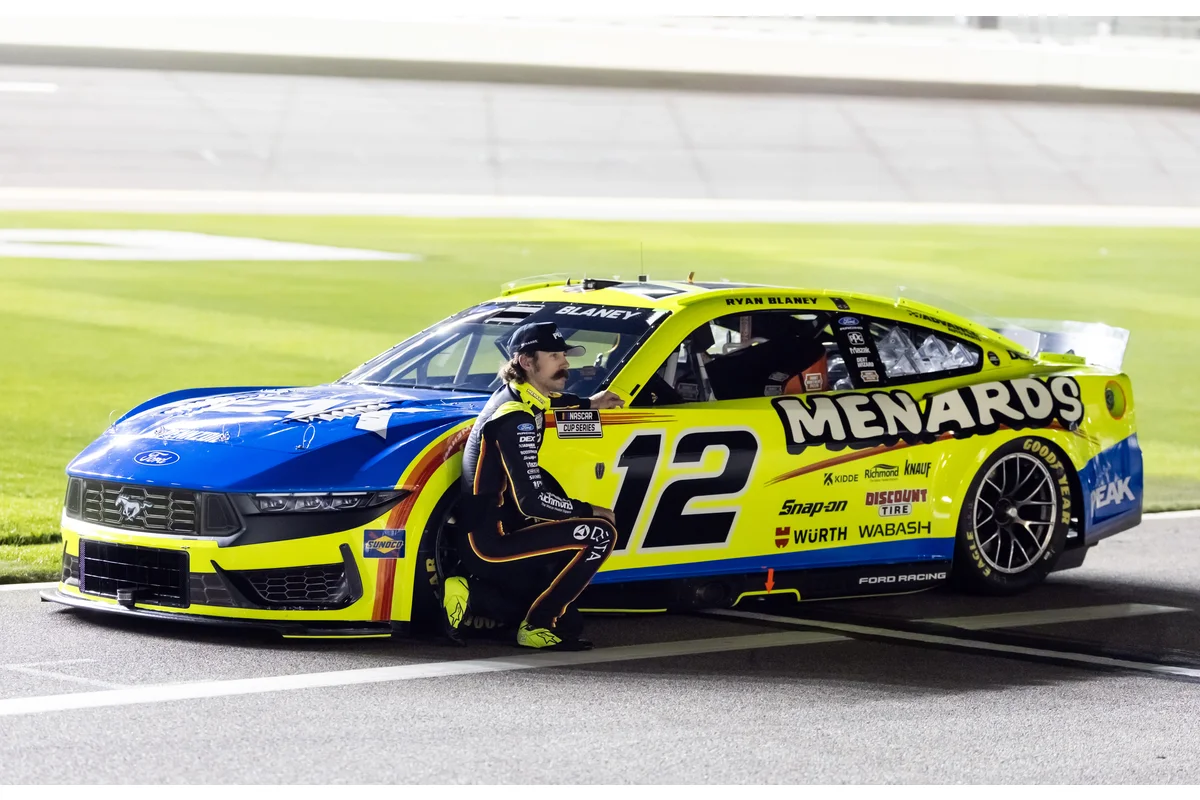
The rapid changes in G-forces proved to be too much, even for a driver accustomed to intense speeds. While at 30,000 feet, Blaney managed to reach the bag just in time. Despite this uncomfortable moment, he felt no shame about the experience, viewing it as a badge of honor rather than embarrassment.
Reflecting on the incident, Blaney said:
It was like a proud vomit. It was not like other moments where you are not proud, like you overindulge in something, and then you are sick. This one was like, I got to vomit at 30000 feet in a Thunderbird. That was like, I wish I had a better meal that morning. It was an unbelievable experience. I hope to get to do it again one day.
He then emphasized the thrill and uniqueness of the experience, noting its lasting impression. Blaney also openly acknowledged his physical reaction without hesitation:
🤢
“I did get sick […] I’m not afraid to say it.”
?Ryan Blaney, NASCAR Driver
Describing the overall flight, Blaney praised the entire Thunderbirds organization for their professionalism and skill, extending his admiration beyond just the pilots to mechanics and coordinators involved in the operation. He recalled:
So the coolest part of what they do is—it’s like they go straight to 10,000, so they pop off the runway, and they go straight 90-10000 feet. And you are at 10,000 feet before you know it. And you are seeing everything get very small in a very short amount of time; it’s just unbelievable.
Blaney expressed a desire to re-experience the ride, feeling that with age he would have a greater appreciation for the intense adventure.
Peer Reactions and Shared Experiences from Fellow Drivers
Another driver, Connor Zilisch, who recently participated in a similar Thunderbirds ride, referenced Blaney’s warning about getting sick but highlighted the exhilaration nonetheless. Zilisch conveyed his anticipation and concerns saying:
I think I was nervous of the fact that whether or not I was going to get sick. Cause I listened to enough drivers tell me how they threw up. But even the ones who threw up still said it was one of the most coolest experiences of their life,
said Zilisch.
The experiences of these drivers illustrate the physical demands and unpredictability of flying in such high-performance military jets, even for athletes used to extreme conditions like those in NASCAR.
Challenges Faced by Ryan Blaney During Daytona 500 Highlight Career Obstacles
While Blaney’s Thunderbirds experience provided a memorable moment, his recent performance in the Daytona 500 reflected ongoing difficulties in competitive racing. He concluded the race in seventh place, hampered by the actions of rival Toyota teams who deliberately slowed the pace to conserve fuel. This tactic impaired Blaney’s ability to advance and disrupted the flow of the race.
Blaney openly criticized this strategy and called on NASCAR to address the issue for the benefit of the sport:
[Toyota] gets three cars and just blocks the whole field. It’s unfortunate. We have to fix that. It’s pretty bad.
He continued to express hope about ongoing discussions among teams, drivers, and NASCAR officials aiming to resolve the tactic’s negative impact on racing dynamics.
I know we’re working on that. We’re trying to figure out ways to fix it, and there’s been a lot of discussion with the teams and drivers and NASCAR about how do we go about this and how do we fix it?
This blockage tactic, where teams drive three-wide to obstruct opponents, is a widespread problem. It forces the entire field into a slow, gridlocked formation, hindering true racing and creating long periods where drivers are essentially waiting for pit stops to shake up the order.
Blaney described how this affects the racing experience for him personally and for fans watching:
It takes away from the racing aspect of it. At that point, we’re not really racing. It feels like riding in a line and waiting for the green-flag stop…It sucks in my position because I was in the back, and when I got to the roadblock three-wide, you really can’t go anywhere,
he explained.
This ongoing issue highlights the challenges NASCAR faces in balancing competitive racing strategies with maintaining excitement and fairness on the track.
Implications for Future Racing and Ryan Blaney’s Career
Ryan Blaney’s recounting of his Thunderbirds flight underscores the intense sensations involved in military jet rides, revealing new perspectives on the physical limits even for professional race drivers. His openness about feeling ill at high altitude humanizes the elite driver, making the experience relatable.
Meanwhile, the concerns he raised about fuel strategy and blocking tactics during NASCAR events emphasize the ongoing discussions within motorsport communities about how to keep racing thrilling for participants and spectators alike. The resolution of such issues will be vital in preserving the spirit of competition and ensuring more dynamic races.
As Blaney looks forward to another opportunity with the Thunderbirds and continues to compete on the track, his experiences offer insights into the demands of speed, strategy, and adaptability both in the air and on the asphalt.
https://twitter.com/SiriusXMNASCAR/status/2024496539477946503
