
During the 2026 Daytona 500, Ryan Blaney openly criticized Toyota’s controversial fuel-saving strategy that appeared as deliberate slow driving, or “roadblocking,” during the critical final stages of the race. Blaney highlighted how these tactics hampered his ability to compete after a pit-stop setback, raising concerns over fairness and calling on NASCAR to address the issue promptly.
The Daytona 500 featured intense competition under a new championship format, with 23XI Racing’s Tyler Reddick securing victory, providing team owner Michael Jordan with an unforgettable birthday present. Despite the win, Toyota’s approach during stage two caution drew significant frustration, especially from Blaney of Team Penske Racing.
Ryan Blaney Criticizes Toyota’s Deliberate Slow Driving Strategy
Following the stage two caution, Ryan Blaney found himself at the rear of the field due to necessary repairs on his car. He described becoming trapped behind Toyota Racing Development (TRD) cars, which were consistently running 52-second laps as part of a pronounced fuel-saving plan. According to Blaney, the slow pace was intentional, effectively blocking other drivers and impacting race flow.
“Spent some time fixing our car after the Stage 2 caution. Then we started at the back and just got trapped with the Toyotas running 52-second laps and road-blocking the whole thing… We gotta fix that. It’s pretty bad.” Ryan Blaney told Toby Christie via X.
Blaney’s comments echoed widely as many drivers recognized the growing influence of fuel management on race outcomes. Although this tactic is not exclusive to Toyota, Blaney singled out their dominance in controlling multiple lanes at such a slow speed, attributing it to a form of strategic obstruction rather than fair racing.
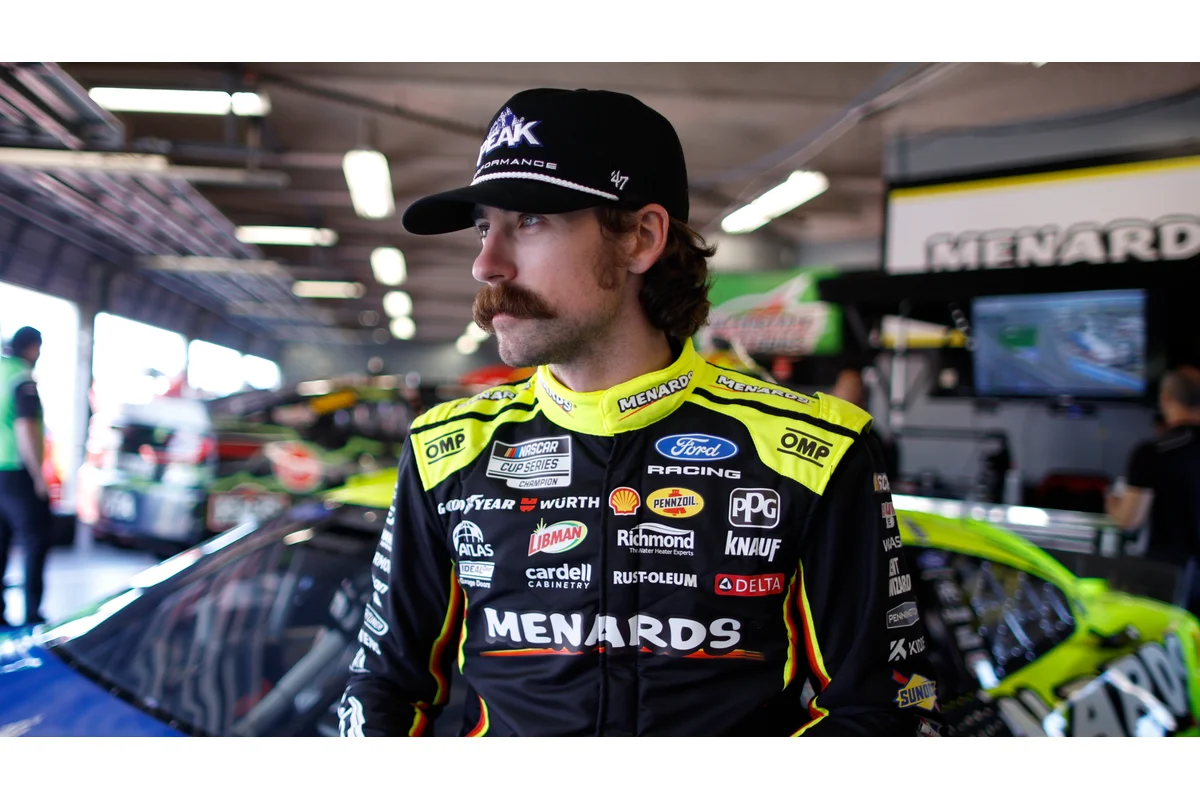
Insights from Denny Hamlin and Billy Scott on the Fuel-Saving Issue
Veteran driver Denny Hamlin acknowledged the complexity of resolving this issue, suggesting an innovative solution to discourage fuel-saving maneuvers. Hamlin proposed moving NASCAR’s Clash event to Daytona, where teams could collaborate to design a car package that would minimize the need for such tactics by focusing on endurance and speed rather than fuel conservation.
“One of the suggestions that we talked about just a few days ago is to come here next year in the Clash. Let a few of us come up with a package that we think you won’t see any fuel saving, you’re just going to see people hanging on. That would be the only fix.” Denny Hamlin said.
Meanwhile, Billy Scott, the crew chief for the Daytona 500-winning No. 45 team, expressed skepticism about finding a permanent solution. Scott emphasized that teams constantly explore loopholes to gain an edge, making it difficult to eliminate controversial strategies like fuel-saving entirely.
“I doubt there’s a fix to it because we’re just going to figure out the next way to exploit it, and I don’t know that it needs to be fixed. I think we all, as competitors, are spending as much time trying to figure out what the next best thing is and how to combat what the other is doing. I mean, I think it would be like asking if you need to change how chess is played.” Billy Scott asserted.
Scott’s view highlights the ongoing cat-and-mouse dynamics within NASCAR, where teams continuously adapt rules to maximize performance. His comparison to chess suggests this as a natural part of competition rather than a problem requiring regulation changes.
Broader Implications for NASCAR and Future Races
Ryan Blaney’s frustration with Toyota’s tactics underlines a wider debate within NASCAR about fuel-saving and race strategy integrity. While fuel management has become more crucial due to evolving regulations and car design, the associated slow-paced “roadblock” moves raise questions about the sport’s entertainment value and fairness.
The controversy has sparked calls for NASCAR officials to reconsider race formats and rule enforcement to prevent teams from deliberately impeding competitors. However, as Billy Scott pointed out, attempts to clamp down on these strategies may simply lead to alternate methods of exploitation, creating a persistent regulatory challenge.
With voices like Ryan Blaney’s demanding change and figures like Denny Hamlin proposing innovative tweaks, the issue is expected to remain central to NASCAR discussions in the weeks following the Daytona 500. How the sanctioning body addresses fuel-saving tactics in upcoming events may redefine competitive dynamics and fan experiences in future races.
Ryan Blaney was not pleased that Toyota had all three lanes locked up and were running ultra-slow 52 second laps in the final stage. Says, “We need to fix that. It’s pretty bad,” in regard to the fuel saving racing in the #Daytona500 pic.twitter.com/LfTJ17eZ5D
— Toby Christie (@Toby_Christie) February 15, 2026
