
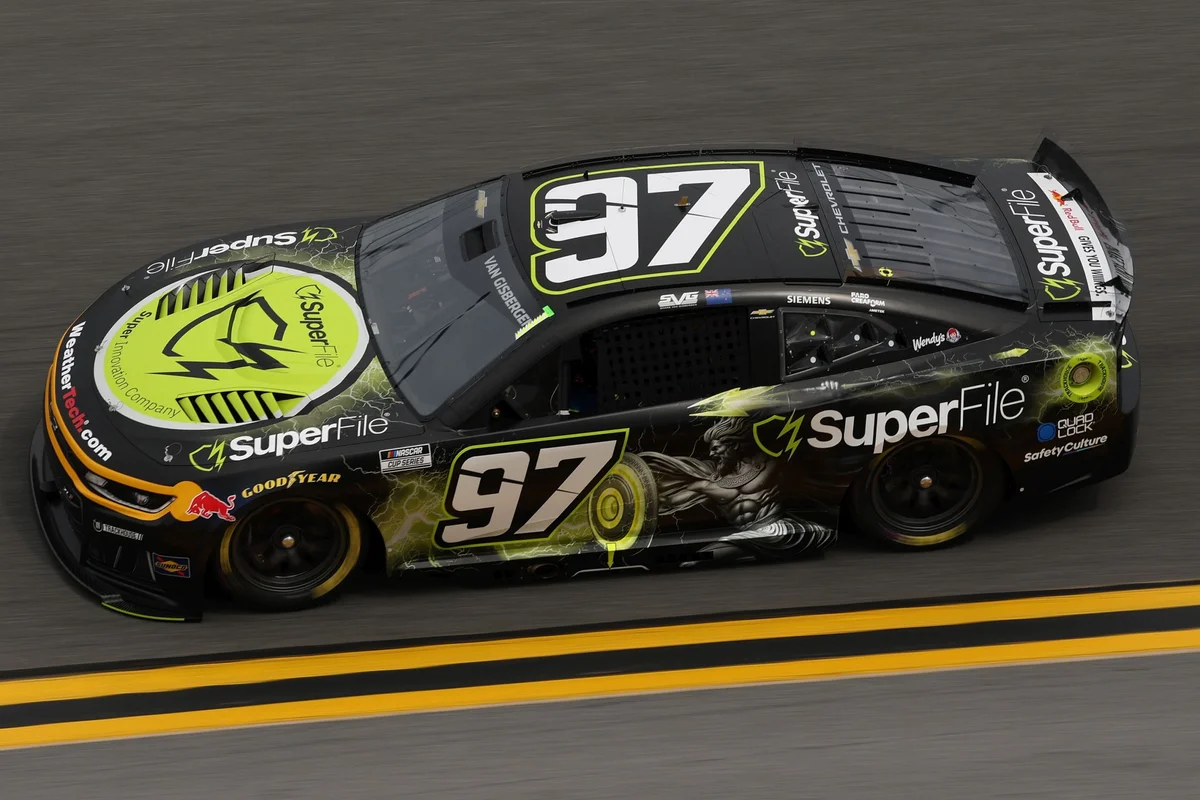
Shane van Gisbergen is aiming for a stronger showing at the upcoming Daytona 500 after finishing 33rd in his initial race at the famed track in 2025. Known for his dominance on road courses, where he claimed five victories in six starts last season, van Gisbergen has faced a steep learning curve on oval tracks. His early oval results were modest but have recently improved, showing a gradual adaptation to NASCAR’s unique demands.
Progress and Performance Trends on Oval Tracks
Throughout the first half of the past season, van Gisbergen averaged finishes between 26.6 and 30.4 on oval tracks, including Michigan. However, his results steadily improved during the second half, with averages between 22.2 and 23.2, lowering his season-long oval average from 26.26 to 22.73. On drafting tracks, where pack racing creates unique challenges, he currently holds an average finish of 24.6 over ten races. While these numbers don’t yet reflect a top contender, they mark a clear shift from his earlier struggles.
Daytona presents a particular challenge, known for its intense atmosphere and unpredictable racing. Van Gisbergen, driving for Trackhouse Racing and qualifying 37th for the upcoming race, has been navigating the complex social and competitive dynamics of oval racing cautiously, seeking to build relationships and trust with fellow drivers.
“I’m still learning and trying to make friends, I guess,”
he said.
“Like, it’s still people leave you for no reason or you do something wrong and lose the trust of people. So, yeah, it takes a while how to understand to put your car in the right place, yeah.”
Van Gisbergen Reflects on the Challenges of Oval Racing
The New Zealand driver openly acknowledges the significant differences between oval racing and his previous experience on road courses. The technical aspects—such as driving style, car setup, race dynamics, and changing track surfaces—require a vastly different skill set.
“I don’t know where to start. Yeah, like it’s the driving, the setups, the cars, the racing dynamic, how the surface changes.
Yeah, there’s so many different things. It’s a completely different discipline to any other driving,”
van Gisbergen explained.
He also recounted his early exposure to the Daytona 500 before joining NASCAR:
“It was always early mornings, I guess, or mid-mornings, but yeah, like I’d watch the race, but wouldn’t watch a whole one, you know, just the end.”
Gaining Confidence and Better Results in NASCAR Ovals
Van Gisbergen admits that while he is not expecting rapid breakthroughs, his comfort level on ovals has improved notably. In recent races, he has run competitively inside the top 15 despite setbacks caused by on-track incidents.
For instance, during his last five oval starts last season, he finished in the top 15 three times before being hindered by crashes or misfortune. At New Hampshire, he was running in the top five when a restart collision ended his momentum. The following week at Kansas, he secured his first top-10 oval finish. Later, he again ran inside the top 10 before another restart incident cost him a strong result.
In the fall race at Talladega, van Gisbergen displayed impressive racecraft by advancing from the back and leading the outside line, yet a late-race wreck dropped him to 11th place. Across multiple events, he has demonstrated an ability to compete near the front, although repeated incidents and occasional handling issues have prevented a solid string of finishes inside the top 10 or 15.
Adjusting Strategy Under NASCAR’s Revised Playoff System
With NASCAR returning to the Chase elimination format and reducing the number of road course races, van Gisbergen and his Trackhouse Racing team have adapted their approach. The previous system rewarded single race wins as automatic entries in the playoffs, but now consistent point accumulation on ovals is key.
“Yeah, like I said earlier, that’s our goal is to just accumulate points now,”
van Gisbergen shared.
“You have to try and achieve as many points as you can every weekend, and it probably changes the way you take risks if you’re probably going to be like us, a guy trying to point our way in. So, yeah, I probably will approach it a bit different, I think.”
The 2026 NASCAR schedule features 32 oval races, alongside three road courses, one street course, and four non-championship oval events. The road and street races remain in the regular season, offering some opportunities for van Gisbergen’s strengths. However, success in the playoffs will hinge almost entirely on strong oval performances.
Road Ahead for Van Gisbergen and His Daytona 500 Ambitions
As the Daytona 500 draws near, Shane van Gisbergen is poised to leverage his growing oval experience and newfound raceweekend confidence. His evolving skill set and strategic shift aim to see him transition from outsider to serious contender in NASCAR’s premier events. The challenge remains steep, with pack dynamics and high-speed chaos always around the corner, but van Gisbergen’s recent progress suggests he will be a driver to watch.
His ability to adapt quickly to the nuances of oval racing will likely determine not only his performance at Daytona but also his overall trajectory in the NASCAR series as he pursues consistent top finishes and a playoff berth.
“It was always early mornings, I guess, or mid-mornings, but yeah, like I'd watch the race, but wouldn't watch a whole one, you know, just the end.”
–@shanevg97 talks about watching the Daytona 500 before coming to NASCAR and his plans to get better finishes on ovals.… pic.twitter.com/lm0COYO7nC
— Frontstretch (@Frontstretch) February 11, 2026
