
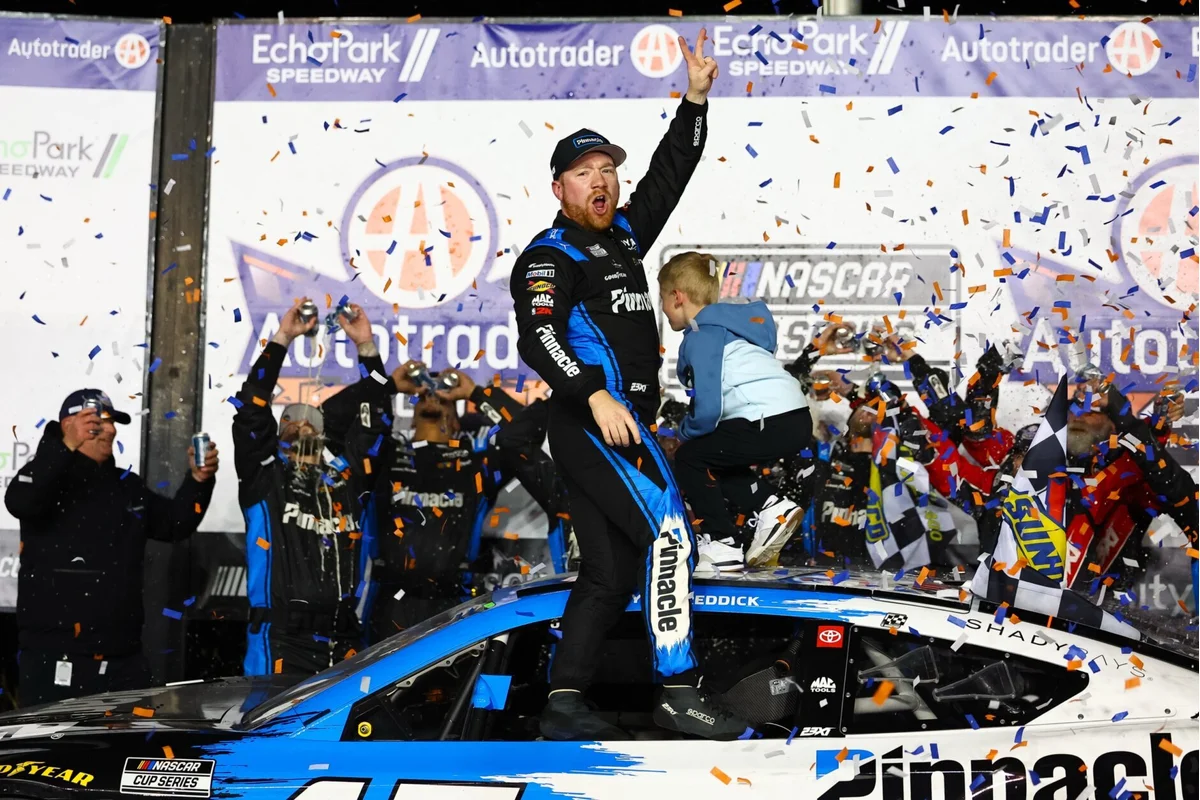
Tyler Reddick has burst into the 2026 NASCAR Cup Series with remarkable momentum, winning the first two races of the season and joining an elite group of only six drivers in Cup Series history to accomplish this feat. This early success at the start of the season, including his wins at the Daytona International Speedway and another major track, places him alongside some of the sport’s legends. However, despite this powerful start, historical patterns suggest that early victories don’t guarantee championship success.
Examining Past Drivers Who Opened with Two Straight Wins
Reddick became the first driver since 2009 to win the season’s opening two races back-to-back. The drivers who achieved this before him include Marvin Panch, Bob Welborn, David Pearson, Jeff Gordon, and Matt Kenseth. Notably, all but Jeff Gordon failed to convert those strong starts into championships, with Jeff Gordon in 1997 being the sole driver to claim the title after opening with such momentum. This mixed record offers a cautious backdrop to Reddick’s own championship ambitions.
Marvin Panch’s 1957 Season: Strong Starts in an Extended Schedule
Marvin Panch began the 1957 season by winning races at Willow Springs and Concord Speedway, though these events were actually held in late 1956 as the season spanned November through October, covering 53 races. Panch competed in all his starts, winning six times during the year and securing 22 top-five finishes and 27 top-10 placements. His consistent participation and performance helped him finish second in driver points, marking 1957 as his peak year in top-level NASCAR.
Bob Welborn’s 1959 Success and Mechanical Challenges
In 1959, Bob Welborn entered the record by winning two of the season’s opening races: one at Champion Speedway in Fayetteville, North Carolina, and the 100-mile Daytona 500 qualifying event, which counted for points until 1972. He participated in 29 of that year’s 44 races, primarily driving his own cars, and earned three victories along with 13 top-10 finishes. Despite his early success, Welborn faced 15 DNFs mostly due to mechanical failures, making it a season of highs and lows. His last win came later that year at Asheville-Weaverville Speedway, after which he mostly raced part-time.
David Pearson’s Dominance Despite a Part-Time Schedule in 1976
David Pearson overcame the challenge of running a partial schedule during the late 1960s and early 1970s, when road-course specialists often disrupted regular drivers at tracks like Riverside International Raceway. In 1976, Pearson won both the opener at Riverside and the Daytona 500, totaling 10 wins in just 22 starts—the highest win count of any driver that season. Although he finished ninth in points, his performance exceeded some drivers who ran the entire 30-race schedule. Pearson displayed dominance at Riverside, Darlington Raceway, and Michigan International Speedway, leading over 1,200 laps and securing 18 top-10 finishes.
Jeff Gordon’s 1997 Season: The Only Double-Win Opener to End in a Title
Jeff Gordon’s 1997 championship season began with victories at Daytona and North Carolina Speedway (now Rockingham Speedway). He remains the only driver to start the season with back-to-back wins and also capture the championship in the same year. Gordon’s ten wins came on ten different tracks, supported by 22 top-five and 23 top-10 finishes. He won the title by a narrow margin of 14 points over Dale Jarrett, demonstrating how those early-season triumphs were integral to his overall championship campaign during NASCAR’s full-season era.
Matt Kenseth’s Inconsistent 2009 Season After a Promising Start
Matt Kenseth won the first two races in 2009 at Daytona and Auto Club Speedway, but his season quickly faltered. An engine failure forced him out early in the third race, and Kenseth struggled with consistency throughout the year. He managed only seven top-five and 12 top-10 finishes, ultimately failing to qualify for the Chase for the first time in his career and ending the season 14th in points, tying his lowest career points finish from his rookie year in 2001. Kenseth’s season serves as a reminder that a strong start does not always translate to season-long success.
Challenges of Sustaining Success in the Modern NASCAR Format
With the Chase 2.0 playoff system restored, race wins provide important but not exclusive paths to championship contention—consistent high finishes remain crucial. Tyler Reddick’s bright start places him in an excellent position, but the extended nature of the season means maintaining form is vital. No driver has yet claimed three consecutive wins to start a season, but Reddick has a chance to achieve this at the upcoming race at Circuit of the Americas. His proven success there, including a win in 2023 and five top-five finishes, combined with the speed demonstrated by the 23XI Racing team, keep his championship hopes strong.
Historical Patterns and the Road Ahead for Tyler Reddick
History indicates that an explosive start like Reddick’s rarely guarantees a championship, yet racing remains unpredictable. His early dominance is a compelling story, but the season’s long haul will test his ability to sustain performance against tough competition. As the 2026 Cup Series progresses, all eyes will remain on Reddick and 23XI Racing to see if they can transform this promising start into a championship run.
