
At the Bahrain circuit’s pre-season test, Max Verstappen stunned the Formula 1 community by unveiling an unconventional downshifting technique that could change racing tactics. The reigning champion’s innovative approach, centered on aggressive downshifting to first gear, immediately set him apart, demonstrating a potential breakthrough in energy recovery and vehicle control.
Unlike most drivers who favored the safety of second gear, Verstappen dared to drop into first gear during braking. This bold move generated a significant rev spike, allowing him to harness additional power from the engine and recharge the car’s battery more efficiently, a crucial advantage for the hybrid power units now dominating F1.
Mastering the Challenging Turn 10 with Unusual Downshifting
Turn 10, known for its difficulty and tendency to unsettle drivers, became the stage for Verstappen’s audacious maneuver. By downshifting directly to first gear while applying the brakes, he produced a substantial increase in engine revs without exceeding mechanical limits. This approach enabled finely tuned adjustments to the car’s behavior through braking zones where control is vital.
The risks involved are considerable, as sudden downshifts can cause uncomfortable jerks or wheel lock-ups. Despite these challenges, Verstappen exhibited remarkable control and stability, maintaining smooth gear transitions and consistent performance throughout the test session, showcasing his expert handling of this demanding technique.
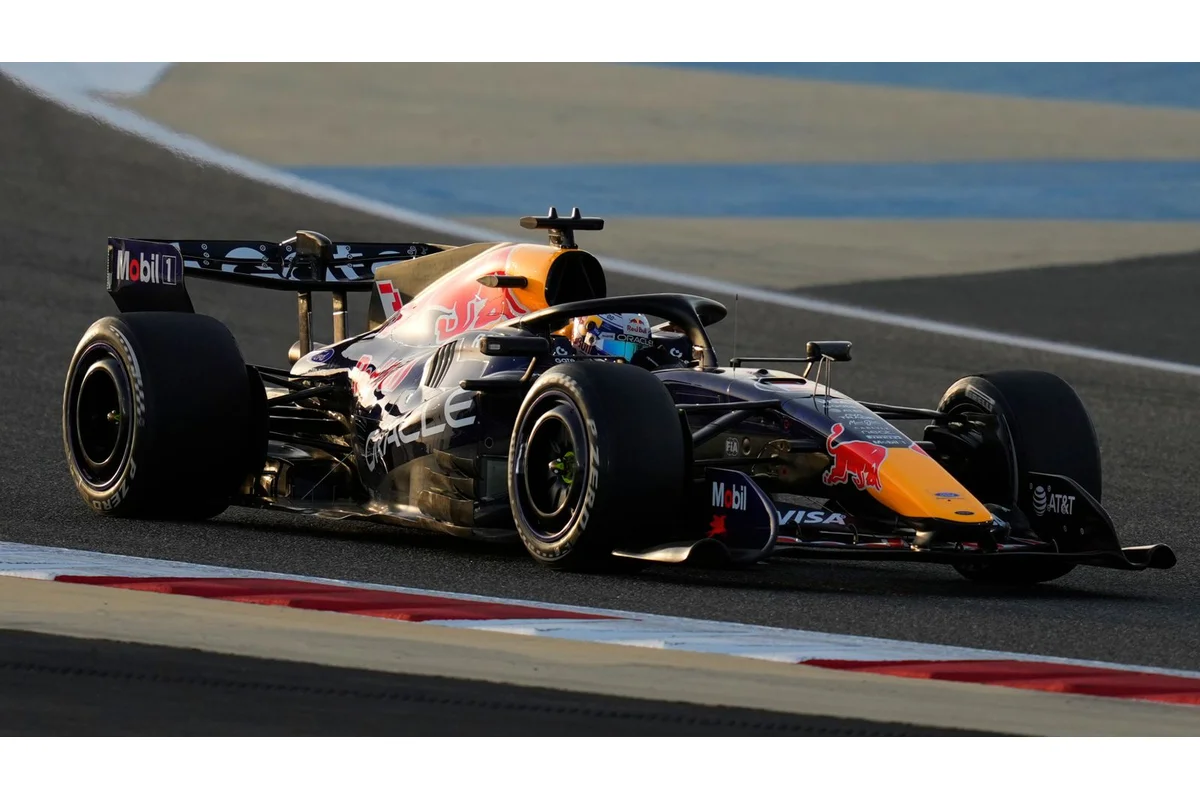
Red Bull’s Strategic Advantage Over Rival Teams
While a few drivers began to explore similar tactics as testing progressed, Verstappen’s expertise revealed a clear advantage for Red Bull. The team’s adoption of this method appears intentional, providing Verstappen with a tactical edge by maximizing energy recovery from the rear axle during deceleration periods.
Versus competitors like Audi, Ferrari, and Mercedes, who remained committed to more traditional downshifting methods, Red Bull’s innovation manifested as greater car stability and better lap consistency. Drivers such as Gabriel Bortoleto and Nico Hulkenberg struggled with their cars’ responses, often experiencing instability linked to conventional setups.
Implications for the 2026 Formula 1 Season and Beyond
Looking ahead to the 2026 season, the importance of efficient battery recharge methods for the MGU-K system cannot be overstated. Verstappen’s aggressive downshifting technique promises to be a game-changer, offering energy regeneration opportunities that could redefine race strategies and car design philosophies across the sport.
The carefully choreographed sequence of downshifts—from fifth to fourth, third, then rapidly into second and first gear—optimizes energy harvesting without sacrificing speed or control in tricky corners. This rhythm contrasts sharply with competitors’ struggles to balance performance and stability under pressure.
The Potential Lasting Impact of Verstappen’s Innovation
The buzz generated by Verstappen’s daring strategy has sparked discussion on whether rival teams can successfully emulate this approach or if Red Bull will maintain their dominance through technological and tactical superiority. As testing continues and teams refine their setups, all eyes will remain on Verstappen and his innovative downshifting style.
Verstappen’s mastery of this technique signals more than just individual skill—it represents a shift in how energy management and car control can be integrated at the highest level of racing. The unfolding 2026 season may well hinge on how widely this innovation is adopted and adapted.
