
The 2026 FIA Formula 1 World Championship will commence with the Australian Grand Prix at Melbourne’s Albert Park Street Circuit, marking the event’s 30th anniversary on the F1 calendar. This race, serving as Round 1, continues Australia’s tradition of opening the season, with the 24-race schedule matching the length of previous years in 2024 and 2025. Expectations are high again, especially with local driver Oscar Piastri’s grandstand selling out quickly, fueling enthusiasm for the race weekend.
Details of Albert Park Circuit and Its History
Located in Melbourne’s leafy parkland near the city center, Albert Park Circuit offers a semi-permanent layout combining fast corners with heavy braking zones closely bordered by gravel traps and barriers. The track’s temporary nature means it undergoes significant evolution throughout the weekend, often leading to Safety Car periods or race stoppages. Tire wear here is moderate, attributed more to abrasion rather than heat stress, while unpredictable early autumn weather has caused rain interruptions and shifting track conditions in past races.
The event hosts a comprehensive support program starting Thursday, featuring Formula 2, Formula 3, Porsche Carrera Cup, and Australian Supercars, all contributing to track surface grip as rubber builds up. Australia’s F1 history began in 1985 at Adelaide’s street circuit before moving to Melbourne in 1996. Aside from cancellations in 2020 and 2021 due to COVID-19, this weekend marks the 37th Australian Grand Prix overall.
Michael Schumacher leads driver records with four wins at Albert Park, all for Ferrari, who have 10 wins versus McLaren’s 12 victories. McLaren also holds the record for most poles at 11, while Lewis Hamilton boasts the highest number of poles (eight) and podiums (10). Ferrari and McLaren share the podium title with 26 apiece. Red Bull’s wins in Melbourne are limited to Sebastian Vettel in 2011 and Max Verstappen in 2023.
Highlights from the 2025 Australian Grand Prix
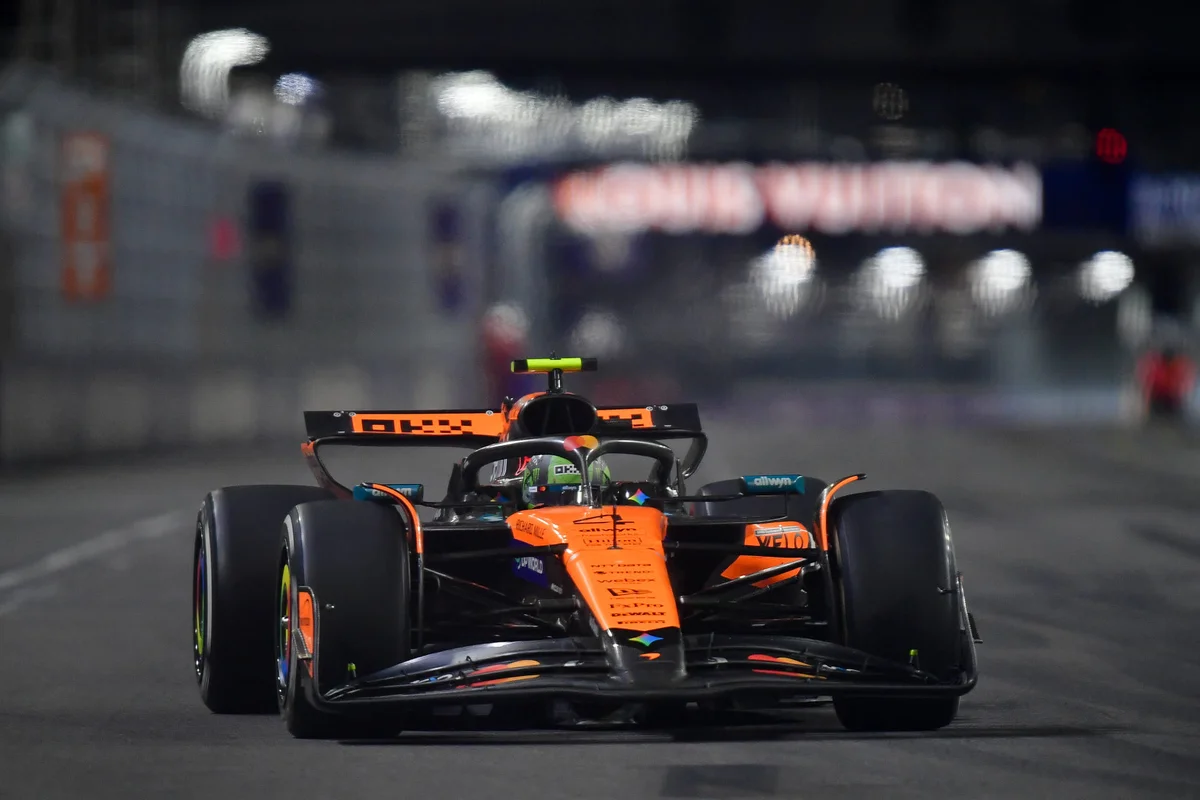
The 2025 race was notable for its challenging wet conditions. Pole-sitter Lando Norris managed a complex race at Albert Park in his McLaren despite variable weather that alternated between wet and dry, causing crashes and multiple Safety Car deployments. Norris overcame a brief excursion into a gravel trap to maintain a narrow lead, ultimately holding off Max Verstappen in a suspenseful six-lap duel to win by less than a second.
It was amazing—a top race, especially with Max behind me,
said Norris.
Tricky conditions, but they’re the enjoyable ones. We learned from mistakes last year in similar weather at Silverstone and Canada. Thanks to McLaren for a brilliant car.
–Lando Norris, Driver
Verstappen reflected on the battle:
It was difficult but fun at the end. Lando’s moment in Turn 6 got me close. This is 18 points more than last year—I’ll take that.
–Max Verstappen, Driver
George Russell completed the podium, finishing over eight seconds behind the leaders while driving for Mercedes.
2026 Technical Regulations Bring Major Changes
The 2026 season introduces one of the most significant regulatory revisions in Formula 1 history, featuring smaller, lighter vehicles with reduced aerodynamic downforce. Traditional DRS functionality is replaced by active aerodynamics, and engines must deliver an almost equal split between electrical and combustion power. These changes aim to improve racing dynamics but also introduce new strategic complexities.
At Albert Park, drivers and teams will test the new Manual Override Mode, which allows trailing cars an electrical power boost usable anywhere during the lap, adding layers to overtaking strategy. Strict energy recovery limits per lap will force drivers into more aggressive lift-and-coast tactics, particularly on circuits like Melbourne with fewer heavy braking points. This shift means qualifying performance may no longer reliably predict race results.
These cars are anti-racing. It’s all about energy management, not pure skill. Drivers should brake late without checking batteries or deployment maps. The regs reduce skill to just 5%—F1 ruined a great sport to appease tree-huggers by going ‘green.’
–Max Verstappen, Driver
Previously, cars ran at full throttle around 72% of the lap. With the new rules requiring 50% electric power, that figure is predicted to drop below 50%, favoring drivers who focus on efficiency rather than outright speed and aggression.
Rising Attendance and Upgraded Facilities for Fans
After a downturn six years ago, Australian motorsport has experienced a resurgence in attendance, now drawing crowds that significantly exceed venue capacity. Female attendees comprise 40% of the crowd, the highest worldwide. Oscar Piastri’s rising popularity has intensified ticket demand, and the 2026 event is on pace to surpass 2025’s record of 465,498 attendees.
We’re tracking to break it again,
said Tom Mottram, chief events officer.
We’ve boosted Sunday capacity to 141,000, ensuring amenities, food, walkability, and transport meet demand.
Several infrastructure projects aim to ease access and improve fan experience, including a new train station near Turn 6 that alleviates pressure at main gates and reduces tram congestion from the central business district. The primary overpass above the start-finish straight has been expanded threefold in capacity, accompanied by additional investments to optimize crowd flow.
We won’t sacrifice experience for records,
Mottram added, emphasizing the priority of fan satisfaction. Melbourne’s lively atmosphere combined with scenic surroundings consistently makes Albert Park a favorite among supporters.
Weather Outlook for Race Weekend
Friday, March 6, encompassing Free Practice 1 and 2, is expected to have mixed sun and clouds, with temperatures reaching 72°F and light winds from the south-southwest. Humidity will hover around 68%.
Saturday, March 7, covering Free Practice 3 and Qualifying, will see mostly cloudy conditions early, becoming partly cloudy later with highs near 68°F and winds from the south at 10 to 15 mph. Rain chances stand at 11%.
Race Day, Sunday, March 8, should feature sunshine mixed with clouds, a high of 76°F, and south-southeast winds at 5 to 10 mph, with only a 5% probability of rain.
Key Details of the Albert Park Circuit Layout
The circuit stretches 5.278 kilometers, shortened slightly in 2022, blending public roads with permanent track sections featuring fresh asphalt. Its pit lane is the shortest in Formula 1 at 281 meters, requiring roughly 17 seconds of time loss during pit stops. Drivers make about 35 gear changes per lap, ranking second lowest only after Monza, while full throttle usage reaches 71%, also second to Monza.
The highest lateral force on tires hits 5.1 Gs in Turns 9 and 10, which are known as challenging high-speed bends after recent modifications. A ‘negative’ curb at the Turn 6/7 exit enhances safety, along with a profiled left barrier to reduce incident risk. The pit exit line has been extended to improve merging into track traffic.
Albert Park has served as the season opener 23 times and is unique as the only Grand Prix to conclude one season (1995 in Adelaide) and start the next (1996 in Melbourne). The hybrid nature of the track, utilizing city streets and permanent sections, places extra demands on drivers and machines.
Tire Choices and Strategies for the Event
With the introduction of revised cars in 2026, Pirelli supplies tires featuring smaller contact patches and diameters while maintaining the 18-inch rim standard. For this race, the softest three slick compounds (C3, C4, C5) have been nominated to suit the fast straights and technical corners of Albert Park.
Tire stress is anticipated to be low, with degradation due mainly to wear rather than overheating. The smooth asphalt surface helps minimize graining issues. Teams will evaluate tire performance throughout opening sessions to optimize setup, tuning axle temperatures using methods such as differential blankets and warm-up laps.
Effective pit strategies will depend on car loading and the ability to preserve soft compounds given overtaking difficulty. The new Overtake Mode may assist drivers in passing competitors, but energy management will remain pivotal, as battery depletion could cause leaders to lose advantage late in the race.
