
The 2026 Formula 1 liveries for all teams have been unveiled, showcasing a mix of tradition and fresh aesthetics amid significant regulatory changes. As teams prepare to hit the track, the liveries offer fans a first glimpse at each car’s identity, with designs ranging from conservative continuations to bold statements. The reveal highlights hopes and tensions ahead of what could be a pivotal F1 season.
Aston Martin’s Green Remains but Creativity Is Hidden
Aston Martin has kept its iconic green color for 2026, presenting a show car that doesn’t reveal the depth of Adrian Newey’s design work. As the team reportedly pays roughly £30 million per year for Newey’s expertise, they’re understandably reluctant to share their full engineering innovations prematurely. For now, the Aston Martin AMR26’s livery sticks to the familiar green, offering little more to analyze at this stage.
McLaren Maintains a Proven Look After Championship Success
As reigning world champions, McLaren has chosen not to stray far from last year’s successful livery design. The new McLaren MCL40 retains the papaya orange and anthracite balance, adjusting only subtly for visual effect. The dropped nose, however, catches attention with an unusual shape reminiscent of an anteater’s snout—perhaps a quirky omen for more podium finishes. Maintaining this visual identity reflects their confidence in the winning formula of 2025.
Cadillac’s Bold Half-and-Half Design Draws Mixed Reactions
Making a striking television debut during the Super Bowl and at Times Square, Cadillac’s car sports a striking black-and-white half-and-half livery. This pattern, inspired by the Cadillac chevron, is complemented by a distinctive chromed halo element. While the colors are viewed as suboptimal for TV, the design reflects Cadillac’s ambition to make a statement in its first F1 appearance. Naming the car remains pending as the brand settles in.
Williams Keeps Blue Glory but Faces a Tough Challenge
Williams continues with its gloss blue color scheme for the FW48, honoring the look that earned them two podiums and fifth place in the constructors’ championship last season—their best result in nearly a decade. While the livery is appealing, the real challenge lies in turning this into an on-track performance leap. Despite utilizing Mercedes power, Williams must navigate an increasingly competitive field where only the top few teams dominate.
Alpine’s Turnover to Mercedes Power Signals Change
After finishing last in the 2025 season and scoring fewer points than a single top driver’s first race haul, Alpine faces a critical shift by switching to Mercedes engines for 2026. The blue-and-pink livery remains nearly unchanged, signaling some visual continuity despite significant powertrain changes. Drivers Pierre Gasly and Franco Colapinto likely hope this technical upgrade will reverse the team’s fortunes after years of underwhelming results.
Ferrari’s Traditional Red Faces High Expectations Amid Regulation Changes
Ferrari’s SF-26 sticks predominantly with its trademark red and some white accents. However, the focus is on whether it can deliver wins after a disappointing previous season marked by early exits for drivers like Charles Leclerc and Lewis Hamilton. With sweeping 2026 regulations in place, there is cautious optimism that Maranello might finally produce a contender after an 18-year title drought, though history urges restraint in expectations.
Mercedes Unveils Its Title Contender Before Testing Begins
The new Mercedes W17 E Performance enters the 2026 season as a strong championship favorite, continuing the dominance that followed similar engine regulation changes in the past. Although track testing has not started, early speculation has George Russell or rookie Kimi Antonelli poised to secure their first title by season end in Abu Dhabi. Mercedes’ reputation places pressure on rivals to keep pace with this formidable package.
Audi’s F1 Debut Brings High Ambitions to the Grid
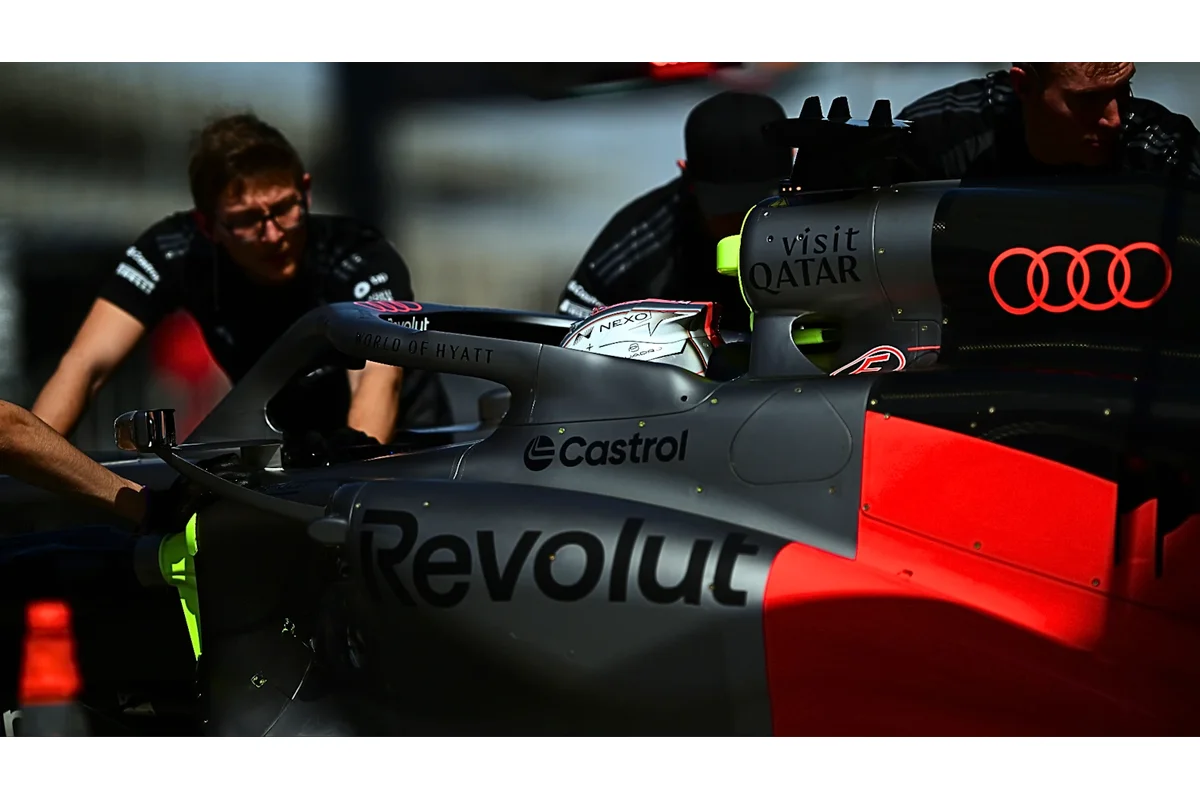
Taking over the former Sauber team, Audi’s R26 demonstrates the brand’s full-scale F1 commitment. Team principal Jonathan Wheatley expressed intent to
“
embed a championship DNA into every fiber of this team,
”
signaling serious aspirations. Considering Sauber’s modest history of just one win in 32 years, this Audi project represents a fresh start with high expectations for future success in F1’s evolving landscape.
Haas Shows Continuity with a Nod to Toyota Partnership
The 2026 Haas VF-26 car retains much of the 2025 design, making no radical changes. Its most obvious update is a large “GR” on the engine cover, a tribute to Gazoo Racing, Toyota’s performance division, reflecting a new technical partnership. While Haas’s track record remains modest, this alliance hopes to boost competitiveness, although skepticism persists given Toyota’s own historical struggles in F1.
Red Bull Returns to Glossy Paint Amid Engine Development Concerns
Red Bull’s RB22 livery stays largely consistent with previous years, notable mainly for reintroducing glossy paint. With the team now developing its own engine alongside Ford, Max Verstappen faces pressure for a reliable powertrain; failure could lead to a significant performance gap, particularly against Mercedes-powered teams like Alpine. This looming uncertainty casts a shadow over what was expected to be another dominant Red Bull era.
Racing Bulls VCARB 03 Focuses on Talent Development Amid Challenges
The Racing Bulls continue their role as Red Bull’s development outfit, aiming to nurture future stars. New recruit Arvid Lindblad brings youthful promise, highlighted by his striking white wheel rims and a notably large airbox on the car. Despite these visual cues, Racing Bulls remains primarily a stepping stone for drivers destined to feed into Max Verstappen’s main team, illustrating the ongoing talent pipeline in Formula 1.
Looking Ahead to a Season of Intense Competition and Uncertainty
The 2026 Formula 1 liveries offer more than style; they hint at team strategies amid sweeping regulation changes and shifting alliances. With Mercedes and Audi gearing up for strong performances, Red Bull faces significant pressure on its new engine project, while stalwarts like Ferrari and Williams aim to reclaim former glory. Alpine’s powertrain switch and Haas’s Toyota partnership mark important developments, though past struggles temper excitement. As testing approaches, fans can expect a season marked by both opportunity and tension, where the designs on the cars may carry the weight of ambitious hopes and urgent challenges.
