
Aston Martin’s Formula 1 team is confronting a more severe performance gap than initially anticipated during the early 2026 pre-season testing in Bahrain, with reports indicating they are approximately four to 4.5 seconds slower than rivals. The ongoing difficulty, deeply concerning for the team, revolves around a combination of power unit limitations and car efficiency challenges, raising questions about their competitiveness as the new season approaches.
Insights from Team Members and Experts on the Extent of the Problem
Following the Bahrain tests, team ambassador Pedro de la Rosa acknowledged that the gap remains substantial.
“We’re not happy. To be honest, nobody’s happy when you’re seconds slower than expected,”
de la Rosa told the media. He further explained that the car struggles mainly due to a lack of grip and insufficient power, though the drivers themselves are not hindered by mechanical issues that affect drivability.
When pressed about the time deficit, de la Rosa reiterated,
“As Lance said, we’re three, four, or five seconds behind. But that’s not the most important thing right now.”
He added,
“Yes, we need to get the car more efficient. But we’ve lost a lot of time and have to make up for it. The team knows what the problems are, and they’re already looking for a solution at the factory.”
The situation worsens as there are unconfirmed reports suggesting that Aston Martin’s car might be carrying around 40 kilograms of extra weight, nearly double the alleged excess carried by Williams. This added mass further undermines their pace on track.
Concerns Over Honda Power Unit and Team Management Response
German media outlet Auto Motor und Sport revealed that Lawrence Stroll, the team owner, expressed serious frustration during the Bahrain testing, reportedly delivering a stern reprimand to his engineering team due to the car’s underperformance despite large investments and the enlistment of famed designer Adrian Newey.
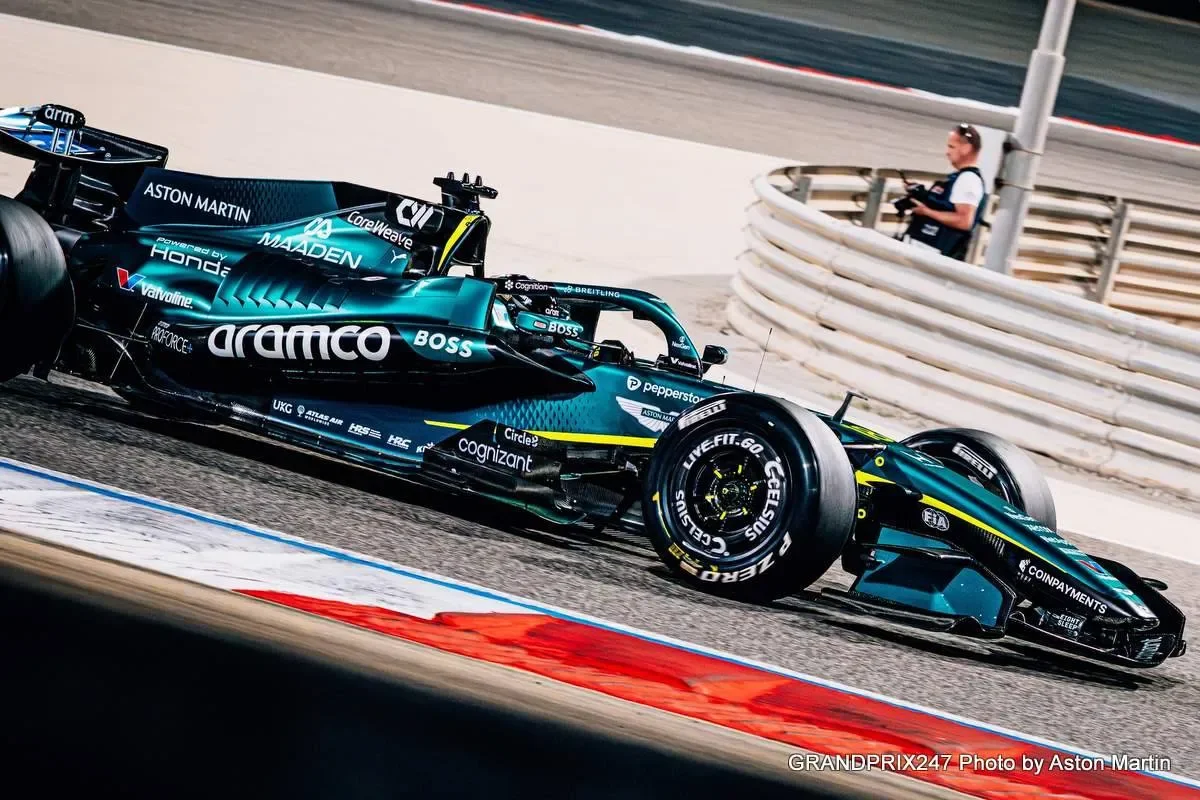
Spanish journalist Carlos Miquel pointed to the Honda power unit as the root of Aston Martin’s difficulties rather than Newey’s chassis design.
“Aston Martin’s problem is the Honda engine, not Newey’s car,”
Miquel stated.
“It feels like while the others are running at 12,000 rpm, the Honda’s engine can’t go above 11,000 or it’ll fall apart.”
He also noted,
“The Honda power unit is also the first to lose electrical power on the straights.”
This scenario draws parallels to Honda’s problematic F1 comeback with McLaren about ten years ago, when Fernando Alonso criticized the reliability and power, calling it a “GP2 engine.” Now Alonso, racing for Aston Martin, faces a similar challenge at the start of Honda’s new development phase.
Honda’s Track Operations Manager Addresses Cooling and Performance Issues
Shintaro Orihara, Honda F1’s general manager of track operations, commented on the situation to Fuji TV, aiming to reduce concern.
“We haven’t yet tested it with aggressive cooling specifications to judge whether the cooling is severe enough,”
he said, emphasizing the ongoing evaluation efforts.
He continued,
“The priority right now is to get the car running normally, and the car is running with a certain number of vents open to allow some headroom. Next week we plan to test how high the temperature can get with the more aggressive cooling specifications.”
An observer at the testing noted that Orihara’s demeanor was calm and composed, with
“no sense of tragedy at all,”
suggesting that Honda is cautiously optimistic about resolving these power unit challenges.
Implications for Aston Martin’s 2026 Season and Outlook
The difficulties Aston Martin encounters in balancing chassis performance with the power unit’s constraints mark a critical juncture for the team, which has invested significantly in facilities and personnel, including Adrian Newey. With a time deficit of over four seconds and potential weight issues, Aston Martin must urgently improve efficiency and engine output to remain competitive.
As development continues, the team’s ability to resolve these challenges will shape their position in the 2026 Formula 1 season. The collaboration between drivers like Fernando Alonso and Lance Stroll, alongside engineers and Honda specialists like Shintaro Orihara, will be essential to closing the gap and turning current frustrations into future progress.
