
Fernando Alonso has confirmed that Aston Martin will pull out of the Australian Grand Prix if battery issues arise during the race, placing the team’s ability to compete in next week’s Chinese Grand Prix in serious doubt. The team is dealing with limited battery supplies, making it critical to preserve their remaining units to ensure continued participation.
Limited Battery Supply Due to Production Challenges
Honda Racing’s senior managing director, Ikuo Takeishi, revealed that Aston Martin arrived in Melbourne with only four battery units because of manufacturing constraints. Despite production limits, the two batteries still in use after Saturday’s practice sessions remain functional. Takeishi acknowledged ongoing efforts to increase battery availability ahead of the Chinese GP.
“The honest answer is that we were only able to prepare four units due to production volume issues,”
Takeishi stated. When asked about prospects for China, he added,
“We would like to take measures wherever possible at Sakura.”
Battery Vibrations and Monitoring Remain a Concern
Concerns over battery vibrations have led the team to monitor the units closely, although the problem has lessened recently. This improvement allowed Aston Martin to ease restrictions on battery usage during Saturday’s practice, providing some operational flexibility. However, detailed information about the monitoring process has not been disclosed.
“The vibrations have calmed down quite a bit, so we’re not imposing any strict restrictions,”
Takeishi said. He also mentioned,
“I can’t go into details, but we are monitoring the condition of the batteries and doing various other things.”
Alonso Highlights Progress Despite Technical Setbacks
Alonso expressed cautious optimism about the car’s performance, noting a significant improvement achieved simply through track time. He pointed out that the chassis showed strong potential after completing more laps, which contributed to cutting down the lap time gap compared to earlier sessions.
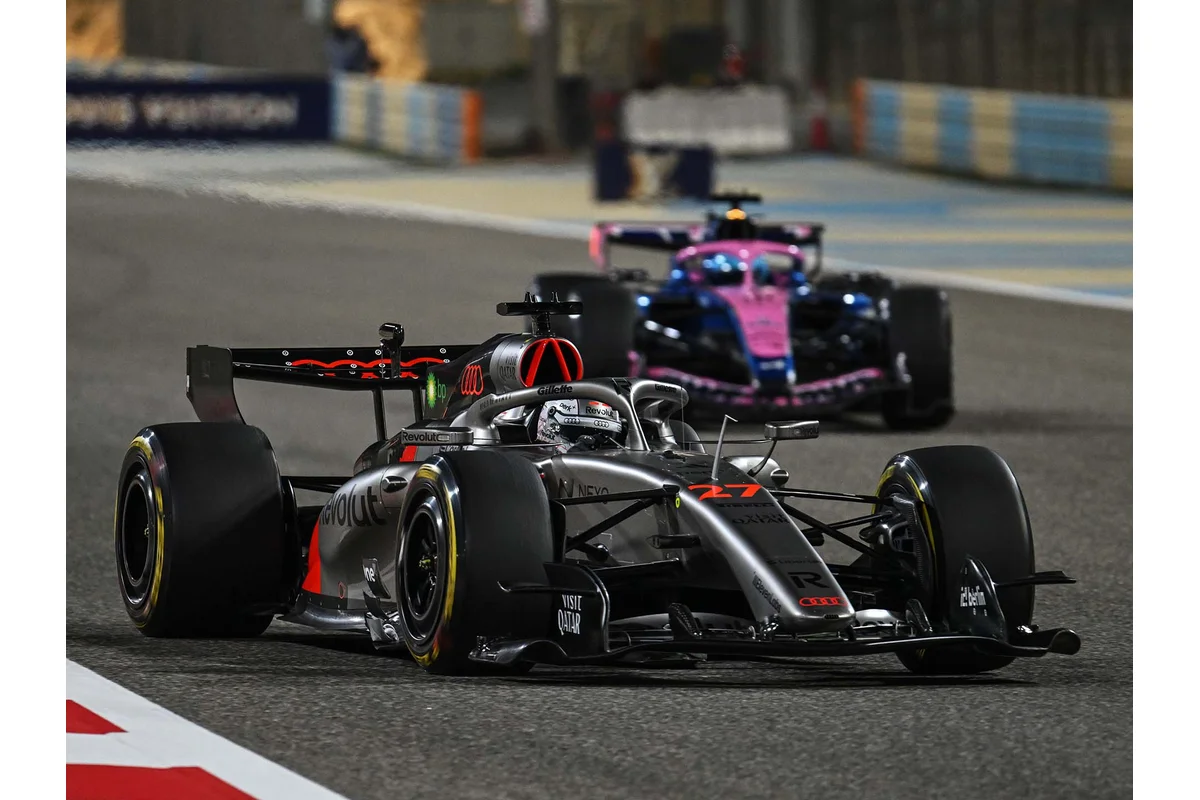
“Yesterday we were four seconds off the pace, and today we were three. We haven’t changed anything – we’ve only improved by a second and a half because we were able to get some laps in,”
Alonso said. He further added,
“We’ve had a session and a half of car development, and we’ve improved by a second and a half. That tells you the potential.”
While optimistic, Alonso acknowledged that unlocking the remaining performance will require more races and understanding of the car’s dynamics. He estimated that even with a few more events, some deficits would remain difficult to overcome.
“If we had three or four normal Grand Prix races, I think there’s still another second or so of chassis to unlock, just by running more and understanding the dynamics. But once that’s fixed, we’d still have two seconds left, which seem difficult to recover.”
Alonso remarked.
Unexpected Challenges Add Pressure on Team and Partners
On the starting grid in Melbourne, team principal Lawrence Stroll acknowledged that the issues with Honda’s battery supply and reliability came as an unforeseen setback for Aston Martin. These complications complicate the team’s strategy and may affect their competitive position in the coming races, especially in China.
Implications for Aston Martin’s Upcoming Races
The battery constraints and limited spares create a fragile situation that could force Aston Martin to prioritize longevity over aggressive race strategies. Should the batteries show any signs of malfunction during the Australian GP, the team’s priority will be to preserve their remaining units for the Chinese Grand Prix. This situation places added emphasis on Honda’s ability to increase battery production and resolve vibration issues swiftly to support Aston Martin’s ambitions for the season.
