
The 2026 Formula 1 Australian Grand Prix at Melbourne’s Albert Park Circuit marked the debut of a transformed F1 era, introducing complex new rules focusing on advanced power unit management—including enhanced battery deployment strategies and novel racing modes such as Overtake and Straight Mode. Mercedes showcased full command by securing the top two podium positions, with George Russell triumphing and teammate Kimi Antonelli following closely in second, while Ferrari’s Charles Leclerc secured third place amid intense competition and technical challenges.
Initial Reactions and Key Moments from Drivers Post-Race
George Russell, who clinched victory for Mercedes, described a demanding start to the race due to critically low battery levels, which resulted in fierce on-track duels with Charles Leclerc. Russell commended his team’s unyielding effort to achieve a one-two finish and highlighted how the strategic use of energy during straights led to a yo-yo effect in race positioning, compounded by handling issues linked to Straight Mode’s impact on front-end grip.
Kimi Antonelli admitted his poor start cost him several positions, but praised his recovery through strong overtaking maneuvers. He also acknowledged the critical role of the mechanics who swiftly resolved technical setbacks encountered during the third practice session, enabling a strong comeback on race day.
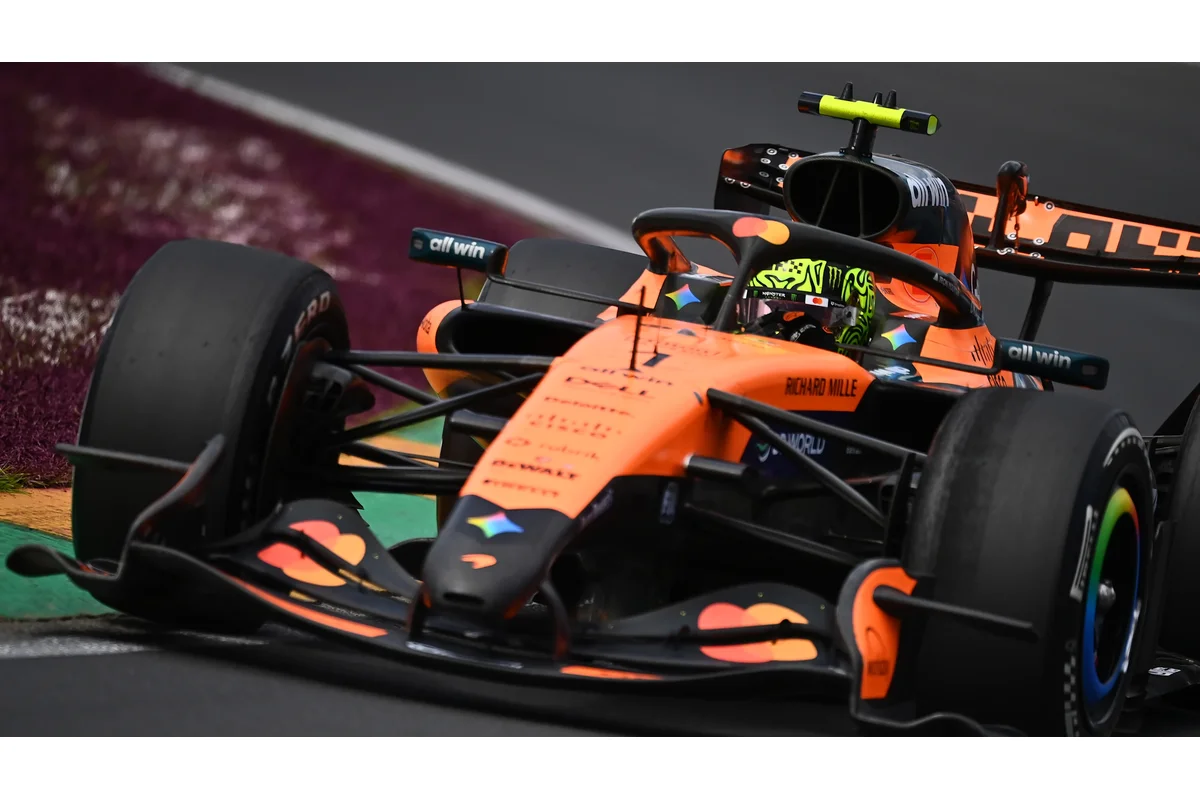
Charles Leclerc characterized the race as highly challenging, citing abrupt battery cut-offs that impaired his ability to defend position. Although he leveraged a lightning-quick start to briefly challenge Russell, Leclerc conceded that Ferrari’s race pace fell short of Mercedes’, reducing his chances of winning without the intervention of a Virtual Safety Car (VSC).
Emerging Strategic Depth in Energy and Race Management
The newly introduced regulations have significantly complicated energy management, compelling teams and drivers to adopt intricate battery deployment strategies. Drivers elaborated on the tactic of unevenly distributing 100% battery power across the four straights rather than dividing it equally. Russell noted this method created more overtaking opportunities while also making the racing dynamics unpredictable, as drivers quickly lost ground after deploying Overtake Mode boosts.
Leclerc emphasized that all drivers faced imperfect starts, largely because of depleted battery reserves and the surprise caused by a rapid lights-off sequence. Antonelli described the stress brought on by low power through critical corners, particularly the final turn, where insufficient energy delivery affected car responsiveness.
Russell expressed surprise at Mercedes’ qualifying performance but affirmed the team’s expectation of a race pace advantage over Ferrari. Leclerc acknowledged Ferrari’s encouraging closeness in race pace compared to qualifying struggles and underscored the championship’s likely determination by ongoing development and upgrades. For Russell, leading the early standings is a welcome milestone but just the beginning of a demanding season that requires improvements in starting procedures and battery usage.
Debate and Perspectives on the Overtake Button and Racing Quality
The introduction of the controversial Overtake Button sparked debate among drivers regarding its effect on racing authenticity. Russell pointed out that its impact varies by venue, noting tracks like Shanghai with long straights concentrate battery use differently than circuits like Melbourne. Antonelli praised the device for generating thrilling on-track action, particularly early in the race, while Leclerc observed it demands a more strategic mentality, as drivers must carefully weigh the costs of boost usage during overtakes.
All drivers agreed that a conclusive judgment on the Overtake Button’s influence should await further race data, emphasizing the need for patience as they adapt to the evolving regulations.
Lessons Learned and Preparations for Upcoming Circuits
Drivers and teams viewed the Melbourne GP as a crucial learning experience, especially given its unique energy management demands. Antonelli highlighted Melbourne’s complexity for battery deployment and forecasted that these lessons will be vital for managing the Sprint race format in Shanghai next week. Leclerc stressed the importance of mastering the new car elements early in the season to remain competitive, while Russell called on the FIA to reconsider the design of Straight Mode, suggesting that the aggressive front wing drop causes understeer and unsafe racing conditions, which he believes could be rectified without drawbacks.
Specific Tactical Choices and Driver Reflections on Race Events
Leclerc explained Ferrari’s conscious decision not to pit him under the Virtual Safety Car, despite the lost opportunity when the pit entry was closed. He stated no regrets over this calculated gamble, emphasizing that multiple VSCs occurred, with the team aiming to capitalize on a better-timed one. Russell responded to Lando Norris’ comments about Mercedes’ advantage by attributing their success to superior optimization rather than any external factors or complaints.
The post-race press conference revealed a united front among drivers acknowledging the increased strategic complexity involved in this new era. The importance of energy conservation and optimized battery deployment became clear as pivotal factors influencing race outcomes and overtaking opportunities.
In-Depth Remarks from Race Winners and Contenders
George Russell reflected on the race’s intensity and how the starting difficulties almost foiled his victory chances.
“I got on the grid, I saw my battery level, I had nothing in the tank, made a bad start, and then obviously had some really tight battles with Charles,”
he said. Russell praised his team’s persistence, stating,
“Thank you so much to the whole team because it’s been a long time coming to have this car beneath us and I’m, yeah, going to start off in a better way.”
Regarding the nature of competition, Russell noted,
“We had this suspicion that it was going to be a bit of a yo-yo effect, and as soon as one of us got in front it just felt impossible to hold it. And obviously with this Straight Mode we lose a lot of the front end on the car, so we’re sort of just understeering a lot around these corners.”
He acknowledged this made the racing “a bit sketchy,” but was relieved they finished one-two.
Kimi Antonelli described his rollercoaster race:
“The start was really bad and I lost a lot of pace, I mean a lot of places, and I found myself, you know, that I had to recover. But overall, it was a good race. The pace was very strong, especially at the end, and yeah, just looking forward to next week.”
He highlighted the joy of frequent overtaking and credited the mechanics’ swift repairs for enabling his comeback.
Charles Leclerc characterized the race as “very, very tricky,” especially due to the unpredictable battery cuts hampering defense. He reflected on the start,
“I think the person that is switching off the lights has been quite cheeky… It took everybody by surprise. And we’re always very much on the limit with the power units, so I think that played a little bit in our hands.”
On the possibility of winning without a Virtual Safety Car, he was candid:
“I don’t think so, but maybe I’m wrong… Mercedes maybe had a bit more pace than us today.”
Drivers’ Views on the Overtake Button and Artificial Racing Claims
Addressing criticism voiced by McLaren’s Lando Norris about the Overtake Button facilitating artificial racing, Russell advocated for patience.
“It’s different, it’s definitely different. But I think the interesting thing with these regs is every track we go to, they’re not always going to be like this… You need to give it a shot, you know…[and] see after a few more races.”
Antonelli agreed on the variability depending on circuits, saying,
“Today was much better than what we all anticipated, so I think, yeah, as George said, we need to just wait a few more races before actually commenting on this new regulation.”
Leclerc concurred, pointing out the strategic shift,
“Before, it was more about who is the bravest at braking the latest. Maybe now there’s a bit more of a strategic mind behind every move you make… It’s a different way to go about racing for sure.”
Insights Ahead of Upcoming Races and Championship Outlook
Foreseeing the challenges at Shanghai and Suzuka, Russell noted,
“I think [Melbourne] is an outlier in terms of how the battery is deployed across the lap. I don’t think it would necessarily change the order that much… but it would just change how we go racing and how much variability there is in the deployment.”
Leclerc and Antonelli emphasized that mastering energy deployment will be critical early in the season, especially with the Sprint race format’s compressed schedule and limited practice time. Antonelli stressed the “massive learning” experienced in Melbourne, advising that teams must avoid mistakes amid a high rate of development that could quickly alter the competitive landscape.
Russell requested FIA revisions to the front wing’s behavior in Straight Mode, stating,
“When we open Straight Mode we will have lots of understeer… from a safety aspect that would make the racing safer, better. I don’t see a downside of doing it.”
Strategic Decisions During the Race and Their Implications
Leclerc explained Ferrari’s decision-making regarding pit stops,
“It was a wanted and conscious choice. We thought it was better for us to maybe wait for another [VSC]. That’s always a gamble, of course… We were a little bit unlucky on that side, but it was a conscious choice again and I don’t really regret it.”
Russell dismissed suggestions of complaints regarding Mercedes’ advantage. Responding to Norris’ remarks about car drivability, Russell said,
“If he was winning, I don’t think he’d be saying the same. We weren’t happy with how stiff the cars were last year… Everyone’s always looking to themselves and we’re all selfish in this regard.”
He noted Mercedes’ superior optimization following engine parity with McLaren and others, producing a competitive edge.
Significance of the 2026 Australian Grand Prix in Setting the Season’s Tone
This inaugural race of the 2026 Formula 1 season underscored the sport’s evolution towards more sophisticated strategic management, with energy deployment and battery conservation taking center stage. Mercedes’ ability to exploit these elements at Albert Park translated into a commanding one-two finish, though the close competition from Ferrari hinted at ongoing battles ahead.
The drivers’ reflections highlighted the complex learning curve teams face in interpreting and optimizing the new regulations, while conversations about the Overtake Button showcased divided opinions on balancing racing spectacle with sporting integrity.
Looking forward, the insights gained in Melbourne will shape preparations for upcoming circuits, particularly Shanghai, where different track characteristics will demand adaptive strategies. The championship’s competitive narrative is poised to revolve around which teams can master the balance of power, battery management, and tactical acumen under a rapidly developing technical framework.
