
On Saturday, March 7, 2026, Brad Keselowski, driving the No. 6 Consumer Cellular Ford Mustang Dark Horse, appeared at the Phoenix Raceway infield media center to discuss his performance this season and expectations for the upcoming race. Currently ranked 12th in the NASCAR Cup Series standings, Keselowski addressed a range of topics including equipment choices, recovery from injury, and the evolving championship format. The focus keyword “Brad Keselowski Phoenix Raceway” naturally applies as he prepares for this crucial stage of the season.
Managing Cool Shirt Use and Performance Balancing in Racing
Keselowski explained how his team approaches decisions about wearing cool shirts during races, a topic that has drawn attention since the Austin race. He emphasized the autonomy given to individual teams to determine if they want to use cooling gear, adding that engineering support is provided to ensure safety and performance. He acknowledged the challenges these cooling suits pose, particularly their safety risks and reliability issues under racing conditions. Keselowski noted a past incident when the team had to adjust after a cooling system failure and stated that all teams are actively seeking a better solution, but no perfect fix has been found yet. This highlights a technical challenge unique to the current Cup Series environment.
“Our group, we let the teams have that autonomy of what they want to run, so if the driver wants to run a cool shirt, he runs a cool shirt and we try to provide the necessary engineering support to make sure that there isn’t an issue. I had one last year where we probably didn’t do a good enough job with that and we came back in and buttoned it up. Cool suits are a tough thing because they’re not designed in our environment to fail to safe, so when they fail, it’s fairly devastating and occasionally those things are gonna happen. It’s unfortunate when it happens to anyone, not just our team. There’s a solve that’s being worked on for all the different teams, but nothing seems to have been bulletproof yet. It’s one of the nuances of currently racing in the Cup Series.” – Brad Keselowski, NASCAR Cup Series Driver
Decision to Stay Behind the Wheel Instead of Substituting Joey Hand
During the recent race weekend, Keselowski had the option to be replaced by driver Joey Hand as a fail-safe plan aimed at securing good points. However, he chose to remain in the No. 6 car, confident in his competitive capability. Keselowski explained that while Hand is a skilled driver, swapping drivers midweekend involves challenges like adjusting to a non-fitted car and restarting at the back of the field, which could hinder team progress. Ultimately, Keselowski’s decision was based on his belief that he could push the car to its limits and help the team earn the best possible outcome.
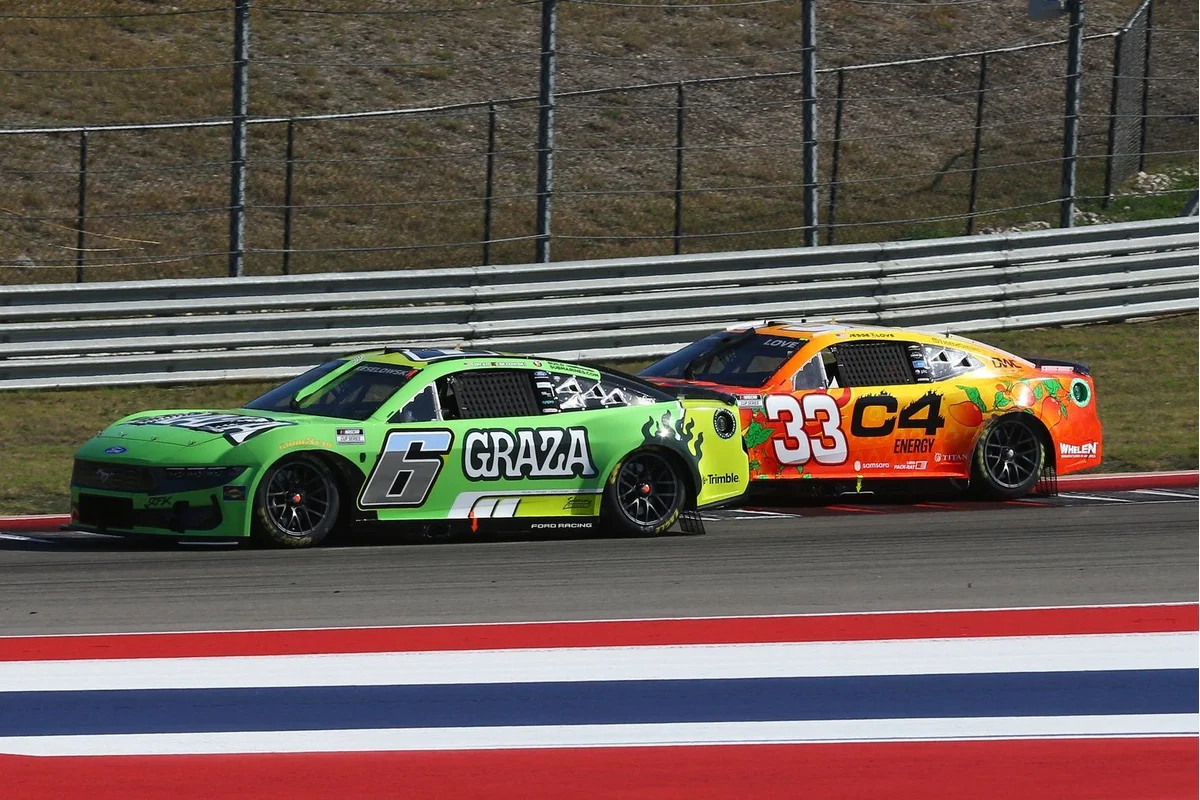
“Well, Joey was a fail safe in case I wasn’t able to run the race, where if I felt I couldn’t be competitive. In the car, I felt competitive. I felt like I could drive it to its limits and any change was just gonna put us further back, not because Joey isn’t a good driver, but by the time you execute a change and go to the back of the pack and do all those things and he can re-acclimate in a car that’s not made for him, not fitted for him, etc, that’s a lot to ask of somebody. If I felt like I was holding the team back, I would have made a change, but I didn’t feel that way.” – Brad Keselowski, NASCAR Cup Series Driver
Keepsake Reflections on the Full Speed Show Coverage and the Sport’s Media Growth
Asked about his thoughts on the recent documentary series “Full Speed Show,” Keselowski shared his appreciation for the expanded media coverage of NASCAR. Though he had not yet viewed the entire series due to his busy schedule, he praised the sport’s willingness to balance transparency and protect its image. He noted how teams and sponsors have become more open to innovative media projects, and he credits Amazon’s significant investment and encompassing promotional efforts for enhancing the sport’s visibility and engagement.
“I watched a few clips. I can’t say I’ve seen the entire thing. I think it just came out a day or two ago and I’ve been pretty jammed up, but that said, it’s great that this sport has that level of coverage. I think when I started in the Cup Series the teams and the sponsors were really, really protective around doing things like that, but the industry has found a way to get the teams in a better place and the different producers have over the years been more accommodating as well to making sure we don’t put things in there that embarrass ourselves or the sport, so I think that we’ve found a nice balance. I’m really proud of the sport for being able to put those types of things together, and I think Amazon as a whole, what they’ve brought to our sport, in my eyes at least, is underappreciated. They’ve put a big investment in the sport. They’re promoting really hard with not just the races that they cover, but the things they do outside of covering the races to cover the sport, so it’s refreshing to see that level of engagement.” – Brad Keselowski, NASCAR Cup Series Driver
Sharing Race Weekends with IndyCar and Reflecting on Past IndyCar Experience
Keselowski was asked how he enjoys sharing race weekends with the IndyCar Series and whether he has any intentions to return to IndyCar racing. He revealed that a test drive of an IndyCar at Road America nearly a decade ago left a lasting positive impression. However, cross-series participation poses difficulties due to manufacturer affiliations, as his current Cup Series manufacturer does not compete in IndyCar. He acknowledges that his opportunity to switch has likely passed, though he remains appreciative of that part of his racing past.
“I tested an IndyCar at Road America about 10 years ago and I loved it. I had a lot of fun. What’s really, really difficult is that all of my time in Cup I’ve never been with a manufacturer in the Cup Series that competes in the IndyCar Series and to go back and forth between the two is considerable pain for the OEMs that is tough to justify. I think that window for me has probably come and gone. There was a time where I was very, very interested, but life takes us in other places and I’m not complaining.” – Brad Keselowski, NASCAR Cup Series Driver
Adjusting Strategies Now That Phoenix No Longer Hosts the Championship Finale
Keselowski reflected on how the decision to move the NASCAR championship race away from Phoenix has influenced preparations for the weekend. He expressed strong support for the 2026 points format, which rewards each race as essentially a championship event, with bonus points for race winners adding strategic weight to every contest. He praised Tyler Reddick’s early string of victories as significant both for the difficulty and its impact on championship contention. For Keselowski and many teams, Phoenix now represents the real start of a traditional regular season, with a track that demands a focus on speed, pit execution, and race strategy — core components of the season ahead.
“One of the things that I really like about the format that we have switched to for 2026 is every race is kind of a championship race. The way the points stack up, significantly with a bonus to the winner. That has large ramifications to how the championship is gonna play out. Tyler Reddick winning the first three races is not just huge in the sense of how hard that is to achieve, it’s huge in the sense of the ramifications it has for him for being a real contender for the championship because of the extra bonus points that are offered. The structure of last year’s points, honestly, him winning the first three races was not super meaningful to the playoffs or to the championship. It was just a nice stat to have, so I look at this format and what it’s intended to do. It’s intended to make every race a big race and, for us specifically, this is what I think most of the teams would tell you is the start of the regular season. It’s more of a traditional racetrack and more of what we’re going to see. It values the things that most of the races from here on out are going to value, whether that’s speed in the race car, tactics by the driver, execution by the pit crew, or strategy by the crew chiefs. Those four elements are more represented here than they are the first three weeks of the season and more representative of the challenges we’re gonna have throughout the rest of the year.” – Brad Keselowski, NASCAR Cup Series Driver
Recovery Progress Following Physically Demanding Early Season Races
Keselowski detailed his physical recovery, which he describes as progressing faster than expected after an injury requiring a six to twelve-month rehab period. He shared that he has reached milestones like walking without a cane and continues to build strength. Despite some discomfort from the vibration and physical demands of driving, Keselowski emphasized that racing keeps him motivated to maintain his rehabilitation efforts. He acknowledged the challenge of balancing recovery with the wear of race weekends but underscored his determination to manage the physical toll and remain competitive.
“Really well. This is supposed to be a six to 12 month recovery and I’m on track to do it in three to four, which is great. I was just saying to my team when I was coming here that I got out of the motorhome and took my first three or four steps without a cane. I’m like, ‘I’m almost ready to be rid of this thing.’ Mentally, I’m ready to be rid of it, but physically I’m not. It feels good. Yes, driving the car is not the best thing for me in some ways, whether it be the vibration or the loads or just the movements to get in and out, but once I’m in the car I feel reasonable. I can’t say it’s the best I’ve ever felt, but I feel reasonable. There are little setbacks that come from driving the car with dehydration or just the workload in general, but with a day or two of recovery I’ve been able to come back even stronger each of the three races we’ve had so far. I’m really happy just staying the course and putting the work in and dealing with the pain. In some ways, it’s good for me because it provides the motivation to put the work in to do the rehab at a really high level and I think that’s been really good for me.” – Brad Keselowski, NASCAR Cup Series Driver
Comparing Current Standings with Last Season’s and Team Evolution
When asked about the irony of his current points position given ongoing health challenges, Keselowski clarified that last year’s slow start was due to multiple factors including bad luck and major team changes. He emphasized that rebuilding the team from 2024 to 2025 was a significant transition. Now with the roster and operations settled, he believes his team is well-positioned to become a serious contender for victories and championships in 2026.
“Certainly from the outside-in it could appear that way, but I would say that the start of last year was not very good for the 6 team and there was a lot of reasons for that. Some of it was poor luck and some of it was just poor execution. We turned over pretty much the entire team from ‘24 to ‘25 and that was a big transition. Now, the team has got its legs underneath it and I think it can position itself to be a contender.” – Brad Keselowski, NASCAR Cup Series Driver
Michael Jordan’s Impact on NASCAR as a Team Owner
Keselowski praised Michael Jordan’s involvement as a team owner who has recently led his team to three straight wins. He highlighted Jordan’s consistent presence at race events and credited him with positively influencing the sport. Keselowski noted how essential it is for key stakeholders, including team owners and executives, to be physically present and deeply engaged despite the demanding nature of the sport. He admired Jordan’s commitment, especially given the slim odds of winning and the emotional challenges of competing. Keselowski views Jordan’s participation and the brand recognition he brings as valuable assets for NASCAR’s growth and popularity.
“Yeah. It’s hard to argue against Michael having a positive influence on the sport. I love the fact that he’s so engaged and at the races. I just can’t emphasize enough how important that is, not just for Michael, but for any of the key stakeholders to just have a physical presence at the racetrack, and that’s at all levels, not just the team level. So, for him to have a physical presence, I think it’s a testament to his fortitude for being a part of this sport because, let’s face it, even though he’s won the first three races, he’s lost a lot more as every car owner will. It’s not a dig on him. If I’m a guy like him, personally, and I wake up and say, ‘Where do I want to be today,’ and I know that I have less than a 10 percent chance of winning, flying my butt all across the country when I have all the things that Michael has is probably something that takes me a minute to emotionally justify, but he does. I’ll give him a lot of respect and credit for that because this sport is a grind, not just for the people that work in it, but also for the key stakeholders, whether it be team owners, executives, etc. He’s made the decision and choice to participate at a high level to be engaged. The fringe benefit for the sport is the brand that he has outside of it, which naturally comes with him, which I think is a great thing. I’m happy for him. I’m happy for the sport. It’s hard for me to see any negatives. I’m sure there are probably some out there, but I don’t see them and I’m genuinely happy that he’s a part of our sport.” – Brad Keselowski, NASCAR Cup Series Driver
Looking Ahead: Keselowski’s Outlook on the Remainder of the Season
As Keselowski prepares for the Phoenix Raceway event, the evolving points system and competitive field set the stage for a dynamic season. His comments reflect the intensity and pressure drivers face while coping with physical recovery and team demands. With strategic races now carrying championship weight, every event demands peak performance from drivers, crews, and manufacturers alike. Keselowski’s resilience and team’s preparedness position them as serious contenders moving forward.
This upcoming showdown at Phoenix Raceway also underscores the shifting NASCAR landscape, where longstanding championship venues have changed, and manufacturers like Ford and Chevrolet strive for supremacy. For Keselowski, balancing injury recovery, technical challenges like cooling systems, and team strategy will be critical in navigating both the heats of individual races and the marathon of the championship season. Fans and enthusiasts alike will be watching closely to see how he capitalizes on the momentum and adapts to the pressures driving the 2026 NASCAR Cup Series.
