
Brad Keselowski, the 2012 NASCAR Cup Series champion and co-owner of RFK Racing, recently challenged NASCAR’s increasing focus on road course events during an interview with SpeedFreaks. He questioned the business rationale behind adding more road courses to the Cup Series schedule, citing issues relevant to fan interest and sponsorship challenges.
Keselowski highlighted that road course races generally attract fewer attendees and deliver lower television ratings, which complicates efforts to secure sponsorships. His viewpoint emerges amid ongoing discussions about balancing fan engagement with commercial viability in NASCAR’s evolving calendar.
Business Perspective Highlights Challenges with Road Course Events
Speaking as a team owner, Keselowski commented,
I just put on my business owner hat. I don’t understand why the sport wants to run so many road courses.
He explained that sponsors are less willing to invest in races with diminished audience sizes, impacting the financial health of teams and the sport as a whole.
Keselowski stressed the importance of aligning the schedule with market demand, saying,
That doesn’t make sense to me. We should be going to places where sponsors want to be, where fans want to be, and where TV gets the best ratings,
underscoring the misalignment he sees in expanding road course events.
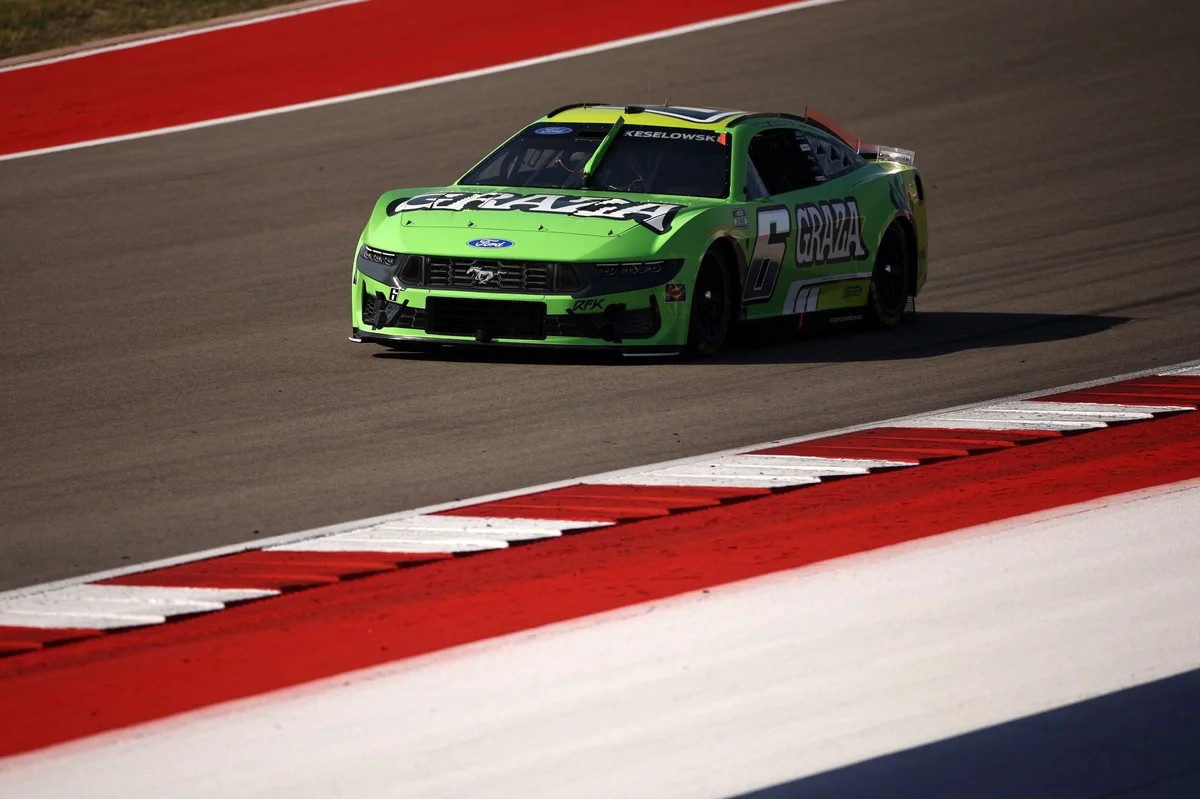
He further added,
Road courses have historically been the worst in all of those categories. So I don’t feel any obligation to that,
signaling his strong stance against increasing the number of road course races without meaningful support from key stakeholders.
Diverse Fan Reactions to Keselowski’s Comments
The remarks sparked a range of responses from NASCAR fans on social media, reflecting divided opinions about road course races. Matthew Bruner offered his perspective:
I like road courses; they’re fun to watch. Brad is not the best at road courses, so we shouldn’t be surprised he’d prefer fewer.
Joshua Reynold proposed a balanced solution, stating,
My proposal has been Watkins Glen, Sonoma, one street course, and one rotating road course. A lot of fans agree with Keselowski, probably the majority, especially older fans. I think younger fans are more receptive to road courses. Personally, I believe four is a perfect balance. Two is too few, but last year’s six was too many.
D.L. Duggan spoke on the viewership and sponsorship concerns with road courses, saying,
Whether or not he’s factually correct on viewership, he’s right about sponsorship and fan attendance. By and large, road course races, there are a few exceptions, are BORING,
expressing criticism of the racing style associated with these events.
Conversely, Maui James voiced enthusiasm for road courses:
I wish every race were a road course. Or even better, have a separate championship for road courses, then a playoff including both divisions at the end, like Supercross and Motocross.
Brian Twining disagreed with reducing road course events, adding,
Absolutely NOT. Including even four road courses like this year, and sometimes six like last, opens the door for more racers to potentially get into NASCAR. It also introduces the sport to fans who might not have otherwise seen it. They’re not constructing ovals for one of the races.
Current Schedule and Future Implications for NASCAR Road Races
For the 2024 season, NASCAR has reduced the number of non-oval points events to four, including three road courses and one street course, down from six in 2023. The Charlotte Roval was removed after feedback from fans criticized the format.
While some purists argue that NASCAR should emphasize traditional oval tracks, others acknowledge strong viewership for select road courses. For instance, the race at Circuit of the Americas drew 4.13 million viewers last year, demonstrating significant fan interest in certain road events.
Keselowski’s call for trimming back road course races highlights ongoing tensions between maintaining NASCAR’s heritage and appealing to broader audiences, sponsors, and team owners. The debate is likely to influence future scheduling decisions, with NASCAR balancing its roots with evolving fan preferences and commercial realities.
Do you agree with @keselowski on the amount of road courses on the #NASCAR schedule? pic.twitter.com/6o8NA7Hybk
— SpeedFreaks (@SpeedFreaks) March 2, 2026
I like road courses they’re fun to watch
Brad is not the best at road courses
So we shouldn’t be surprised he’d prefer less road courses https://t.co/kNT5AT7PML
— Matthew Bruner (@Matthew__Bruner) March 3, 2026
My proposal has been Watkins Glen, Sonoma, one street course, and one rotating road course. Though, a lot of fans agree with Keselowski. Probably the majority. Almost certainly the majority of older fans. I think younger fans are more receptive to road courses though. I…
— Joshua Reynolds (@theJoshRey) March 2, 2026
Whether or not he is factually correct on viewership, he’s right about sponsorship and fan attendance. And by and large, road course races (there are a few exceptions) are BORING.
— D.L. Duggan (@WHODATDuggDat) March 3, 2026
I wish every race was a road course. Or even better a separate championship for road course then a playoff including both divisions in the end like Supercross and Motocross.
— Maui James (@jhg01234) March 2, 2026
Absolutely NOT. Including even 4 RCs like this year, and sometimes 6 like last, opens the door for so many more racers to potentially get into NASCAR, as well as introducing the sport to fans who would never have seen it otherwise. They're not constructing ovals for one of races
— brian twining (@Brian_Twining) March 3, 2026
