
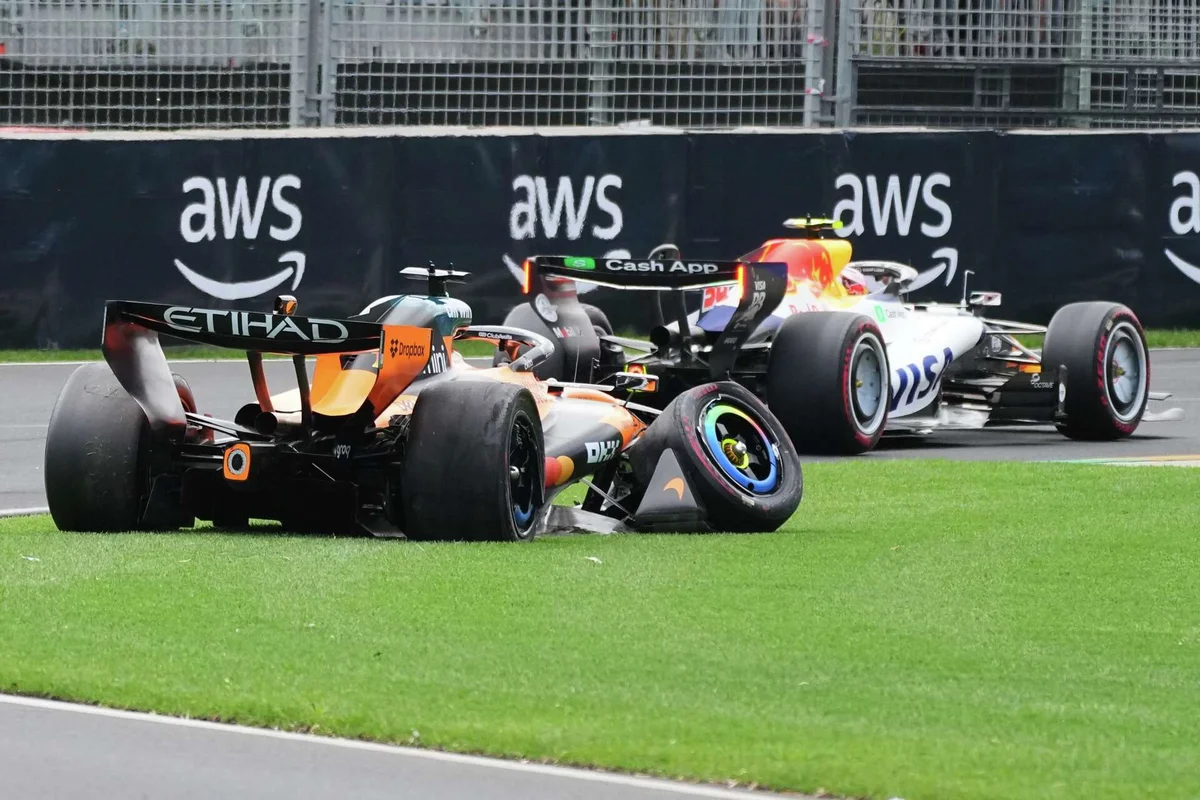
Max Verstappen, driving for Red Bull Racing, climbed from the back of the grid to secure sixth place at the Australian Grand Prix, collecting eight points despite a difficult weekend. His qualifying attempt ended abruptly after he spun off before the first chicane, crashing into the barriers on his initial flying lap. This incident significantly affected his starting position, but Verstappen showed resilience throughout the race.
Although Verstappen posted the fastest lap of the event, he faced several obstacles, including an engine-related problem that caused his rear brakes to lock unexpectedly, leading to the crash. His teammate, Isack Hadjar, demonstrated the car’s potential with a strong qualifying performance, achieving third on the grid. However, Hadjar’s race was cut short due to engine failure on lap 10, resulting in an early exit and ending hopes for a podium finish.
Martin Brundle Voices Concern Over Red Bull’s Explanation of Verstappen’s Incident
Before the race, former drivers Martin Brundle and Jenson Button discussed Verstappen’s crash on Sky Sports F1. Button described the situation as a sudden rear brake lock that the driver could do nothing to avoid. He said,
“It’s like it’s just locked the rears solid and thrown him into the gravel. In that moment, the driver can’t do anything.”
Brundle later expressed unease about the unclear cause behind the crash after engaging with Red Bull representatives, who admitted uncertainty regarding the exact failure. He explained,
“Speaking to Red Bull this morning, saying, can you tell us so we can explain to the audience what happened. They went, ‘We’re not really sure yet,’ which is quite worrying.”
Brundle speculated that the issue might involve a combination of brake-by-wire systems, downshifting complications, and aerodynamic factors. He highlighted that the team has not pinpointed a resolution, but confirmed Verstappen would start from the grid in future races, as the team recognizes the potential variability in race starts.
“Max will start from the grid, he will not start from the pit lane because I think he knows that with the variabilities with the starts, it’s not out of the question that he could be P12 by the end of the first lap.”
Race Developments: Verstappen’s Progress and Hadjar’s Setback in Melbourne
The Australian Grand Prix brought mixed results for Red Bull Racing. Verstappen recovered by gaining 14 positions to finish sixth, an impressive comeback considering his poor qualifying. Meanwhile, Hadjar, who had shown promise with his front-row qualification, lost ground early in the race due to intense competition. Battle with Racing Bulls rookie Isack Hadjar and mechanical issues culminated in Hadjar’s engine failing on lap 10, ending his race prematurely.
Red Bull had hoped Verstappen would extend his contract while adapting to Formula 1’s new car regulations and racing style. Despite Verstappen’s best efforts to finish strongly, he admitted dissatisfaction with his overall race performance and the car’s capabilities compared to key rivals such as Mercedes.
Reflecting on his performance to Sky Sports, Verstappen said,
“No, not really [I didn’t enjoy it]. The overtakes were fun, but I’m also racing cars that are two seconds slower.”
He added,
“For me, it’s just clearing the traffic, it sounds maybe weird, but it’s just how I see it, it’s not really a fair fight.”
Verstappen described the challenge of managing tyre degradation, which heavily affected his race rhythm and pace.
“We had too much degradation, and we were just really graining a lot on the tyres and that then compromised a lot on the rest of the race.”
He noted the hard compound tyres, expected to perform better, did not deliver as anticipated:
“We talked about the hard compounds being better today for us, but that compound somehow didn’t work today.”
Implications of Verstappen’s Performance and Red Bull’s Uncertain Technical Troubles
Max Verstappen’s comeback drive in Melbourne underlines his determination but also highlights the difficulties Red Bull Racing faces adapting to changes in Formula 1’s technical landscape. The vague explanation from the team regarding the crash raises questions about reliability and communication transparency, causing concern among experts like Martin Brundle. Verstappen’s frustrations with tyre wear and race pace on the new cars suggest that Red Bull must find technical improvements to contend more effectively with rivals, particularly Mercedes.
Looking ahead, Verstappen’s ability to recover from setbacks and the team’s quick resolution of brake and engine issues will play a crucial role in maintaining competitiveness throughout the season. As the Australian GP demonstrated, even top drivers and teams can face unforeseen challenges that require both technical refinement and strategic adaptation.
