
Charles Leclerc has pointed to his own mistakes rather than Ferrari’s race strategy as the key reason for his difficult outing at the Canadian Grand Prix. Despite starting well behind, the Monegasque driver finished fifth at the Circuit Gilles Villeneuve, improving three positions from his grid slot, but still fell short of his expectations.
Starting on hard tires, Leclerc remained competitive and stayed within striking distance of McLaren’s Lando Norris. At one point during the race, Leclerc even led briefly and proposed to Ferrari that a one-stop pit strategy would be better suited for his race. However, the team stuck with a two-stop approach, calling him in several laps after Norris’s second stop. Upon rejoining, Leclerc fell more than 10 seconds behind Norris’s teammate, Oscar Piastri, eventually settling into sixth, until an incident between Norris and Piastri altered the order.
Reflecting afterward, Leclerc attributed much of the struggle to a mistake he made during qualifying. He ran wide shortly after recording the fastest time in the first sector, which forced him to start further back than desired in the Montreal race.
“Honestly, I think today is kind of the result of my mistakes,”
Leclerc admitted. “FP1, Qualifying, the traffic… all in all I think that puts us a little bit in a difficult situation because we start further back on the grid.”
Regarding the team’s approach to strategy, Leclerc acknowledged the difference of opinion between himself and Ferrari. While he believed a single pit stop could have been effective, the team insisted on two stops, citing better information on their side.
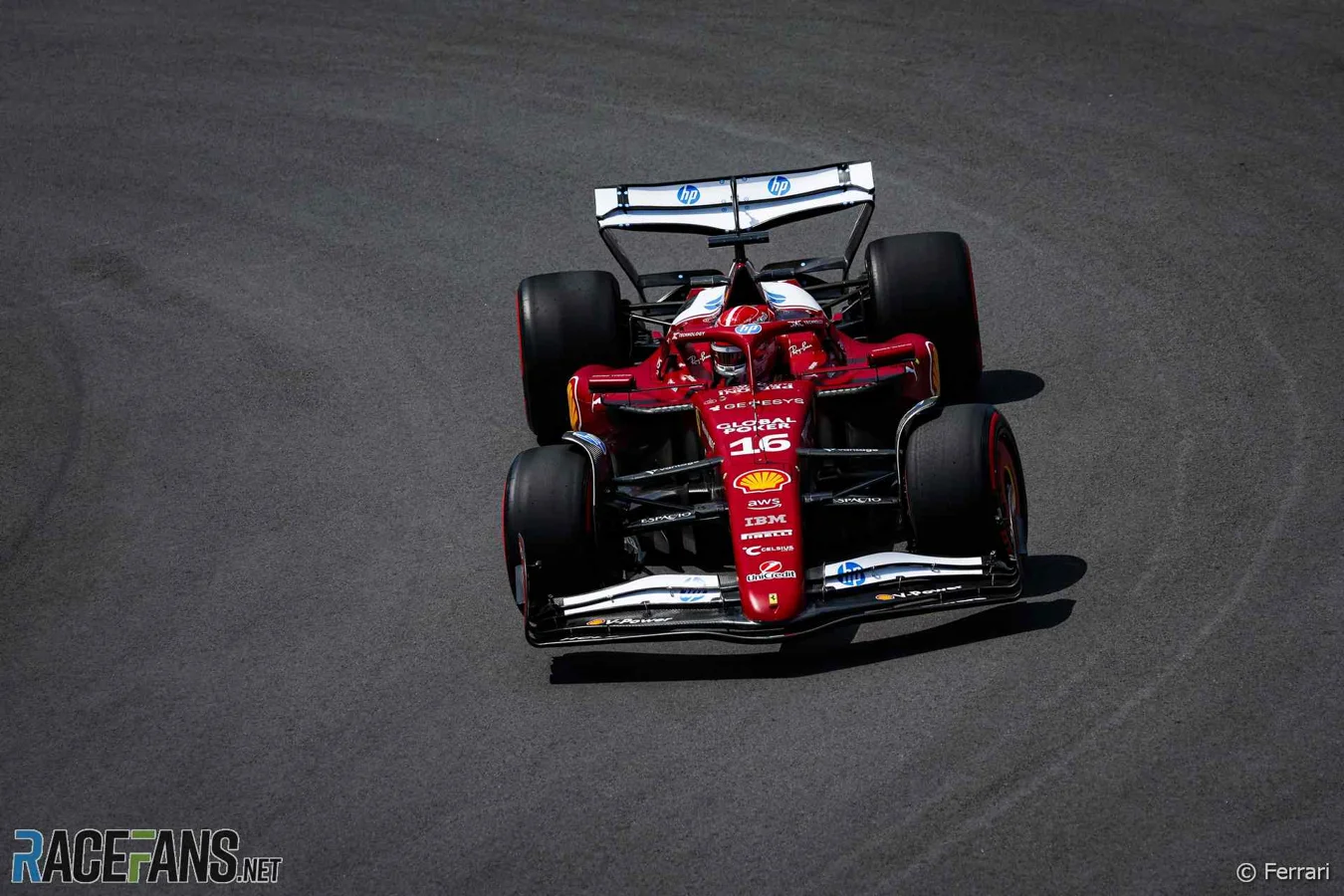
“I wanted to make it clear that this was not what I was thinking, but I understand. I will speak with the team and I’ll explain to them what I saw that made me think that this was the wrong choice. Overall, I don’t think that this has completely changed our race result. Eventually that’s where we deserved to finish.”
Impact of Early Practice Crash and Strategy Decisions
Leclerc’s weekend at Montreal began poorly when he crashed his Ferrari during the first practice session. Attempting to cut the Turn 3-4 chicane, he ran wide and hit the barrier on the left-hand side with enough force to cause major damage. The incident necessitated a replacement of the survival cell on his SF-25 car and forced him to miss the second practice session as well.
Despite missing the majority of Friday’s running, Leclerc believes this setback did not significantly harm his race prospects.
“The pace was pretty strong. I think the starting position was just very difficult to deal with because then you’ve got to overtake and it makes everything difficult. I don’t think FP1 hurt our weekend that much.”
This assessment underlines Leclerc’s focus on his qualifying performance and the race circumstances rather than the lack of track time as the main contributors to his challenging race day.
Race Dynamics and What Lies Ahead for Leclerc and Ferrari
Throughout the Canadian GP, Leclerc showed resilience by gaining positions and pushing McLaren drivers Norris and Piastri. Yet, the combination of starting position and strategic split with Ferrari limited his ability to vie for a podium finish. The debate over pit stop strategy illustrates ongoing challenges within Ferrari’s race decision-making process, at least from the driver’s viewpoint.
Looking forward, Leclerc’s intent to discuss his perspective on the strategy with his team hints at internal efforts to optimize race tactics. Meanwhile, the demanding Circuit Gilles Villeneuve and its high-speed chicanes remain a test for drivers, as seen by Leclerc’s early-practice crash and qualifying error.
How Ferrari balances driver feedback with strategic calls will likely influence their competitiveness in upcoming races as Leclerc seeks to translate his speed into stronger results despite the pressure of mistakes and team disagreements.
