
Connor Zilisch has voiced his appreciation for FOX’s updated NASCAR broadcast after the network removed the disputed SMT throttle graphics, which he had previously criticized. The change, noticed during recent races including the O’Reilly and Truck Series events at Atlanta, reflects FOX’s responsiveness to Zilisch’s concerns about the accuracy of their telemetry visuals.
Zilisch highlighted that the problematic graphics were based on GPS data and not correctly calibrated to the throttle positions in the NASCAR O’Reilly Auto Parts Series (NOAPS) or the Truck Series. This discrepancy had fueled his critical remarks about the broadcast’s presentation quality in the past.
Zilisch Reflects on the Broadcast Adjustment and Its Importance
Prior to the Atlanta race, Zilisch addressed the issue of FOX’s use of throttle percentage graphics and acknowledged his relief at their removal.
“I was watching the broadcast yesterday, and they didn’t have the throttle percentage. I don’t know if they listened to me or if that’s just coincidence. Yeah, I had to speak my mind at that time. Because I feel like that’s been a thing for years now, and it’s—every time I see it, it’s like, ‘Come on, what are we doing?’”
he remarked.
This statement underlines Zilisch’s frustration with the long-standing use of inaccurate throttle data, which undermined the fans’ broadcast experience. His outspokenness seems to have motivated FOX to remove the misleading graphic, enhancing the broadcast’s credibility and transparency.
Technical Missteps in Telemetry Graphics Explained
Zilisch elaborated on why the SMT throttle telemetry was misleading, pointing out its reliance on GPS data rather than engine throttle positions that vary by series. He also criticized remarks made by Kevin Harvick about throttle usage, revealing lingering doubts about technical accuracy. Harvick had claimed that Ford drivers utilize only 90% throttle during races, a statement left unexplained by both Harvick and Ford.
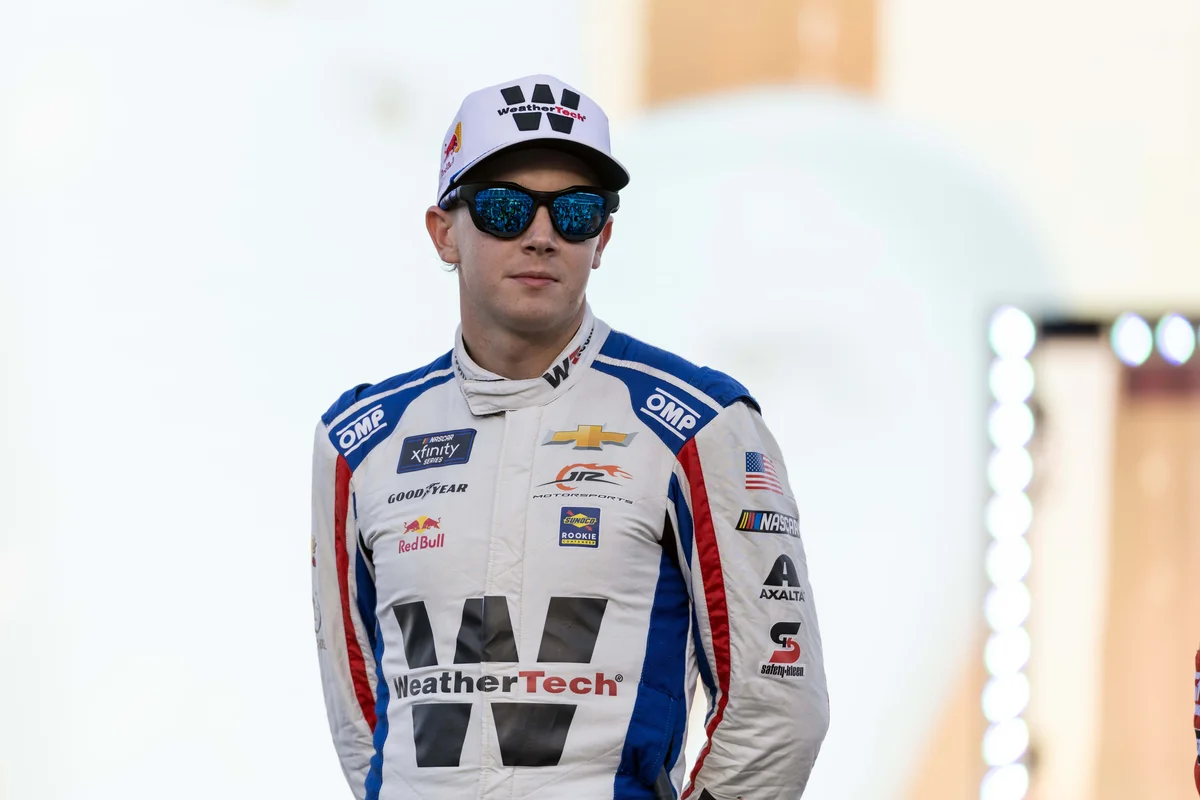
Despite his sarcasm directed at that claim, Zilisch remains focused on his growth in the Cup Series, aiming to improve through experience rather than be sidetracked by extraneous controversies.
Progress and Challenges in Zilisch’s NASCAR Career
Reflecting on his progression, Zilisch expressed mixed emotions about his performances so far. He noted some solid runs but was candid about struggles with car handling, especially in his early season races.
“I am excited to get the year going with all of them. I definitely do think I was able to have a decent run before it went downhill. I wasn’t happiest with how my car was driving. We definitely struggled a little bit to get going and handle it well.”
Far from discouraged, he embraced the learning curve despite setbacks, emphasizing the value of gaining experience.
“It had a lot of good speed, but it just didn’t drive as well as I hoped it would have. But I think it’s good to get that experience running up front and just figuring things out on the fly. I am excited to continue to build on that this weekend in Atlanta and hope for a better finish.”
Approach to Atlanta Race Focused on Learning, Not Just Competition
Veteran drivers have underscored Atlanta’s distinct challenges, particularly when compared to more straightforward superspeedways where draft and high speeds dominate. Despite this, Zilisch intends to tackle Atlanta similarly to other tracks, leveraging each race as a chance to refine his skills. With limited NASCAR experience, he views every track, regardless of length or layout, as a valuable opportunity for growth.
“EchoPark is definitely unique, but for me, who is someone with not a lot of experience, it’s definitely helpful coming to a place like this again. I learned the runs and how they’re built and just how the cars drive and draft and the things you have to look for. For me, who is learning every race, it definitely helps no matter where I go,”
he said.
Ross Chastain’s Controversial Move Impacts Atlanta NOAPS Race Outcome
During the NOAPS race at Atlanta, a decisive moment involving Ross Chastain sparked tension between drivers. Austin Hill, who was close to winning, was bumped by Chastain late in the race, sending him into a slide. This incident allowed Sheldon Creed to seize the lead and ultimately claim victory at the event.
Following the race, Hill expressed his frustration over the contact.
“When Ross is behind you, I expect to get put firewall deep in the wall. I mean, that’s just the things he does. So unfortunate, but what about that save, though? The save was, like, just insane.”
Hill was relieved to avoid a crash, salvaging a 12th-place finish after recovering from the bump.
“I could have very easily ended up hitting the wall head-on but was able to save it and salvage a 12th-place finish. So, all in all, it was awesome,”
Hill added.
Chastain Defends His Actions as Racing Incident, Not a Mistake
Ross Chastain declined to accept blame for the collision, characterizing the event as a typical racing incident. He explained,
“If I would have went to his right rear, I think I would have had to lift out of [the gas], versus going to the bottom, I’d have been wide open. Coming to the checkered, I pulled out of line and he chased me down. I don’t blame him. I believe it’s a racing crash. It’s not an accident. We crashed. But yes, it was racing.”
Maintaining a professional rapport despite the collision, Chastain joked about seeing Hill off the track,
“I’ll see him in the gym on Monday, so we’ll be on the treadmill side-by-side going through a Chevy workout.”
Significance of Broadcast Accuracy and NASCAR Relationships
The adjustment by FOX to omit inaccurate throttle graphics demonstrates a willingness to improve broadcast authenticity, which benefits both drivers and fans. Connor Zilisch’s vocal criticism and subsequent appreciation affirm the importance of honest, accurate data in sports broadcasting. This change also suggests that networks are starting to better align their technical presentations with the realities of the race cars and series.
Meanwhile, the competitive dynamics between drivers like Zilisch, Hill, and Chastain continue to shape narratives within NASCAR, highlighting the tension and split-second decisions inherent in the sport. How these incidents and broadcast standards evolve will likely influence fan perceptions and driver interactions as the season progresses.
"I was watching the broadcast yesterday and they didn't have the throttle percentage, so maybe they listened."@ConnorZilisch on FOX broadcast throttle percentage telemetry. #NASCAR
Presenting Partner: @MyPlaceHotels pic.twitter.com/2O922AuyBW
— Frontstretch (@Frontstretch) February 21, 2026
Sheldon Creed wins the OReilly Race at Atlanta!
— ThePitStop (@ThePitStopTalk) February 22, 2026
