
The Straight Talk Wireless 500 held at Phoenix Raceway on March 8, 2026, was marked by numerous right-front tire failures affecting multiple drivers. Throughout the 312-lap NASCAR Cup Series event, these tire blowouts forced drivers to either crash into the outside wall or slow down suddenly to make pit stops, creating continuous interruptions in the race.
Race officials issued 12 caution flags covering 86 laps, many of which were due to tire issues occurring during long stretches of green-flag racing. After the event, Joe Gibbs Racing’s Denny Hamlin spoke out about the ongoing tire troubles, attributing much of the cause to team decisions regarding vehicle setup.
Denny Hamlin Cites Team Strategy for Tire Failures
On the Actions Detrimental podcast, Hamlin explained that teams often push the boundaries of their setups to extract better speed during extended stints. He highlighted how lowering tire pressure is a known method to improve speed on long runs, but it also raises the chances of a tire failure.
It’s the teams. We’re just pushing it. We certainly know that the lower the air pressure, the faster you’re going to be on the long run, and these teams just keep pushing it. So what they do is they get somewhat comfortable in practice, they run the first run of the race, see where things are. Then all of a sudden they’re like, ‘Alright, well, let me take another tenth or two out of the tire.’
– Denny Hamlin, NASCAR Driver
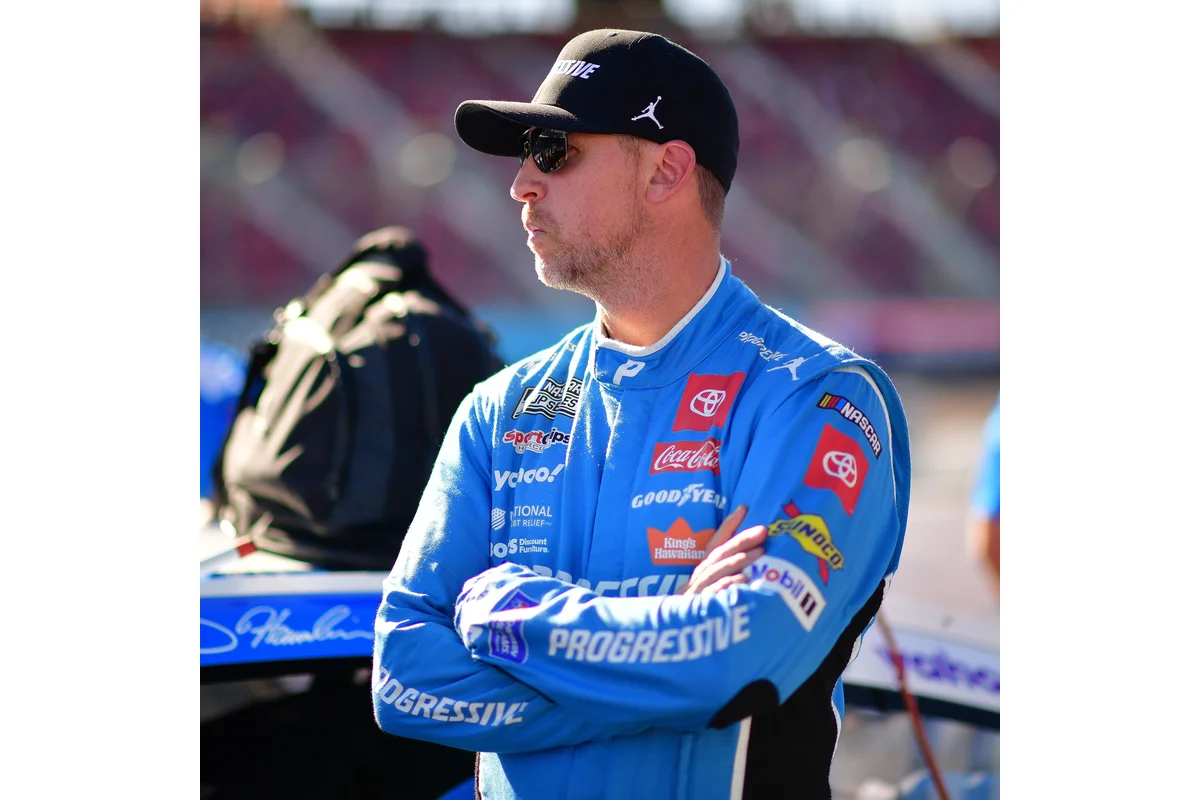
Hamlin stressed that teams are constantly looking for small gains, but each decrease in tire pressure heightens the risk of blowouts. Drivers and crews must balance the desire for speed with the need for tire durability to avoid failures during the race.
The Importance of Balancing Tire Pressure and Suspension Settings
Beyond air pressure, Hamlin pointed out that suspension settings, specifically camber, play a crucial role in tire wear and durability at Phoenix Raceway. The track’s flat turns put considerable strain on the right-front tires, making the setup balance particularly challenging.
It’s not just the air pressure. It’s how much camber you’re putting with that air pressure. So if you want to drop your air pressure super super low, just reduce the amount of camber that’s in the tire. But then there’s efficiency, that you lose actual grip on the short run. It’s a fine line. You want the camber for the short run, you want the air pressure for the long run, and you’re just constantly battling those two out.
– Denny Hamlin, NASCAR Driver
Teams face the difficult task of finding the right combination of camber and tire pressure. While more camber can improve grip during short runs, lower tire pressure can enhance performance over longer distances, making it a complicated balance, especially on Phoenix’s abrasive surface that intensifies tire stress during sustained green-flag periods.
Tire Failures Impact Multiple Drivers in the Phoenix Race
Several competitors endured tire issues at Phoenix, which heavily influenced race dynamics. Kyle Busch suffered a right-front tire blowout on lap 93, causing him to collide with the wall. Shane van Gisbergen experienced a similar failure shortly thereafter.
Chase Briscoe, running in third place, lost a right-front tire on lap 132 entering Turn 4, sending his car crashing into the wall and bringing out another caution period. Additional drivers affected by tire troubles included Noah Gragson, William Byron, Connor Zilisch, and Riley Herbst.
Persistent Tire Challenges Shape Race Outcome and Strategy
The recurring tire failures at Phoenix Raceway highlight the ongoing challenge teams face in balancing performance and safety. As teams continually push car setups to maximize speed, the risk of compromising tire integrity grows, affecting not only individual driver outcomes but the race as a whole.
Looking ahead, these incidents underscore the importance of careful setup decisions, with teams likely to reassess strategies for tire management to reduce failure risks in future races. Denny Hamlin’s comments suggest that while drivers adapt on track, much blame lies with teams for pushing technical limits during competitions.

