
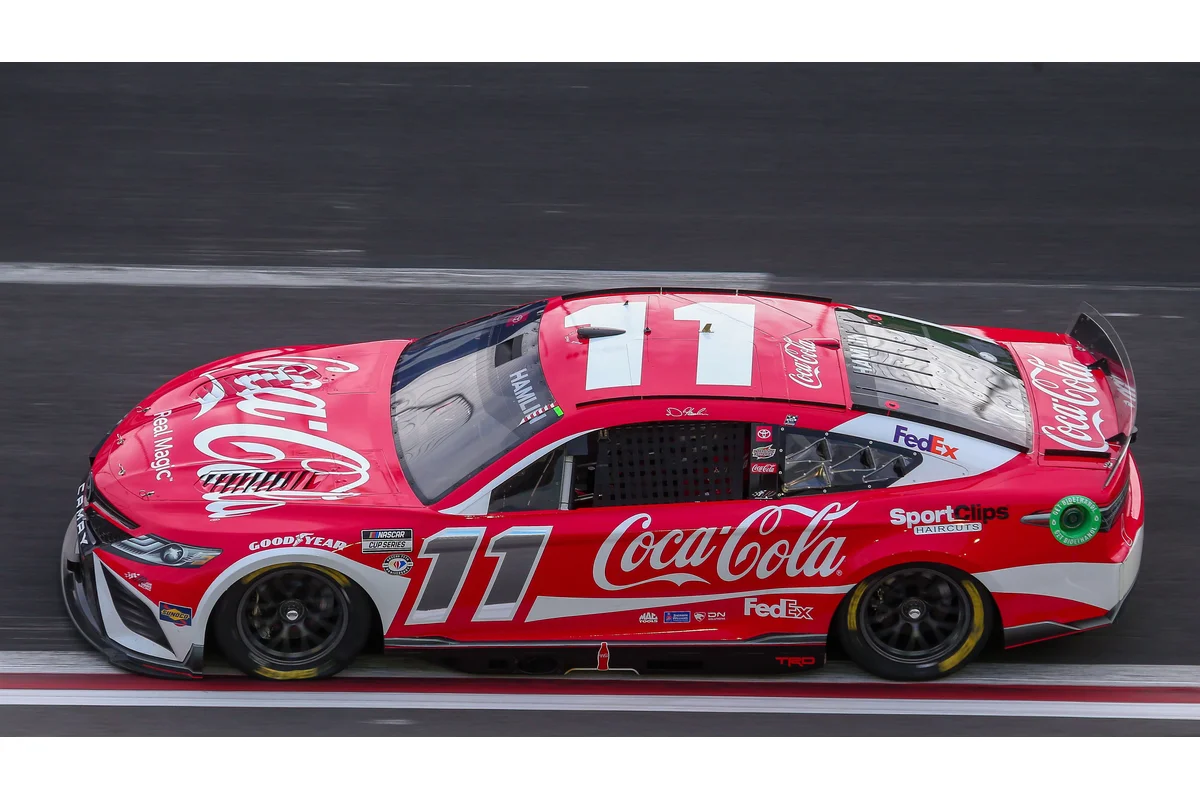
After the NASCAR Cup Series exhibition held Thursday night at the Los Angeles Memorial Coliseum, Joe Gibbs Racing’s Denny Hamlin emphasized the aggressive nature of the competition as a defining feature of the event. The race showcased relentless close-quarters racing, delivering nonstop pressure and intense battles without descending into the common large-scale crashes seen in similar settings.
Throughout the event, cars remained tightly packed, maintaining fierce positional contests. Hamlin shared his observations in a post-race interview with FOX Sports reporter Bob Pockrass, providing insight into how drivers balanced risk and control amid high-speed dueling at this unique venue.
Balancing Intensity and Precision After Pit Stops
Hamlin pointed out that the fiercest moments occurred especially following pit stops, as drivers returned to the track with renewed urgency. Despite the aggressive racing, he noted that the duel avoided the kind of major wrecks that often accompany such tight racing conditions.
Our Duel was aggressive, especially after the pit stop,
Hamlin told Pockrass.
It really had a few moments before the pit stop. I thought we were just as aggressive as what I saw on TV from the first group. We just unfortunately didn’t wreck.
Exhibition races often see heightened urgency because track position carries greater weight and race lengths are shorter. Hamlin acknowledged that drivers maintained remarkable control even while racing side-by-side for much of the event, demonstrating their ability to mitigate risks while fiercely competing for track position.
Subtle Track Conditions Influencing Car Stability
In response to questions about why the racing sometimes appeared more unsettled despite the use of similar cars and tire packages, Hamlin suggested multiple minor factors contribute to this perception rather than one singular cause.
I don’t know. It feels faster this year. There are probably no facts or data to back that up. The track ages another year. It’s just a few small differences that can make the cars a little more unstable than they were in the past.
The condition of the track surface gradually changes due to weather and wear, leading to shifts in grip and handling characteristics. These subtle changes likely made drivers work harder to maintain car control through corners and at higher speeds, adding to the challenging nature of this short track environment.
Aerodynamics and Driver Techniques Affect Racing Dynamics
Hamlin also discussed the impact of aerodynamic tweaks, including a notable update involving the “wicker” device on the cars’ A-post, which modifies airflow around the spoiler and could influence rear stability.
We obviously have that wicker on the side of our A-post that deflects a little air from the spoiler. That could contribute to it.
Such aerodynamic changes often create subtle yet significant effects on how a car balances airflow, particularly during close racing where disturbed air can destabilize vehicles. However, Hamlin emphasized that driver actions played a larger role in the racing’s intensity and car responses.
Most of the ones I saw were just from hard pushes and hard side drafts.
Techniques like side drafting and bumping allow drivers to gain speed and advantageous positioning but require precise timing and control to avoid upsetting their cars, especially on the Coliseum’s tight circuit. Tire compounds and chassis setups remained consistent with previous events, indicating that even minor changes combined with natural track aging can significantly influence vehicle behavior.
Early Season Insights From Coliseum Exhibition
This NASCAR exhibition provided valuable data and experience for teams and drivers as they prepare for the upcoming Cup Series season. The aggressive racing style witnessed, coupled with the manageable level of incidents, demonstrates how competitors are adapting to new challenges presented by evolving track conditions and car developments. The intense pace and tactical driving suggest teams will need to continue refining setups and strategies to handle the blend of speed, precision, and aggression demanded in the 2024 season.
Denny Hamlin on the nature of the racing Thursday and why the cars might be a little bit more out of control. @NASCARONFOX pic.twitter.com/qsahRIV9fB
— Bob Pockrass (@bobpockrass) February 13, 2026
