
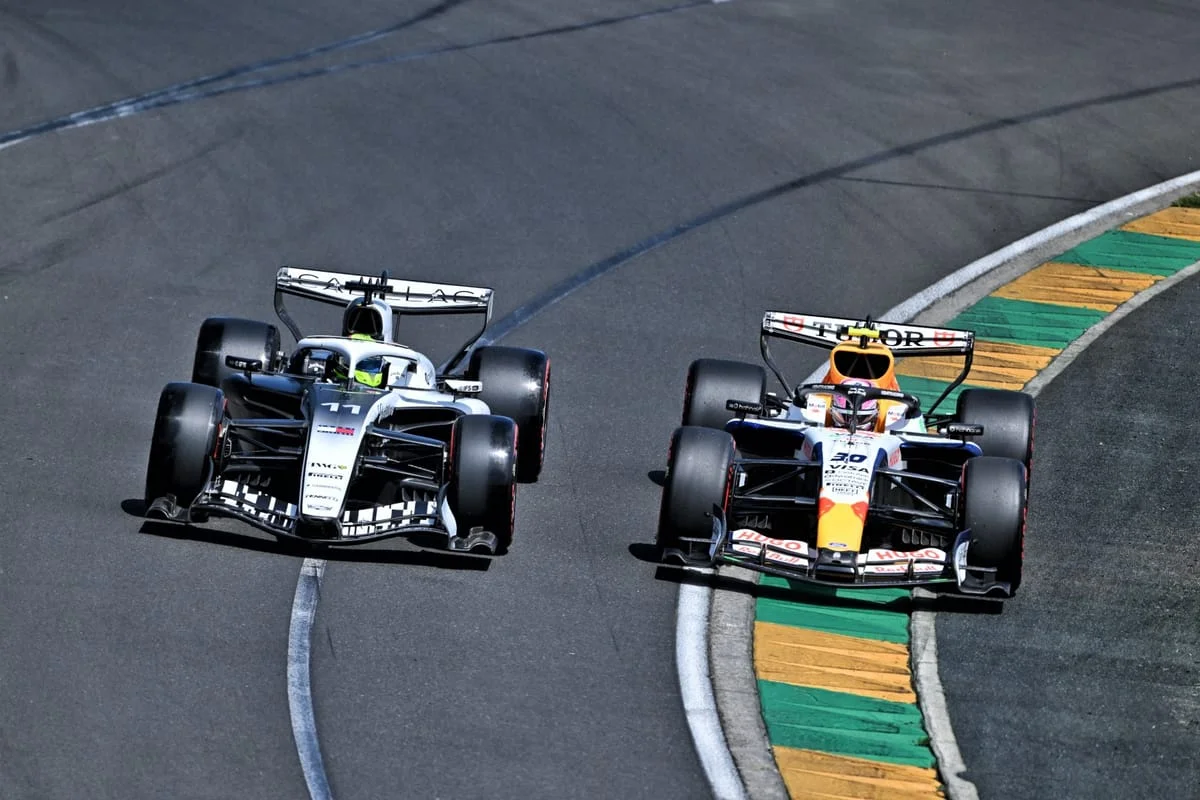
During the opening moments of the Australian Grand Prix, Franco Colapinto narrowly avoided a serious collision with Liam Lawson, highlighting a dramatic instance of quick reflexes on the race track. Colapinto, starting 16th on the grid, had to react instantly when Lawson, positioned eighth, failed to launch properly due to a power loss, forcing the Alpine driver to swerve sharply right to evade both Lawson and the track wall.
Details of Lawson’s Malfunction and Colapinto’s Reaction
Liam Lawson, the New Zealander competitor, admitted that his car stalled unexpectedly as the race began, causing him to remain nearly stationary on the grid. This unexpected failure put drivers behind him, including Colapinto, at immediate risk. Taking advantage of his quick instincts, Colapinto maneuvered between Lawson’s car and the barrier with exceptional precision. Reflecting on the incident, Colapinto stated,
At the start we almost had a massive shunt with Liam as he got stuck on the grid and I was really lucky to go through that lap one. I was really, really lucky.
Expert Reactions Highlight Colapinto’s Reflexes
Former Formula 1 driver Anthony Davidson analyzed the near-miss extensively during a post-race review on Sky Sports F1, praising Colapinto’s impressive reflexes. Davidson remarked on the onboard footage,
Wow. It’s like he’s got cat-like reactions here,
adding,
I mean if I now play it in slow motion, watch what he does on the wheel. How on earth he avoided the rear wheel and the wall is beyond me. It’s amazing. I could watch that a thousand times over. I’ll never get over that.
He noted the widespread expectation of slow race starts, but this situation outmatched typical concerns.
Insight Into the Danger at the Race Start
Observing the event from Lawson’s perspective, Davidson commented on the intense pressure drivers face when grid issues arise. He said,
Oh dear, so he was actually moving. Eyes everywhere. He’s looking in the left and right mirrors, but… Martin Brundle called it at the start of the race that that’s the most fearful time for a driver, knowing that your car may not get off the line and you could be just at a standstill and a roadblock for other cars thundering up behind you.
This underscores how vulnerable drivers are to accidents during initial race moments when mechanical failures occur.
Jenson Button’s Perspective on the Close Call
Co-host Jenson Button, 2009 Formula 1 World Champion, also conveyed his amazement at the near crash, emphasizing the difficulty of controlling a car under such unexpected circumstances. He explained,
Yeah the amazing thing is you don’t see it until he’s on top of the car. How does he slow it down so much? I mean, from a driver’s point of view, I don’t know how that just happened.
He concluded with a hopefulness that such frightening incidents will be avoided in future races:
That was proper scary, hopefully that’s the last time we see that.
Significance and Implications for Race Safety
This incident at the Australian Grand Prix highlights the critical importance of driver awareness and rapid decision-making in motorsport. Colapinto’s skillful avoidance likely prevented a major crash that could have endangered multiple drivers. The event serves as a vivid reminder of the dangers present during race starts, especially when mechanical failures cause cars to stall unexpectedly.
As the motorsport community reviews this moment, teams and race officials may further emphasize safety protocols to mitigate similar risks. For fans and competitors alike, this close call reinforces the unpredictable and thrilling nature of Formula 1 racing, where split-second actions define outcomes and ensure driver safety.
