
The 2023 Formula 1 season opened dramatically at the Australian Grand Prix, but questions have since arisen about the legitimacy of George Russell‘s start. Viewers and fans are debating whether Russell, who took pole position and ultimately won the race, committed a false start after footage showed his car moving slightly before the race officially began. This incident has stirred considerable discussion across social media platforms.
During the tense moments before the race began, Russell’s Mercedes W17 was seen to roll forward a little as the starting light sequence progressed. However, when the five red lights went out, marking the race’s official commencement, Russell was completely still and launched correctly from the grid.
Rules Governing False Starts at Formula 1 Races
To understand the controversy, the Formula 1 regulations must be considered. Article B5.11.1 defines false start procedures during standing starts. It requires all vehicles to stay motionless in their assigned grid spots once the red lights are on and remain so until the start signal is given. The regulation mandates three main criteria for a false start: first, cars must not move from their grid positions early; second, the car’s transponder must only detect movement after the starting signal; and third, the front wheels must not cross the designated grid lines before the race begins.
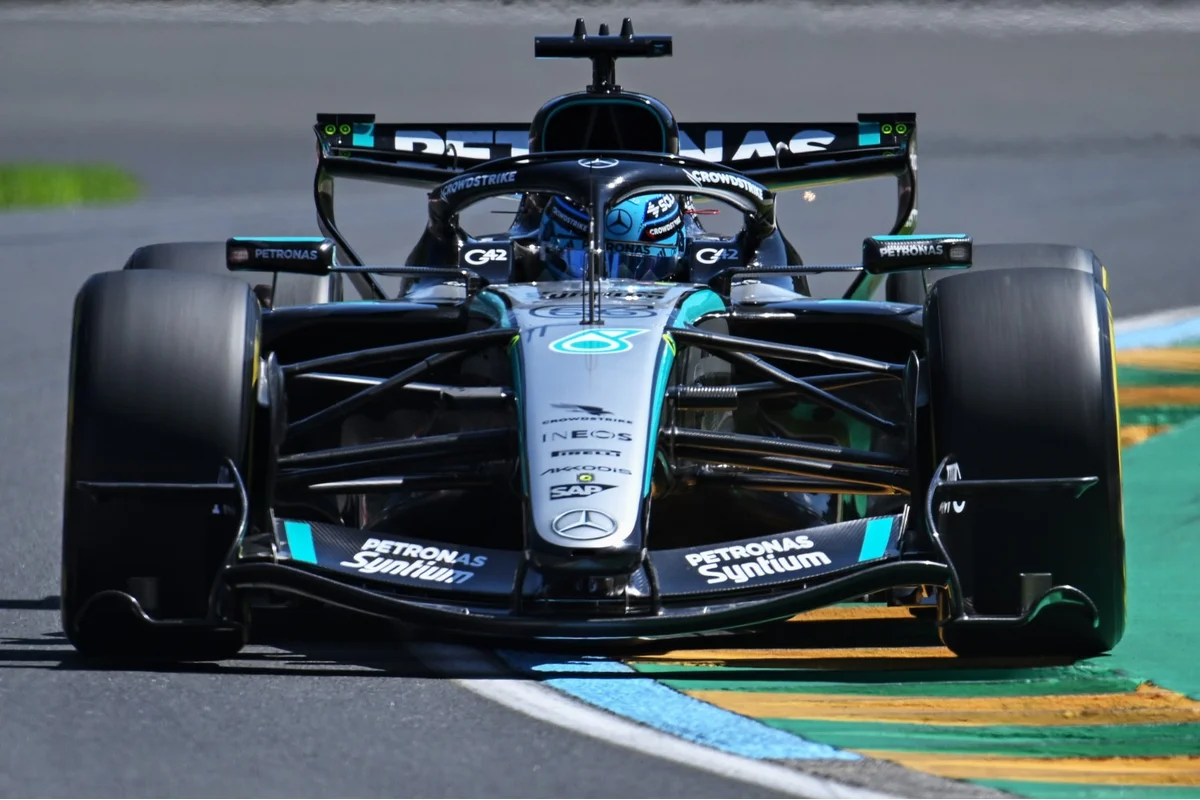
If any of these conditions are breached, the driver faces penalties, such as time additions, drive-throughs, or stop-and-go sanctions, applied at the discretion of race stewards.
Analyzing the Incident Involving Russell’s Launch
Reviewing the evidence, Russell’s slight roll forward prior to the complete red light sequence does not meet the threshold for a false start under the rulebook. By the time the third red light was on, Russell had returned to a stationary position. Additionally, no footage confirms his front tires crossed the grid demarcations, which is the key indicator of an official violation.
The regulations specify that the front wing’s positioning relative to the grid box is not relevant in this context, further supporting Russell’s compliance.
Other Notable Start Line Investigations at the Race
Apart from Russell, two other drivers faced scrutiny for start-related issues. Franco Colapinto was penalized with a stop-and-go sanction after a team member was seen touching his car prematurely following the 15-second signal before the start. Meanwhile, Nico Hulkenberg’s situation differed; his car was pushed back into the pit lane by the Audi team but did not break any rules since he ultimately did not commence the race on the track.
Implications for the Season and Fan Reaction
George Russell’s victory at the Australian Grand Prix currently stands without any formal penalties, reaffirming his performance as legitimate in the eyes of the stewards. This outcome provides relief for his team and supporters amid the heated debate.
As the Formula 1 season unfolds, the Scott Russell start controversy highlights the sport’s intricate balance between strict regulations and the split-second decisions drivers make at the start of every race. Whether the wider community will accept this ruling or continue to question it remains to be seen, adding an extra layer of intrigue to the competition moving forward. With intense rivalries and technical scrutiny becoming ever more prominent, fans should expect the sport’s drama to deepen as the season progresses.
