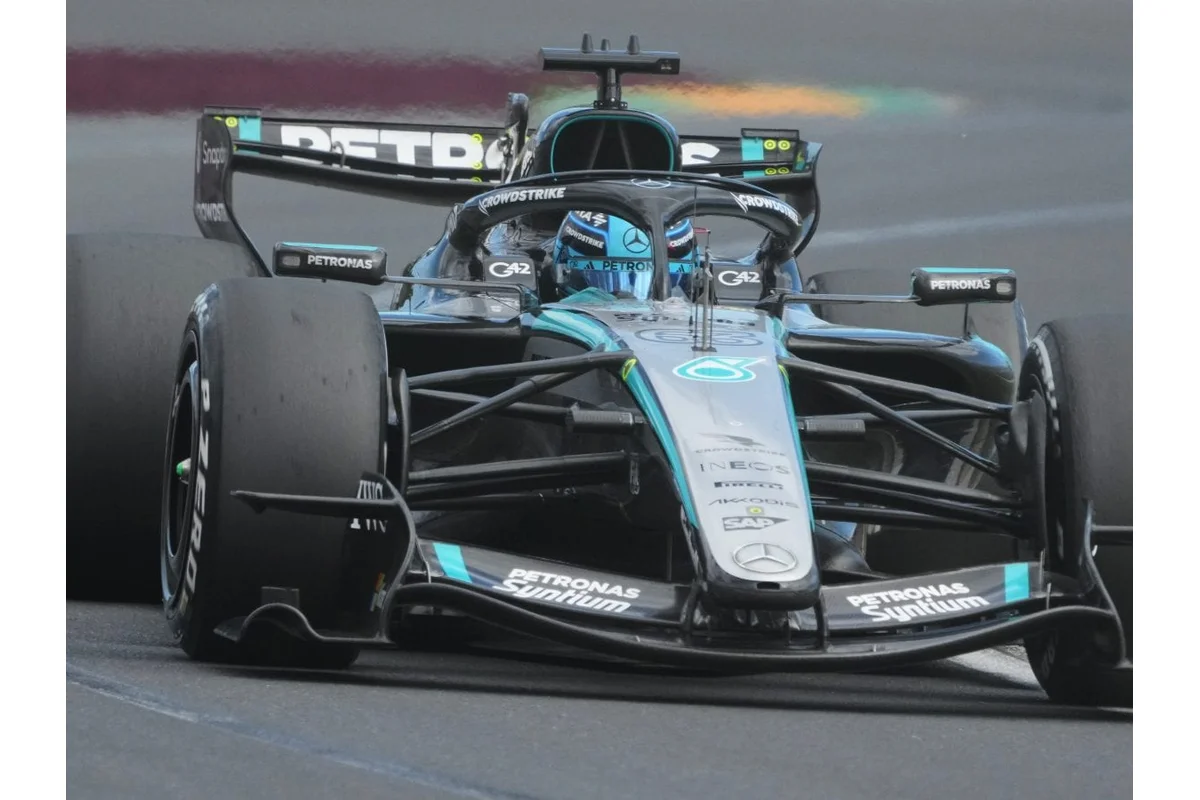
At the Australian Grand Prix in Melbourne, Mercedes delivered an astonishing performance with a 0.8-second lead over their closest competitors, raising eyebrows across the Formula 1 paddock. Seven-time world champion Lewis Hamilton has voiced concerns regarding a controversial engine issue linked to the compression ratio, which has stirred debate since before the season began.
Hamilton’s unease centers on whether this technical loophole might be the hidden factor behind Mercedes’ striking pace, warning that if true, the consequences could be damaging for the sport’s fairness, especially with new FIA engine regulations looming.
During the season opener, Mercedes achieved a remarkable one-two qualifying lockout, with George Russell securing pole position and Kimi Antonelli right behind him. Ferrari’s Charles Leclerc narrowly claimed third place, finishing ahead of Hamilton, but struggled to close the wide gap that Mercedes had created. This dominant showing has fueled questions about how Mercedes surged so far ahead.
As the Formula 1 circus prepares for its next event in China, speculation grows over whether Mercedes can maintain this advantage or if the FIA’s upcoming regulatory changes will once again level the field.
Hamilton Raises Doubts on Mercedes’ Sudden Performance Boost
Hamilton openly expressed confusion regarding Mercedes’ leap in power, telling the media,
Image of: Lewis Hamilton
“I don’t understand it exactly. They didn’t show that they could turn it up in testing, and now they’ve got this extra power from somewhere.”
His statement reflects the growing skepticism within the sport about the legitimacy of Mercedes’ performance spike.
The engine compression ratio has become a hotly debated topic, with whispers that both Mercedes and Red Bull Powertrains have exploited a regulatory loophole permitting greater engine output under certain conditions. Reacting swiftly, the FIA moved the introduction of a hot engine test from August to June to clamp down on this potential advantage.
The High Stakes of Engine Compression Controversy
Hamilton emphasized the seriousness of the situation, indicating that if the performance boost results from exploiting compression regulations, he will be deeply disappointed with the FIA’s allowance.
“If it is a compression thing, then I will be disappointed that the FIA allowed that to be the case,”
he stated, highlighting the threat this issue poses to the sport’s integrity.
He further warned about the ongoing impact during the season’s opening races:
“If they have a few months of that then the season’s done. Not done, but seven races, a few months, you lose a lot of points with a second behind in qualifying.”
These remarks underscore the seriousness of the competitive imbalance that could arise if the loophole remains unchecked.
Implications for Formula 1’s Future Competitiveness
The tension surrounding Mercedes’ sudden dominance puts the entire Formula 1 community on alert, as fans, teams, and officials watch closely for the FIA’s next moves. Whether this advantage is due to clever engineering or regulatory oversight remains uncertain, but with George Russell, Lewis Hamilton, and their rivals preparing for China, questions about fairness and competition integrity remain front and center.
This ongoing controversy may not only define the outcome of the current season but also influence how technical regulations are monitored and enforced in the future, marking a pivotal moment for the sport as it navigates these challenges.