
Mercedes driver George Russell has called on fans and fellow competitors to stay open-minded about the 2026 Formula 1 regulations, which have sparked intense debate since their debut during the Bahrain pre-season testing. As the sport transitions to a new hybrid energy system requiring drivers to balance electric and internal combustion power, Russell emphasizes the importance of patience while teams continue developing these innovative cars.
Understanding the Impact of Hybrid Energy Rules on Driving Technique
The latest F1 cars are subject to ambitious hybrid rules mandating that 50% of their total power output comes from an electric motor. This has forced drivers to adapt new methods — such as lifting off the throttle and coasting down straights, and maintaining high engine revolutions in slow corners — to effectively manage energy consumption throughout each lap. These changes have drawn mixed reactions, as some question whether the driving experience will remain as thrilling as before.
Reigning world champion Max Verstappen has openly criticized the regulations, calling them “anti-racing” and comparing the cars to “Formula E on steroids.” In contrast, Russell sees these early criticisms as premature.
I do think it’s a step forward and I always like to give things a chance,
he said.
We’re just four days into a set of regulations that will dictate the sport for the next three years, and the advancements teams will make in this time will be monumental.
Adapting to New Car Characteristics and Mechanical Challenges
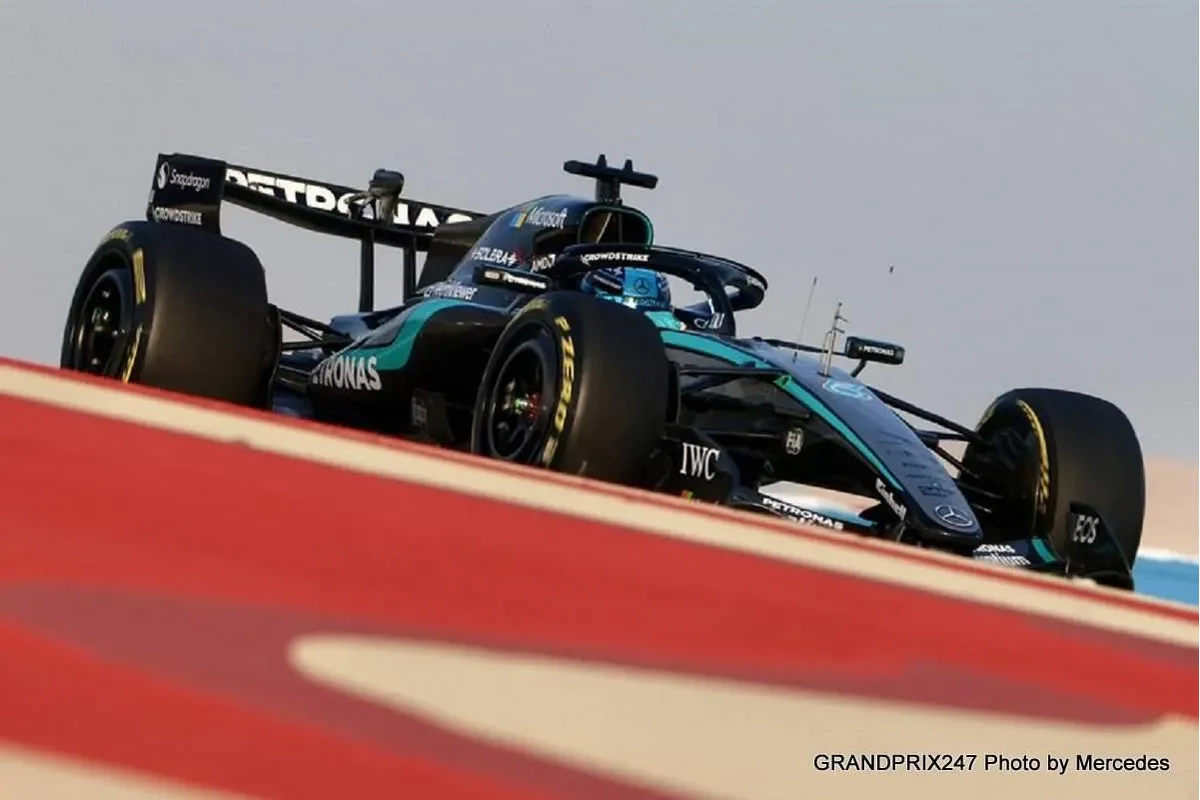
Russell expresses enthusiasm for the fresh design philosophy, describing the 2026 cars as lighter, smaller, and more agile compared to previous models. However, he acknowledges that the engines’ complexity is significant and presents substantial engineering challenges. Russell warned against rushing to conclusions, noting that the difficulties might be more daunting for the technical teams than for the drivers themselves. He stressed that performance and drivability will improve once the series reaches more demanding circuits like Melbourne and Jeddah.
One particular difficulty is the need to run engines at lower revs, which alters cornering dynamics. Russell explained,
Here in Bahrain, usually the first corner is a third-gear corner. Now we’re having to use first gear to keep the engine revs very high,
illustrating the adjustment drivers must make to maintain tire and power management with the new systems.
Strategic Considerations Behind the 2026 Rules and Manufacturer Engagement
Beyond driving style, Russell highlights the larger strategic rationale behind the 2026 regulations, tying them to the increasing demand for electric vehicles (EVs) and policies driven by the European Union. This evolution is helping attract major car manufacturers like Audi to enter Formula 1, demonstrating the sport’s growing relevance in the future of automotive technology.
Russell remarked,
When these regulations came into play, there was a huge push on EVs from the EU, and that was a big part for the likes of Audi to come in,
underscoring how sustainability goals influence F1’s technical direction.
Balancing Diverse Opinions and Embracing the Future of F1 Racing
While some drivers, including Lando Norris, have urged their peers to accept the challenges without complaint, Russell maintains that Formula 1 is in a strong position despite the polarized views. He clarified,
Nobody can argue that Formula 1 is in an amazing place currently. Of course, we want the best cars, the fastest cars, the best racing. But I don’t know how you please everybody,
highlighting the difficulty in satisfying all stakeholders within the sport.
With new regulations ushering in a transformative era, Russell remains committed to progressing alongside technological change and competitive evolution. His call for fans and drivers to embrace this period of adaptation aims to ensure Formula 1 remains exciting and relevant as it moves forward.
