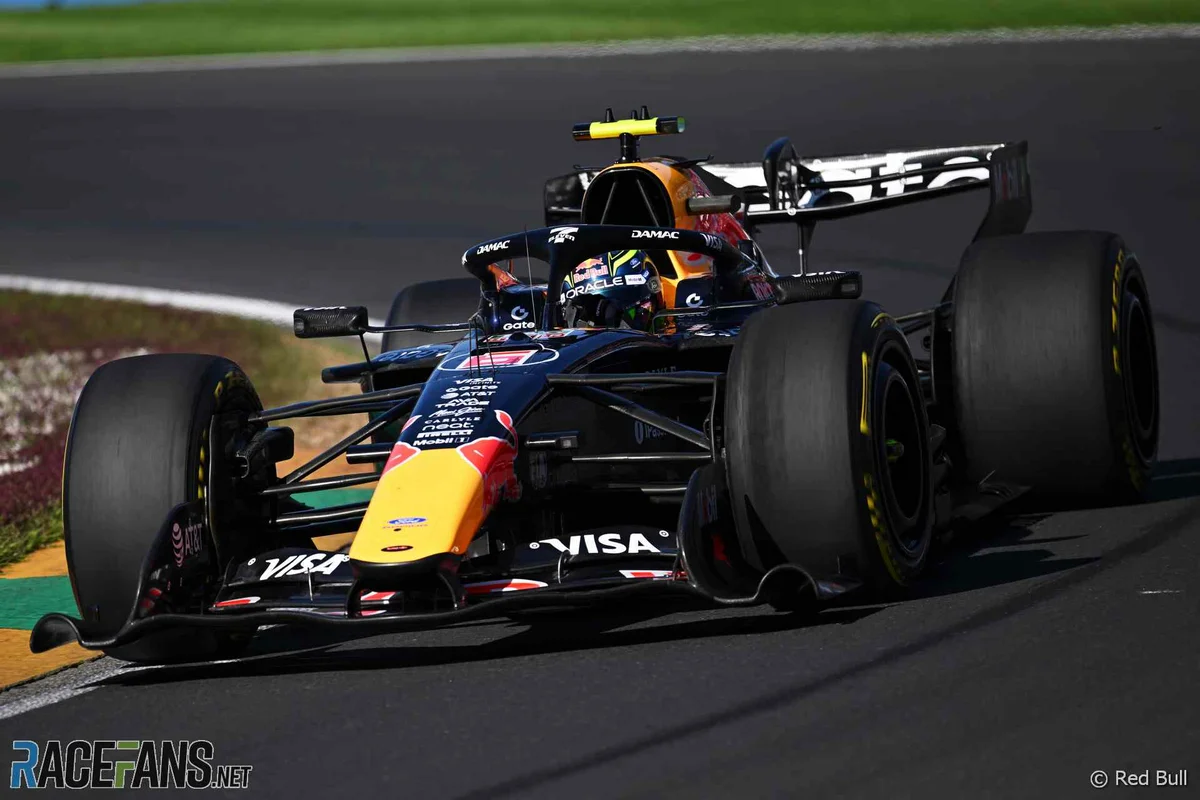
For the second consecutive year, Isack Hadjar faced significant setbacks in his opening Formula 1race at the Melbournecircuit. The French driver arrived hopeful after securing a strong third place on the starting grid, demonstrating impressive speed and confidence during qualifying sessions. However, despite a promising beginning, Hadjar’s race unraveled quickly, leaving him frustrated and out of contention far earlier than expected.
Hadjar managed a solid launch off the line, capitalizing on difficulties faced by fellow driver Antonelli during takeoff to maintain his grid position. Meanwhile, Charles Leclerc, who had started just behind Hadjar, surged ahead to claim the race lead in front of George Russell. Yet, it was apparent early on that technical issues were looming for the Frenchman.
Mechanical Problems Shatter Race Ambitions
Shortly after the Grand Prix began, Hadjar noticed alarming changes in his car’s behavior, particularly with the engine. The familiar sound of his vehicle altered drastically, signaling a serious malfunction. In a post-race interview with Canal+, Hadjar revealed the extent of his technical woes:
“I knew the engine was going to blow up after the first corner; the sound changed completely after the start. The only positive thing was that I got a great launch, and then my battery died. I felt like I was driving a V8 Supercar; the noise was insane, and then it blew up.”
This failure forced Hadjar into an early retirement, cutting short what had looked like a potentially competitive drive.
Visibly upset, Hadjar described the difficulty of trying to control a compromised car through the race:
Image of: Isack Hadjar
“I can’t even count the number of problems I had with the car! It really wasn’t fun.”
Frustration from Unfulfilled Potential
What added to Hadjar’s disappointment was his inability to maintain the pace that had been evident during earlier sessions. The Australian Grand Prix tests had suggested a car that was both efficient and consistent, raising expectations for a strong race performance.
Reflecting on the contrast between Friday’s testing and Sunday’s race, Hadjar expressed regret:
“That’s not what I wanted. I would have liked the car to behave like it did on Friday; the pace was good, the deployment was consistent. That would have been cool. I’m sure I would have taken the lead thanks to the start I got, and then we would have had fun with the guys. I would have liked to finish the race.”
This sentiment captured the gap between his aspirations and the harsh reality he faced.
Despite his personal achievements over the weekend, Hadjar was deeply frustrated by the car’s unreliability:
“I don’t like weekends where I do a really good job, no mistakes, I feel very comfortable in the car, and then everything else falls apart. It’s very frustrating; we could have been fighting for third or fourth place.”
His focus now is on resolving the root causes of these issues to avoid repeating history in upcoming events.
Addressing the technical setbacks, he added,
“As long as we can figure out why it turned into a disaster, we’ll be okay.”
Setback at Melbourne—but the Season Moves Forward
Hadjar’s early exit at Melbourne represents a considerable blow, particularly since he was hoping to turn the page from a last-year crash on the same circuit’s warm-up lap. His promising weekend — highlighted by a strong qualifying performance — had raised hopes for a positive start to the championship.
With the Australian Grand Prix behind him, Hadjar now turns his attention to the next race in China, scheduled for March 13th to 15th, where he aims to capitalize on the lessons learned and regain his momentum.