
Jimmie Johnson, the seven-time NASCAR Cup Series champion, made his Indianapolis 500 debut in 2022 but could not finish the race after crashing on Lap 194. Despite his strong effort, Johnson remains concerned that he did not have the chance to compete more frequently in this iconic event and achieve a notable result earlier in his career. His experiences highlight the frustration tied to missing prime opportunities to race at the Speedway.
In a recent interview with SPEED on Fox, Johnson revealed that a contract with Chevrolet prevented him from racing at the Indianapolis 500 during his prime years. He believes that if he had competed earlier, when he was “younger and more brave,” he might have performed better.
“I had a legitimate shot to run with Roger [Penske] at the speedway,”
Johnson explained.
“I think they were Honda-powered only. And my Chevy contract was a problem with that. I ended up doing the 500, but if it was when I was a little bit younger and more brave, I think I might have had a better result.”
The chance to race with Team Penske dates back to around 2008, a period when Johnson was dominating the NASCAR Cup Series and consistently winning championships. Had the opportunity materialized, it could have significantly altered his racing legacy at the Indianapolis 500.
Reasons Behind Johnson’s Short IndyCar Career
After stepping away from NASCAR’s top level in 2020, Johnson transitioned into IndyCar racing with Chip Ganassi Racing for the 2021 and 2022 seasons. Although he showed promise during his time in open-wheel racing, Johnson decided to retire from IndyCar at the conclusion of 2022, prioritizing his desire to spend more time with his family.
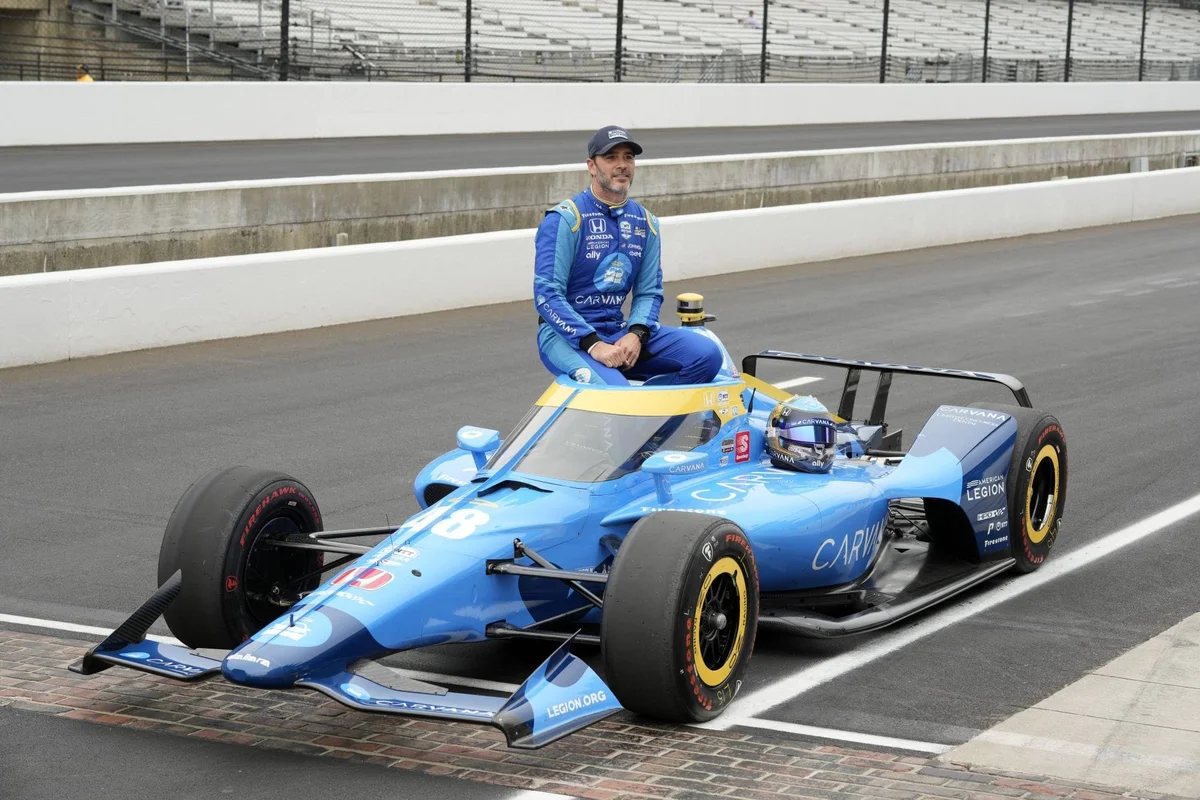
In an interview with The RACER Channel, Johnson shared,
“I found myself in a very similar cadence that I did in NASCAR, being gone all the time. I just didn’t… it wasn’t feeling right. I knew that a third year was there, but I just wanted a change of pace, and I wanted to be with Chani and the girls.”
Despite leaving after two seasons, Johnson’s trajectory suggested he could have achieved better finishes, with his best being a fifth-place finish at Iowa in 2022. Notably, his first Indianapolis 500 run took place that same year, driving a Honda-powered car, which differed from his earlier Chevrolet commitments.
The Impact of Contractual Limitations on Johnson’s Indy 500 Prospects
Johnson’s reflections emphasize how manufacturer affiliations can influence a driver’s career opportunities, especially in crossover events like the Indianapolis 500 where engine partnerships differ. His long-term deal with Chevrolet kept him from competing with Team Penske when they exclusively used Honda engines, limiting his ability to race at Indy during his peak.
This situation underscores the complexities athletes face balancing contractual obligations with career aspirations. For Johnson, the delay in competing at the Indianapolis 500 deprived him of a potential platform to showcase his versatility at an earlier stage.
Looking ahead, Johnson’s experience serves as a cautionary example for drivers managing commitments across racing disciplines. As interest in crossover participation grows, navigating manufacturer contracts will remain a key challenge in maximizing competitive chances at premier events like the Indianapolis 500.
https://twitter.com/SPEEDonFOX/status/2027142127004557359