
Jimmie Johnson, the seven-time NASCAR Cup Series champion, stepped away from full-time racing after the 2020 season. Although many expected him to rejoin NASCAR in 2021 as fans returned to stadiums post-COVID, Johnson chose to explore other pursuits instead. Over the last few years, he diversified his career by competing in INDYCAR and acquiring an ownership stake in GMS Racing, a move that led to his majority ownership of Legacy Motor Club. The team is currently planning to expand from two to three Cup cars by 2027.
After living in England for a couple of years, Johnson returned to the United States full-time in 2025. Now, back in the U.S., he is focused on improving the performance of his team while also balancing a limited driving schedule that includes two NASCAR Cup races this year: the Daytona 500 and a singular event at Naval Base Coronado near his hometown of El Cajon, California.
Reflections on Life After Full-Time Racing
Johnson described his post-full-time NASCAR life as a period of increased self-awareness and reflection. He noted the intense demands of competition had kept him in a constant cycle, leaving little room for personal insight. Now, away from the relentless pace, he is learning more about himself and appreciating the broader aspects of life beyond racing.
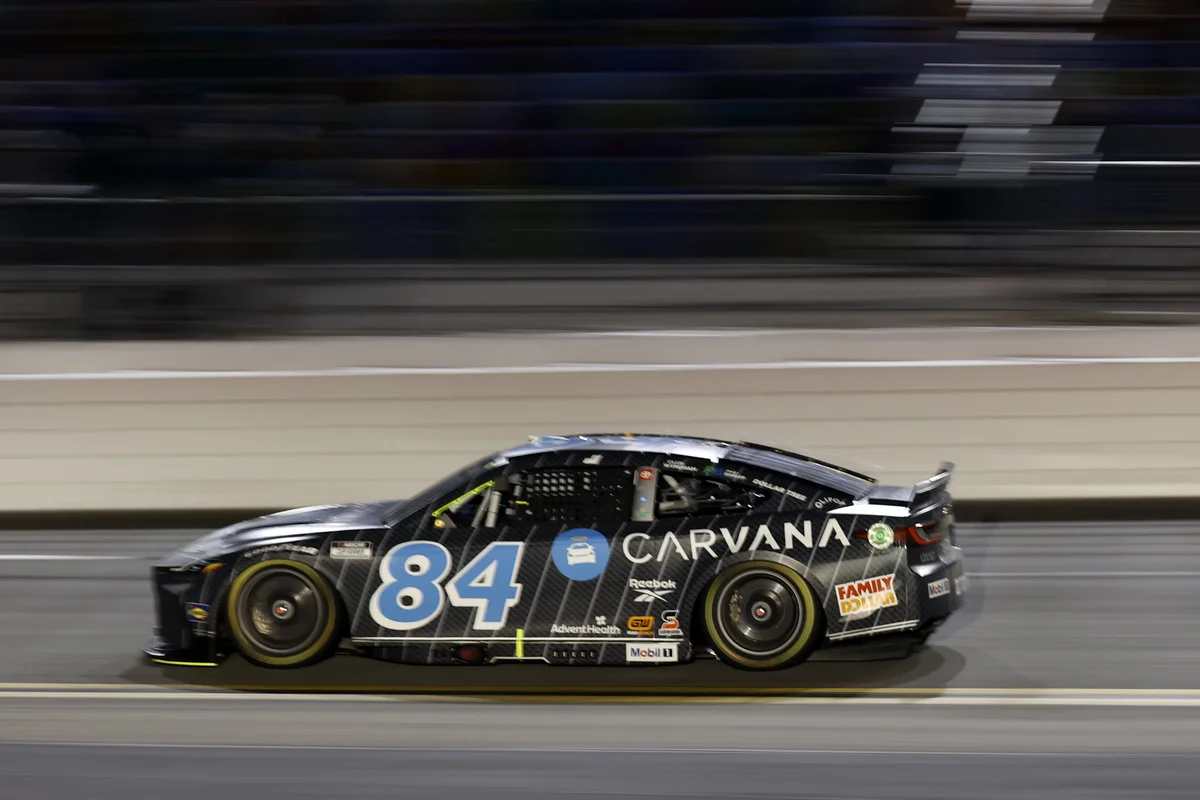
In his own words, Johnson said,
“I am more aware. It’s been a great way to reflect. I’m learning more about myself, who I was, what it took to be that person. You know competition demands so much out of you that you’re on the hamster wheel but maybe don’t have the awareness that you could or should, and the more time I spend away from that environment, the more aware I become. So it’s a lot of reflection, I guess.”
Balancing Personal Life and Shifting Priorities
Johnson shared insights into how his wife, Chani, would describe the changes in his life. While core traits such as work ethic and motivation remain, his focus has shifted from the physicality of competing to the strategic demands of team ownership. He continues to maintain a rigorous schedule, dedicating long hours to managing Legacy Motor Club, which he views as his new challenge.
He explained,
“I think at the core, she would say I’m so very much the same person — the work ethic, the journey, the motivation, my hours. Everything else is different, like my focus has shifted. I’m hopeful to train a couple of days a week. I’m still up so many hours and motivated by being a team owner and the things that go with it versus being out on a run in the morning. The hours and dedication are still very similar, but the pressure of [no longer] competing has brought awareness, peace, enjoyment, some other elements that I certainly think I’m much more aware of now. I think Chani would say the same.”
Challenges of Ownership Compared to Other Business Ventures
Johnson has also ventured into the restaurant business, helping open a street food restaurant in Charlotte. When asked to compare the difficulties of owning a restaurant versus owning a race team, he highlighted that the race team demands a deeper personal involvement.
He clarified,
“A race team. I had great partners in either scenario, but the restaurant was founded in an environment that was enhanced by my participation, not dependent upon it.”
When probed if he is more heavily relied upon in the race team, he confirmed,
“Totally. I’m the approved owner of the charters. My involvement is in some contracts written in with our partners and sponsors and in other elements, it’s maybe not in writing, but it’s an understanding. The big business side of this — if I wasn’t in it like I am, we wouldn’t have the great partners that we do.”
Managing Personnel and Evolving Team Dynamics
Johnson revealed that making personnel changes as a team owner has been the most difficult aspect of his role. Initially expecting to be deeply involved in the competitive side, he found his strengths and interests aligned more with business operations, partnerships, and investor relations. Former Cup champion and Legacy adviser Matt Kenseth has supported Johnson by overseeing the competitive aspects, providing experience and accountability.
Johnson noted,
“Without question, the most difficult part I’ve played. Because coming in, I felt like I would spend more time in a competition department. I probably talked about it before. As we’ve been on this journey, we’ve realized that my strengths are in different areas, and also my interests are in different areas. [Former Cup champion and Legacy adviser] Matt Kenseth has been such an asset for me, personally, to have the competition side with that experienced, watchful eye that I thought I could offer and bring to and the accountability that I could to our drivers and crew chiefs.”
He further explained that while business operations have seen relatively fewer changes, performance-related roles have experienced more turnover, an area in which he seeks to increase his comfort and understanding. Johnson added,
“We’ve had groups that have evolved quite a bit, and there certainly have been plenty of tough conversations.”
This Year’s Racing Schedule and Future Possibilities
Johnson’s plans for the current year include racing in at least two Cup events, including the prestigious Daytona 500 and a special Cup race at Naval Base Coronado. Additionally, he will compete in a truck race at Coronado and participate in off-road and historic car races, such as the Monterey event and the Goodwood Revival in England.
He described his schedule by saying,
“Yeah, that’s the bulk of it. There’s a few historic car races I’ll be playing in. I’ll go to Monterey [California] this year and got a couple historic cars that I’ve purchased, and I’ll have a chance to drive them in addition to the Goodwood revival [in England]. That’s it for now. If something came along, I’d certainly take a look at it. From a Cup standpoint and the at-track demands that I have, I’m far more effective and useful out of a race car. So the Cup side is kind of baked for ’26, but if other opportunities came about, I’d look real hard at them.”
Personal Touches: California Roots and Family Life
Johnson touchingly referred to his Californian background, joking about his eating habits shaped by growing up near the U.S.-Mexico border. He said,
“I’d say my eating habits. Full Mex at all times, especially growing up as close to the border as I did.”
Regarding family life, Johnson spoke about living in London with his wife and daughters and the bittersweet nature of that experience. London provided a welcomed sense of freedom and an opportunity to step away from the relentless rhythm of racing.
“There was a sense of freedom. That first year was really tough, but when you got established, there was big sense of freedom. And it was a good moment for me to separate from this hamster wheel that I’ve been on. You’re abroad. You’re five, six hours ahead. Sure, I had obligations and stuff as an owner and a partner to Maury [Gallagher at GMS], but it was Maury calling the shots. He was still the majority owner. And my schedule lightened up, and it was a nice shift for me to let go in a lot of ways and be with my family. And so that freedom that being away offered in my position in the team as a minority owner, and then the family time — it was just window of time I’ll always cherish.”
Embracing Generational Differences and Teen Trends
Johnson shared amusing insights into the generational gap with his teenage daughters, especially regarding fleeting social media trends. Reflecting on his experience, he remarked,
“You’re not cool, that’s so old, that’s yesterday.”
He noted how quickly fads move on and how he used to resist becoming like his parents, only to find himself out of touch with new technology and trends.
“No. The fads, we just laugh. It’s funny. I remember feeling that my parents were so old and didn’t get it, and I remember thinking, I’ll never be that. And before I knew it, and without any clear understanding, I don’t know how to work my phone, I don’t know the fads — any electronic device that I get handed, they’re like, [Give it] here dad and within a few clicks, they’ve got it. It’s just wild when you’re younger and you make little mental notes or whatever it might be, I’m not going to be that. All of a sudden, you are that.”
Intentions to Continue Competing in the Daytona 500
When asked if this year’s Daytona 500 would be his last, Johnson was quick to dismiss the idea. Owning the team gives him the ability to control his racing schedule and continue competing when it suits him.
He was clear: “No, no, no.” And when pressed for elaboration, he added,
“Yeah. Especially owning the team. I can call these shots, do what I want. So, yeah, without a doubt, there’s a trend of things slowing down. But this won’t be my last 500.”
What Draws Johnson Back to the Daytona 500 Year After Year
Johnson’s enduring connection to the Daytona 500 stems in part from the unpredictability and prestige of restrictor-plate racing. He indicated that despite being a part-time competitor, the unique nature of the event keeps him motivated to race and possibly win again.
He explained,
“What’s the best way to put it? Last year, I finished third. And when I go to other Cup races, and when you’re not a regular with a regular team, squeezing out that last little sliver of speed week in and week out, you’re just not in the window of the win. And it’s just a harsh truth, and one that I’ve accepted recently. And when I look over time and the unpredictable winners of a restrictor-plate race and also of the Daytona 500, why wouldn’t I? I can go get another one, get my 84th [win]. So it just works well with a part-time or a moonlight or whatever the right phrase would be. I think plate races in general, and then, of course, if you’re going to do it, you may as well do the big one.”
