
A heated debate unfolded following a collision during the Good Ranchers 250 at Phoenix Raceway, where reigning IndyCar champion Alex Palou was eliminated after contact with Rinus VeeKay. The incident occurred soon after a race restart triggered by Dennis Hauger’s spin, and Kevin Harvick, the 2014 NASCAR Cup Series champion, challenged the common perception that VeeKay was solely at fault. Harvick argued on the show Speed with Harvick and Buxton that Palou, the championship leader, bore significant responsibility for the crash, highlighting the differing racing etiquette between NASCAR and IndyCar competitors.
The incident took place just one lap after the restart when VeeKay, running directly behind Palou, made contact with the rear of the No. 10 Honda, abruptly ending Palou’s strong run. Palou had started in 10th position and climbed six places before the crash stopped his race early, resulting in a 24th-place finish and five points awarded.
Comparison of Racing Cultures Shapes Harvick’s View on the Crash
Harvick explained how NASCAR drivers and IndyCar drivers approach close racing differently, impacting reactions and responsibilities during high-pressure moments. According to him, NASCAR drivers rely heavily on spotters to provide real-time information about other cars, enabling them to anticipate and avoid collisions more effectively.
“I would agree. And I think that’s just a difference in the way that the etiquette of the two series has worked throughout the years,”
Harvick said.
“And in NASCAR racing, you got to keep yourself going. You don’t want to put yourself in the fence like that.”
He also mentioned the lack of radio communication during the incident as a significant factor. Unlike NASCAR, where spotters call out traffic details such as “Outside, outside,” Palou’s radio was silent in that crucial moment, indicating a different racing protocol.
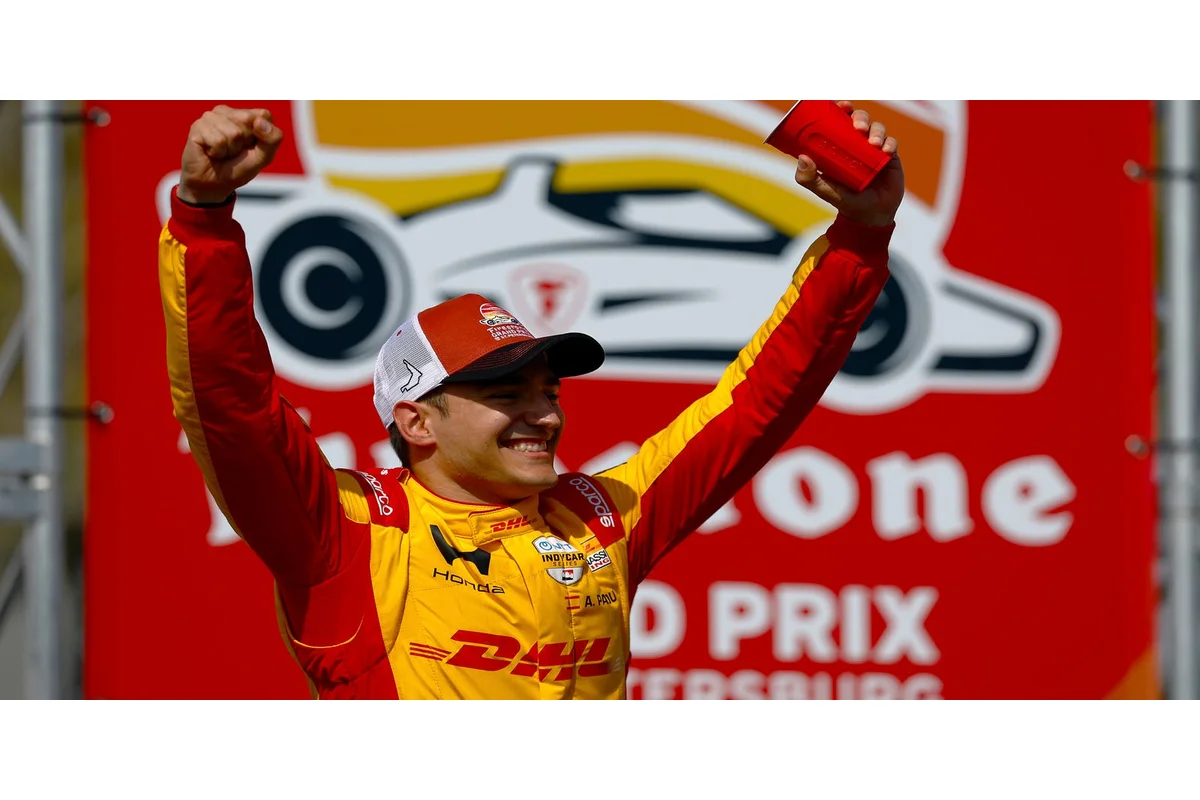
“There was no spotter saying anything,”
Harvick noted.
“In NASCAR, it would be the spotter saying, ‘Outside, outside.’ But there was none of that on Palou’s radio.”
Harvick Asserts Palou’s Incident Worse Than Will Power’s Later Crash
Harvick went further by comparing Palou’s crash with a separate incident involving Will Power later in the race. He suggested Palou’s situation was more avoidable and carried a heavier share of responsibility since Palou was leading at the time and had expectations that the trailing driver would maintain control.
“I actually think that the Palou incident was probably worse than the Will Power incident,”
Harvick explained.
“Being the front car, when you go back and listen to Palou’s radio, you can hear the expectation that the back car is supposed to be in control.”
He concluded that both crashes were preventable but stressed that the key distinction between how drivers in different series handle such scenarios shaped his opinion on fault.
“So I actually think that incident was even more on Palou than the Will Power incident, especially racing for the lead,”
Harvick said.
“Just the difference in the two series. But both of those accidents could have been prevented.”
Palou’s Phoenix Setback Interrupts a Dominant Run
Before this crash, Alex Palou had been enjoying an exceptional period in his IndyCar career, marked by multiple wins and championship successes with Chip Ganassi Racing. The Phoenix incident was a rare interruption in his otherwise strong performance streak this season, underscoring the unpredictability and high stakes of close racing at Phoenix Raceway.
This crash not only affected Palou’s standing in the Good Ranchers 250 but also intensified discussions about racing protocols and driver accountability in mixed-discipline motorsport events. The fallout from this incident is likely to generate further debate as the IndyCar season progresses and drivers continue to navigate the fine line between aggressive competition and caution on tight tracks.
