
McLaren has confirmed that its Formula 1 drivers, Lando Norris and Oscar Piastri, are interested in competing at the Le Mans 24 Hours in the future, aligning with the team’s plans to re-enter top-level sportscar racing with a new Hypercar project in 2027. This move will see McLaren join the World Endurance Championship (WEC) alongside a partnership with United Autosports on a Dallara-based LMDh vehicle.
McLaren’s Strategic Return to Top-Tier Endurance Racing
Beginning in 2027, McLaren will reintroduce itself to the sportscar racing scene by entering the WEC’s Hypercar category, a top-tier class featuring advanced machinery and fierce manufacturer competition. The programme, built around a Dallara chassis and jointly run with United Autosports, marks McLaren’s commitment to expanding its motorsport portfolio beyond Formula 1 and IndyCar.
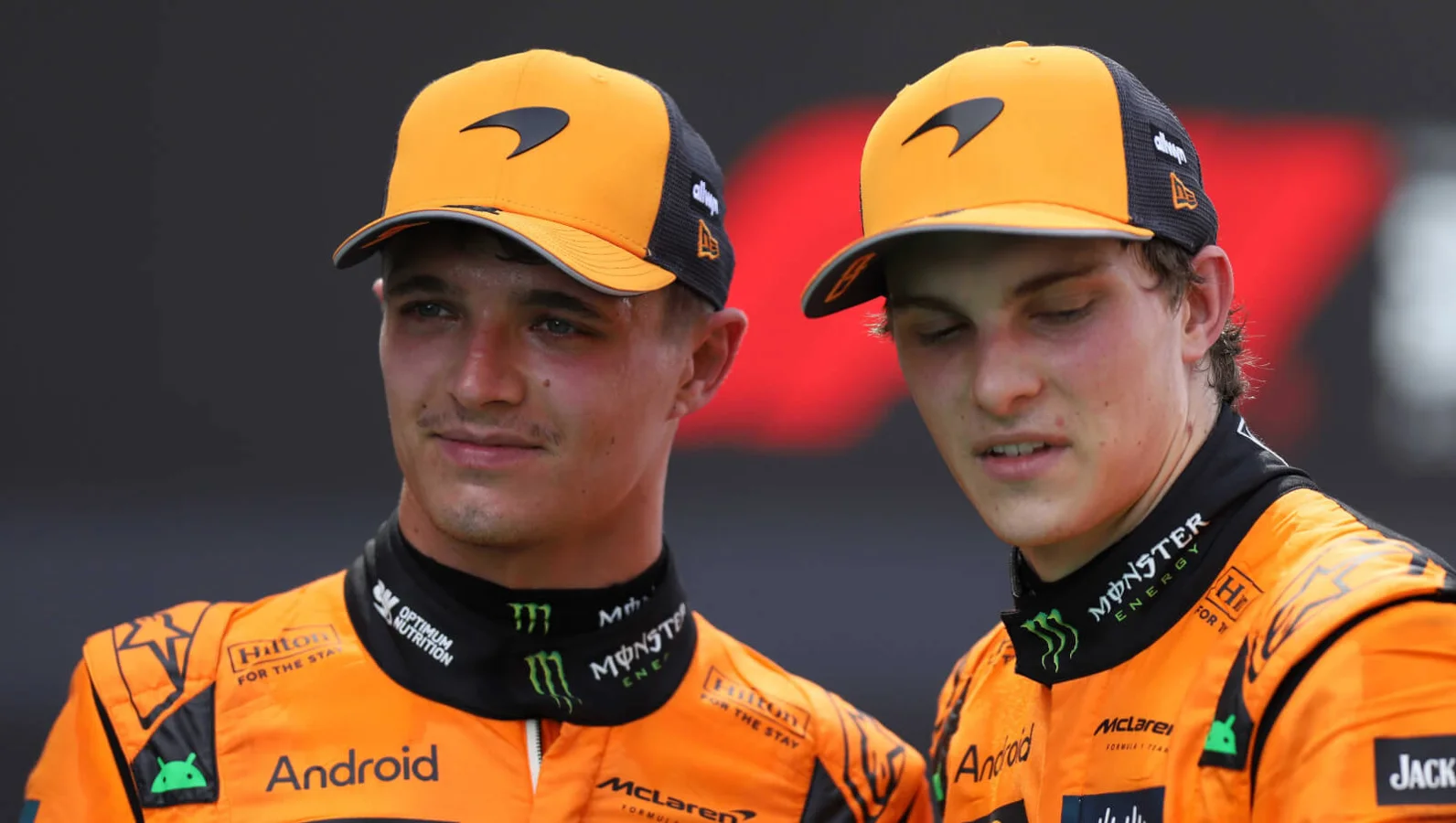
As of now, no specific drivers have been selected for this project. However, attention has turned to whether Norris and Piastri, McLaren’s current F1 drivers, might be tapped for the marquee Le Mans race. McLaren Racing CEO Zak Brown clarified that while neither driver could compete in the full WEC season, both have expressed a strong interest in taking part in Le Mans when the Hypercar programme launches.
“I don’t think they could be in the Hypercar programme,”
Brown stated.
“Will they do Le Mans? I’ve spoken with both of them about Le Mans. They would like to be at Le Mans in one of [our cars].”
—Zak Brown, McLaren Racing CEO
Challenges with Overlapping Race Calendars
The upcoming 93rd edition of the Le Mans 24 Hours competes directly with the Formula 1 Canadian Grand Prix, and notably, the 2026 Le Mans event is set to clash with the rebranded Barcelona Grand Prix weekend. These scheduling conflicts limit opportunities for crossover participation from F1 drivers in WHO endurance events.
Brown acknowledged that increasing calendar congestion across global racing series presents logistical challenges. Adjusting one event’s date often leads to ripple effects in other major events, complicating the task of coordinating schedules for multi-series drivers.
“You know these schedules are hard with the expanded schedules of all the racing series and then the knock-on effects,”
Brown explained.
If you move that date, that date might work, but then it has a knock-on effect to another show. I wouldn’t want to be the person responsible for the calendars.
“I think Formula One will do everything they can to not conflict with Le Mans. Obviously, it now conflicts with Indy [500] next year, but I think that’ll only be one of every five years from my understanding, so I think they’ll try and avoid a conflict.”
—Zak Brown, McLaren Racing CEO
Managing Multiple High-Profile Racing Commitments
As McLaren embarks on the new Hypercar project, it will juggle three major racing commitments simultaneously: Formula 1, IndyCar, and the World Endurance Championship. The team has competed in Formula E since the 2022-23 season but will withdraw after the London finale in July to avoid overextending its resources.
Brown expressed confidence that McLaren has structured its operations to handle these demands, noting how the various racing departments operate independently. This segregation allows the team to focus resources efficiently while taking on additional programmes.
“Few things. One, obviously we’re leaving Formula E because we don’t want to be in more than three racing series at any one time, so we are creating capacity,”
Brown said.
The other is the way you go about racing. The IndyCar team doesn’t touch the Formula 1 team and vice versa. Same thing with the WEC.
“Everyone’s very dedicated and you know a racing team sitting in Indianapolis doesn’t fall on any resources.”
He added that the pressure mainly comes in increased demands on his time and supporting departments like commercial, finance, and human resources, but McLaren plans to scale those accordingly.
“I’m not concerned about that at all, but that also kind of comes back to timing. You don’t want to bite off more than you can chew. So we feel comfortable that it isn’t a commitment that is a stretch for us.”
—Zak Brown, McLaren Racing CEO
Reasons Behind McLaren’s Entry into the Hypercar Class Now
The WEC Hypercar category was launched four years ago, with a surge of factory-backed programmes arriving in 2023 alongside the introduction of LMDh regulations. McLaren’s decision to join at this stage is driven by a combination of factors, including recent corporate changes and the momentum of its existing motorsport operations.
Zak Brown noted the influence of McLaren’s automotive business acquisition by CYVN Holdings LLC from Abu Dhabi, which brought new ambitions and resources for racing engagements linked to the automotive division.
“So our automotive business has now been acquired by CYVN Holdings LLC out of Abu Dhabi and we’ve had a strong interest in wanting to go racing together with automotive,”
he said.
They’re now in a great position [and] forward-looking.
“The strength of our Formula One and IndyCar team definitely has an element of that, and then also the success of this new platform, so you kind of put that all together, the timing is good.”
—Zak Brown, McLaren Racing CEO
McLaren is also considering expanding into the IMSA SportsCar Championship’s GTP category, though such an initiative would likely begin after the 2027 WEC Hypercar launch, probably in 2028.
Implications of McLaren’s Motorsport Expansion
McLaren’s planned return to endurance racing with a Hypercar effort represents a significant broadening of its motorsports involvement, which already spans three elite series including Formula 1 and IndyCar. By tapping into its F1 talent pool for landmark events like Le Mans, the team could enhance its brand and racing prestige.
The potential presence of Norris and Piastri at Le Mans carries exciting implications for fans and the team’s competitive reach, although calendar clashes and logistical challenges are hurdles to navigate. McLaren’s strategic withdrawal from Formula E signals a focused approach to managing resources as it expands its motorsport footprint.
Overall, McLaren’s Hypercar programme highlights both the evolving landscape of sports car racing and the increasing demand for adaptability among teams competing across multiple disciplines. The next few seasons will reveal how successfully McLaren can balance these ambitions while maintaining competitive edge on all fronts.
