
The 2024 Formula 1 season opened with practice sessions at Melbourne’s Albert Park circuit, revealing the competitive landscape for the championship battle. Ferrari’s Charles Leclerc expressed surprise at the strong pace shown by rival teams, particularly from German manufacturers, during the initial track runs. The impressive speed displayed by competitors during race simulations, especially under full fuel loads, caught the attention of the paddock and added urgency to Ferrari’s preparations.
German Teams’ Strong Performance Challenges Ferrari’s Expectations
Analysis of lap times from Friday’s sessions showed that Mercedes managed to sustain high performance not only in light fuel runs but also throughout extended race simulations. Leclerc noted that the speed demonstrated by his German rivals exceeded what Ferrari’s engineers had anticipated for this early stage of the season in Melbourne. As the first real test of the new technical regulations unfolded, the Monegasque driver was focused on understanding the true potential of all teams on the grid.
Although McLaren’s Oscar Piastri topped the time sheets during the second practice session, Leclerc’s attention remained fixed on the aerodynamic and mechanical strengths shown by Mercedes. The rival car’s stability through Albert Park’s tight and twisty corners suggested a finely tuned setup that Ferrari has yet to replicate with its latest project. Behind the scenes, Maranello’s engineers concentrated on refining the car’s electronics and suspension systems, with telemetry data highlighting a key gap in corner exit traction. This deficiency became the central topic in multiple engineering meetings as the team worked to boost performance before qualifying.
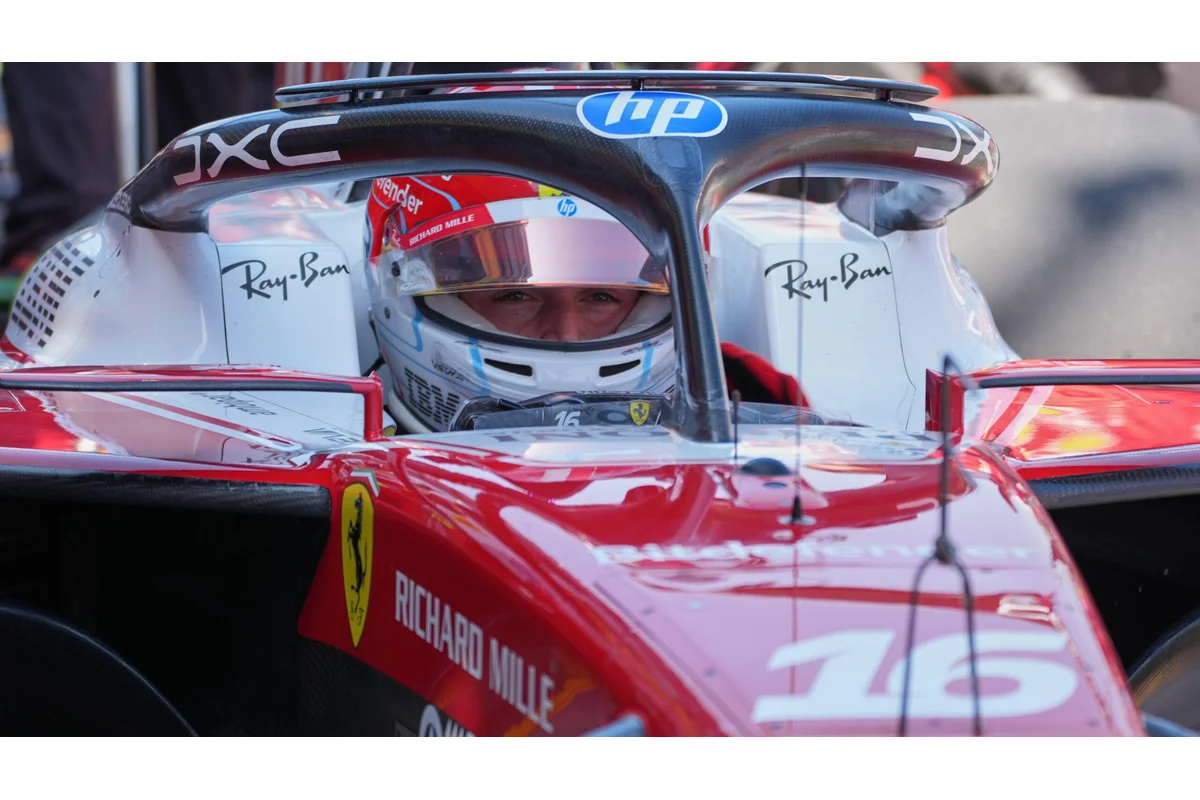
Ferrari’s Risky Setup Experiments During Practice
In an effort to close the apparent performance gap, Ferrari pursued an aggressive strategy by testing extreme configurations on Leclerc’s car during Friday’s second free practice. These radical setup changes aimed to counteract the faster pace of their championship rivals. However, the adjustments compromised the car’s aerodynamic balance under heavy braking, forcing Leclerc to abort some fast laps and finish the session fifth overall.
Leclerc ended the session just behind teammate Lewis Hamilton, who opted for a more conservative setup. The negative feedback from the track led the team to plan a return to more stable configurations for Saturday’s sessions. Ferrari’s primary goal is to enhance driver confidence, particularly to allow the drivers to confidently attack the curbs at Albert Park without risking instability. The focus shifted toward fixing persistent grip issues rather than solely tracking competitors’ progress.
Technical Insights from Practice Sessions
Teams gathered important data during the Melbourne practices that will inform their tactical approach for qualifying and the race. Mercedes showed remarkable improvement between the two afternoon sessions, particularly excelling in race pace with medium tires and heavy fuel loads. McLaren confirmed its strong single-lap speed, setting the fastest time in these sessions and establishing itself as a main contender.
Ferrari, on the other hand, struggled with the aggressive suspension changes that did not produce the expected gains seen in wind tunnel simulations. The gaps in performance led to immediate recalibration efforts as the team sought to address shortcomings across the weekend.
Effects of New Technical Rules on Car Handling
The introduction of stringent new technical regulations has significantly altered power unit characteristics and introduced active aerodynamics to the sport. This has led to notable performance fluctuations between sessions, as teams fine-tune the complex engine control systems. Drivers now face increased challenges adapting to cars that react unpredictably during high-speed corners and under strong lateral forces.
Teams must strike a difficult balance between maximizing top speed on the straights and ensuring stability during heavy braking zones on the Albert Park layout. Mercedes appears to have found this equilibrium faster than its competitors, explaining Ferrari’s perception of lagging development. The upcoming races will test the teams’ agility to adjust and improve their packages under real race conditions.
Tire Management Challenges Due to Melbourne’s Track Conditions
The unique surface and temperature variations at Albert Park have a direct influence on tire wear throughout the event. The shift from daytime heat to cooler evening conditions complicates the behavior of soft and medium compound tires, posing a strategic challenge. Teams must balance the need for immediate grip during qualifying runs with the preservation of tires to support long race stints.
Proper thermal management has become a strategic priority, as overheating in traction areas quickly degrades lap times. Careful tire use will be essential to maintain strong race pace and avoid costly performance losses.
Collaboration Between Drivers to Optimize Performance
Information sharing between Charles Leclerc and Lewis Hamilton within the Ferrari garage has played a key role in diagnosing the car’s rear-end instability issues on corner exits. Cross-analysis of their feedback is being used to develop multiple setup configurations. This collaborative effort aims to isolate and resolve the areas most hindering performance.
Anticipated Battle for Grid Positions Highlights Tight Championship Rivalry
Qualifying is expected to feature a fierce competition among at least three distinct teams vying for top starting positions. Mercedes stands out as the primary challenger to McLaren’s impressive single-lap speed shown during Friday’s sessions. Ferrari’s efforts are concentrated on enhancing the power delivery of its hybrid power units to recover lost time on the four full-throttle sectors of the track.
Maranello’s sports management has prioritized securing a spot in the first two rows on the grid. A strong starting position is crucial at Albert Park to avoid traffic congestion and the negative effects of “dirty air” that can compromise brake cooling and engine efficiency during the opening laps.
Race Day Strategy Hinges on Pit Stop Precision and Fuel Use
Winning the season’s opening Grand Prix offers a significant psychological boost for the entire campaign. Overcoming key rivals in Melbourne will demand flawlessly executed pit stops and careful fuel management throughout the race. The history of safety car deployments at this tight street circuit adds complexity to race strategy, with small driving errors potentially reshuffling the field dramatically.
Last-Minute Tuning Before Parc Fermé Restrictions
Teams have only a limited window to finalize suspension and engine settings before the parc fermé period locks in configurations. Melbourne’s passionate spectators look forward to a direct face-off between emerging talents and seasoned veterans on the grid. The effectiveness of energy recovery systems will be pivotal in allowing cars to overtake within zones where adjustable rear wings can be activated, with aerodynamic engineers working to protect the cars from attacks on the main straight.
Ongoing Development Will Shape the Season’s Progress
Ferrari and other teams recognize the challenges encountered early in the season as a call to accelerate the introduction of new parts from European factories. Formula 1 demands continuous progress, and the aerodynamic packages unveiled in Melbourne are expected to evolve rapidly in upcoming races. The competitive dynamics observed on Friday set the stage for a season-long 개발 battle that will continue until the closing events on the calendar.
“The speed imposed by the opponents in race simulations was much higher than we expected.” ?Charles Leclerc, Driver
“The stability of the rival car in the winding sections suggests a refined setup that we are still trying to achieve.” ?Charles Leclerc, Driver
“Our main focus shifted to fixing chronic grip issues rather than just watching what the other teams are doing.” ?Ferrari Engineer
“Mercedes seems to have reached a balance point faster, which explains why we feel a bit behind in development.” ?Team Strategist
