
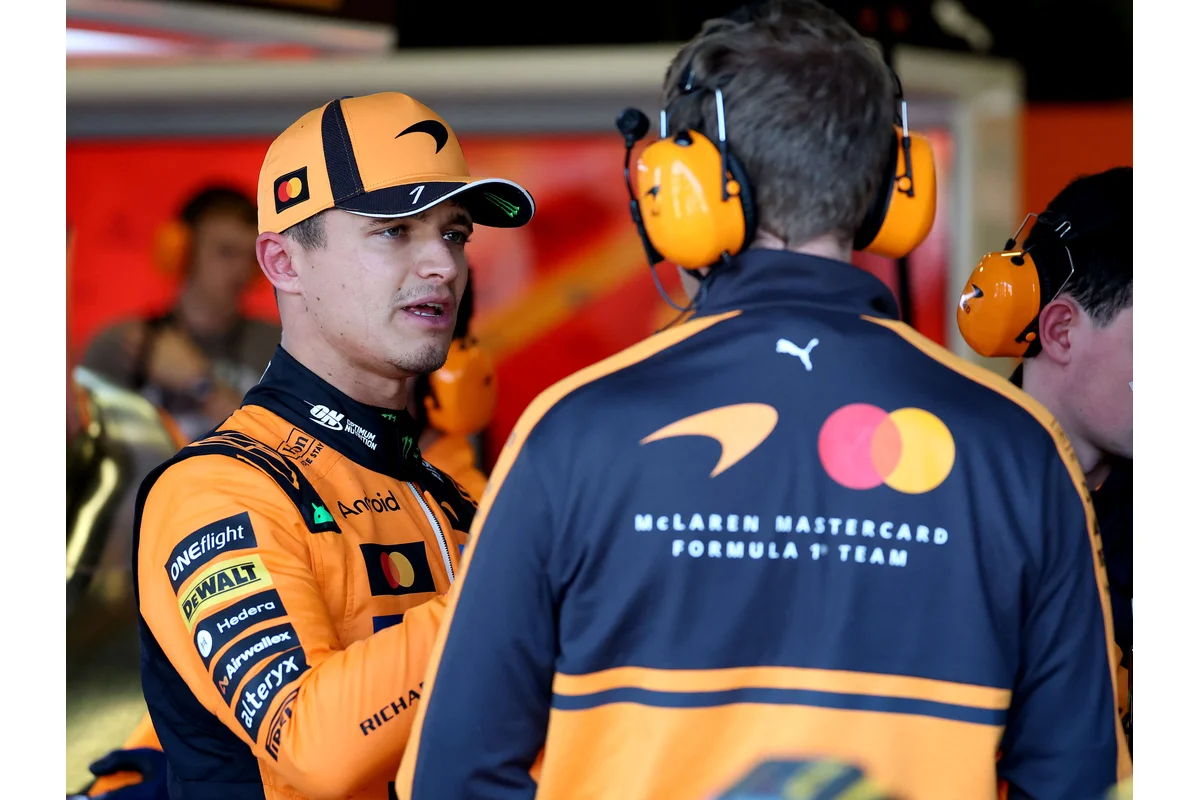
This season, Lando Norris has taken on the prestigious number one on his McLaren car, a spot previously held by Max Verstappen, who will now compete using number three. Norris, the reigning Formula 1 world champion, made this decision to display the number one following his victory last year, a choice that has led Verstappen, a four-time titleholder, to request permission for a number change from the sport’s governing body, the FIA.
Background on Drivers’ Number Selection and Rule Adjustments
Historically, drivers retained their numbers year after year unless they became the world champion, at which point number one was assigned to the titleholder. Since 2014, Formula 1 regulations have become more flexible, allowing drivers to select their race numbers. Verstappen, who initially raced under 33 during his time with Toro Rosso and Red Bull starting in 2015, adopted number one only after claiming his first championship.
Verstappen’s switch to number three required approval because the number was previously used by Daniel Ricciardo, his former Red Bull teammate. FIA rules require that a previously used number remains unused for two consecutive seasons before another driver can claim it. Since Ricciardo last raced with number three less than two full seasons ago, Verstappen sought special permission and confirmed the change with the FIA.
Verstappen’s Perspective on His New Number Choice
In a recent interview with Viaplay, Verstappen commented on his decision to shift numbers:
“It won’t be number 33. My favourite number has always been three, apart from number one. We can now swap, so it’ll be number three. The rules state that a number isn’t available until it hasn’t been used for two consecutive seasons.”
“Number 33 was always fine, but I just like one three better than two. I always said it represented double luck, but I’ve already had my luck in Formula One.”
?Max Verstappen, F1 Driver
Verstappen’s adoption of number three makes him only the second driver to race under this number since the personalized car number system was introduced. Prior to 2014, race numbers were assigned based on Constructors’ Championship standings or event organizers.
Other Notable Number Changes and New Entrants
Most returning drivers are maintaining their existing numbers, though several notable shifts are occurring as some drivers return or enter the sport. Valtteri Bottas will switch back to number 77, a familiar choice during his career, while Sergio Perez has decided to race with number 11, honoring his favorite footballer, Ivan Zamorano.
This season’s rookie, British newcomer Arvid Lindblad, will compete under number 41. He chose this number as it visually represents his initials “AL” and is the first driver to ever use this number in Formula 1, making it uniquely his own.
Upcoming Season and Event Preparations Amid Global Concerns
The new Formula 1 season is set to commence on March 6 with the Melbourne Grand Prix in Australia. Event organizers have reassured fans that recent travel complications stemming from escalating tensions in the Middle East will not disrupt the opening race.
Formula 1 enthusiasts will be able to follow every practice session, qualifier, and race live through Sky’s Essential TV and Sky Sports bundle, which also includes access to approximately 100 TV channels along with free subscriptions to streaming services like Netflix and Discovery+.
Implications of the Number Switch and What to Expect Next
This transition in car numbers highlights shifting traditions within Formula 1, reflecting both the sport’s evolving regulations and drivers’ personal preferences. Lando Norris’s decision to claim number one symbolizes his status as current world champion, while Verstappen’s shift to number three shows a strategic return to a favored number after gaining special approval.
As the season unfolds, fans will closely watch how these changes influence driver identities on the track and whether such adaptations might become more common. The Melbourne Grand Prix will serve as the stage for these new number alignments, setting the tone for a competitive and closely monitored campaign.
