
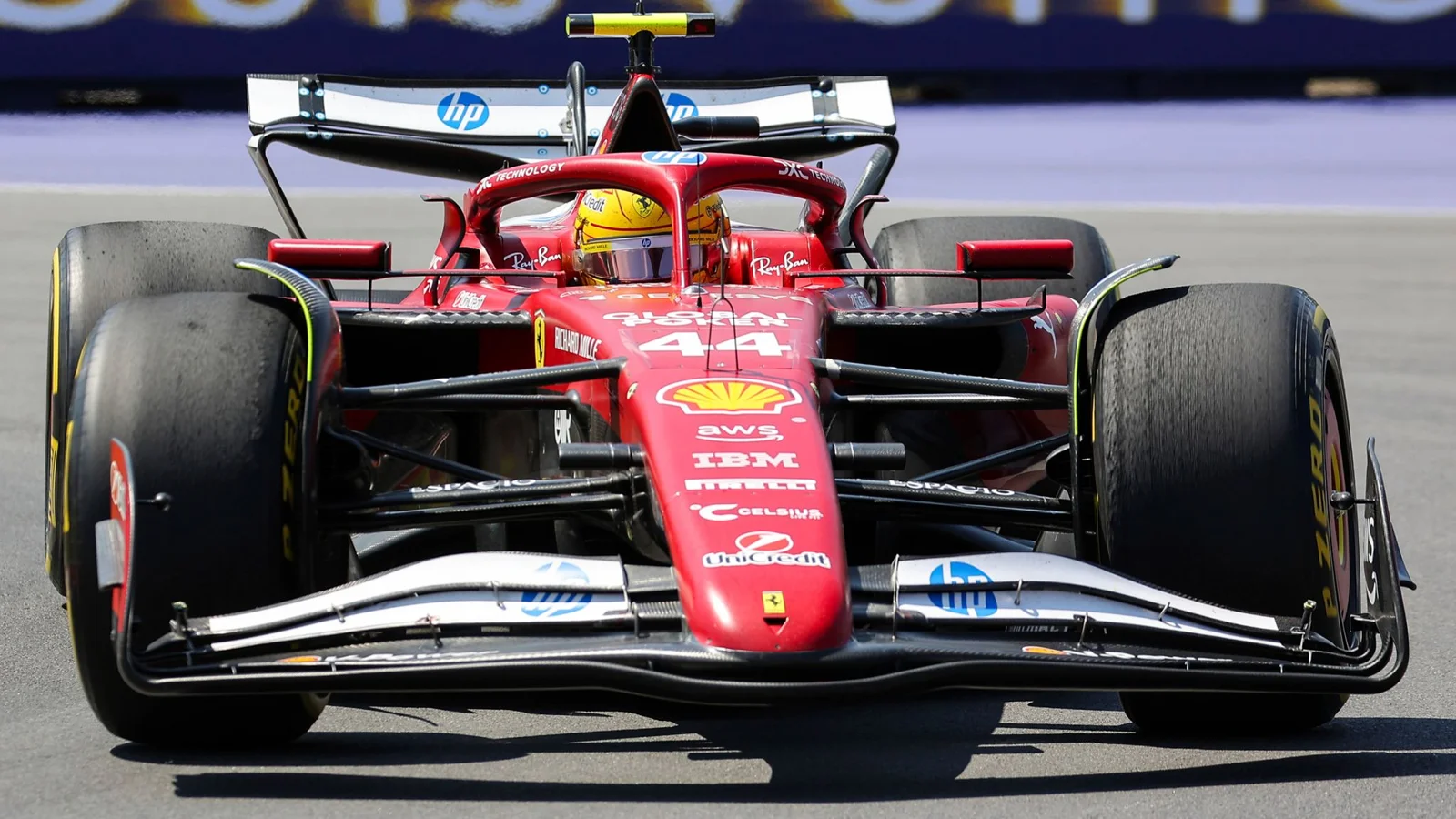
Lewis Hamilton experienced a significant loss of downforce during the Canadian Grand Prix after colliding with a groundhog while driving his Ferrari. This incident, which the driver described as devastating, led to major damage that affected his performance and contributed to a sixth-place finish at the Montreal race.
Ferrari’s team boss Fred Vasseur later confirmed that the damage resulted in a 20-point loss of downforce, which severely hampered the car’s competitiveness. Hamilton, who had earlier qualified ahead of his teammate Charles Leclerc, faced multiple difficulties during the race, including brake issues and tactical missteps, which combined with the floor damage to hinder his result.
Race events and challenges for Hamilton in Montreal
During qualifying, Hamilton managed to outqualify Charles Leclerc for the second consecutive event this season, securing fifth on the grid compared to Leclerc’s eighth. However, the race outcome was less favorable as Hamilton gradually fell behind, finishing sixth after a late Safety Car period caused by a collision between Lando Norris and his McLaren teammate Oscar Piastri.
Hamilton revealed that his race had started well as he maintained his position and managed his tires effectively. However, the situation deteriorated after the groundhog collision caused floor damage, specifically to the right side, where key aerodynamic components known as vanes were damaged or missing. This damage drastically reduced the car’s downforce, which is crucial for stability and speed.
Reflecting on the incident, Hamilton said,
“I think it was feeling pretty decent up until [the collision],”
—Lewis Hamilton, Driver
He added,
“I got a good start, held position, I was holding onto the group. I was managing the tyres well, so I was feeling optimistic.”
—Lewis Hamilton, Driver
Hamilton expressed particular sadness about hitting the animal, stating,
“I didn’t see it happen, but obviously I heard I hit a groundhog, so that’s devastating. I love animals, and I’m so sad about it. That’s horrible. That’s never happened to me here before.”
—Lewis Hamilton, Driver
Alongside the aerodynamic damage, Hamilton faced brake complications mid-race and made what he considered a late pit stop that left him stuck in traffic, further complicating his progress. Despite these problems, he appreciated being able to finish and secure points.
“I’m grateful that I could just finish, particularly with the brake issue I had, and bag those points.”
—Lewis Hamilton, Driver
He also shared with DAZN the frustration caused by the damaged floor, noting how critical those components are:
“The floor — we have all these vanes on the floor and there was like a hole. So in one of the most important parts of the car.”
—Lewis Hamilton, Driver
Hamilton described the rest of the race as a struggle:
“After lap 13, it was terrible — I just wanted it to end. I couldn’t see anyone ahead or behind. I was just driving around. I was trying to push but nothing was working. I just wanted to see the finish line. It was an uneventful race. Not my worst race in Montreal, but it’s up there.”
—Lewis Hamilton, Driver
Team principal confirms severity and performance impact
Fred Vasseur confirmed the collision with the groundhog occurred around laps eight or nine during the first stint. Assessing the damage, the team determined that the front floor suffered a loss of approximately 20 points of downforce, severely reducing Hamilton’s car performance.
“It’s true that we had a small kiss with a marmot,”
—Fred Vasseur, Ferrari Team Principal
“We measured the front part of the floor. It’s something like 20 points.”
—Fred Vasseur, Ferrari Team Principal
“Hopefully we didn’t have a big change in balance, but it was a lot of performance.”
—Fred Vasseur, Ferrari Team Principal
Following 10 rounds of the Formula 1 season, Hamilton now trails Leclerc by one position and 25 points in the Drivers’ Championship, highlighting the growing pressure within the Ferrari team to maintain competitiveness.
Implications for the remainder of the season
The damage sustained in Canada underscores the fragility of race performance when unexpected incidents occur, such as wildlife collisions. Hamilton’s struggles in Montreal, despite a promising qualifying, illustrate how a combination of technical issues and on-track incidents can drastically alter race outcomes.
With key races still ahead, Ferrari faces increased challenges to recover lost ground in the championship, especially with rising competition from other teams. For Hamilton, the Canadian Grand Prix may serve as a setback, but also as a reminder of the need for resilience amid intense racing conditions.
