
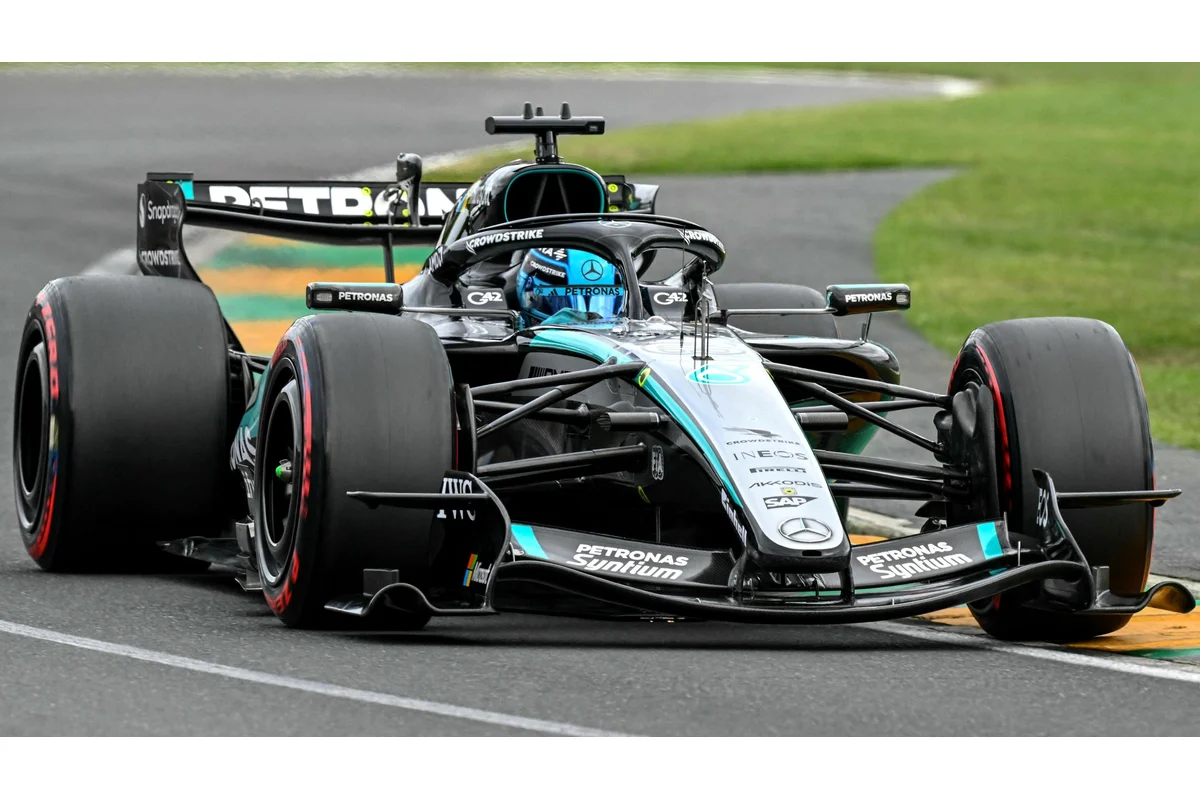
After qualifying seventh at the Australian Grand Prix in Melbourne, Lewis Hamilton expressed strong dissatisfaction with the FIA and Mercedes regarding concerns about engine compression ratios. Highlighting the sizeable eight-tenths-of-a-second gap between Mercedes and other teams, Hamilton questioned the regulatory body’s oversight and the extent of Mercedes’ power advantage under the current engine rules that are set to change on June 1.
Hamilton Questions FIA’s Inaction Amid Mercedes’ Power Lead
Hamilton’s frustration was clear as he addressed the media, pointing directly at Mercedes and the FIA’s approach to monitoring engine compliance. He alleged that Mercedes may have withheld their full engine power during testing, evidenced by the large time gaps seen during qualifying. Speaking to Sky Sports F1, Hamilton said,
“Mercedes? I think it’s obvious they didn’t show the full power of their engine in testing, because we’re talking about the compression ratio, and it’s clear they’ve done a fantastic job with their engine, just like we have. But it will be interesting… I’m trying to understand why the gap is two tenths or more purely in terms of power in each sector. And if it’s related to compression, then I want to understand why the FIA did nothing and what’s being done to address it. But if it’s not, and it’s purely raw power, then we have to do better. It’s a contested situation between all of us, except Mercedes.”
The seven-time world champion’s remarks challenge the FIA’s enforcement role and raise questions about the fairness of the Mercedes advantage, casting a shadow over the season’s opening race and regulatory integrity.
Ferrari’s Qualifying Difficulties Highlight Team Challenges
While Hamilton focused on regulatory concerns, Ferrari wrestled with its own complications during qualifying. The team’s struggles were reflected in their performance and operational management, particularly in Q2 where engine issues interrupted their run. The driver commented on the weekend’s ups and downs,
“The whole weekend seemed promising up until Q2. Q1 on the medium tires gave me good feedback, and I felt really comfortable. Then we entered Q2 and experienced engine problems, forcing us to return to the pits. That put a lot of pressure on us, forcing a single-lap attempt on a tire we hadn’t yet tested. It was difficult. Then we went into Q3 again, which was a disaster for everyone, so it was a bit random. I think the car has much more performance; we just didn’t execute it perfectly. Honestly, I think if everything had gone perfectly today, we could have been third.”
These remarks underline how technical setbacks and strategic decisions have impacted Ferrari’s qualifying outcomes, leaving the team eager to improve in the race ahead.
Battery Performance Set to Influence Race Strategy
Attention now shifts to the race where battery management will be a critical factor, especially for Ferrari. The driver highlighted challenges related to energy use during qualifying and the unpredictability of race conditions at Albert Park. Reflecting on the upcoming contest, he remarked,
“Today, the hardest part for us was managing the battery energy; we had some issues. The race is completely unpredictable, overtaking will be harder than usual, and I really don’t know what to expect. Will I gain positions at the start? I hope so, we’ll see.”
The complexity of energy deployment within the hybrid power units is expected to influence race pace and overtaking opportunities, shaping tactical approaches for teams and drivers alike.
Technical Controversy Overshadows Season’s Opening Battle
Hamilton’s outspoken criticism regarding the Mercedes engine advantage has quickly shifted much of the focus away from on-track action to off-track disputes about technical regulations and compliance. The upcoming enforcement of revised compression ratio rules and hot checks on the power units will be closely watched, as the FIA aims to ensure a level playing field. The tension between manufacturers and the governing body indicates that the championship fight will be contested not only in races but also within the regulatory arenas.
With Ferrari still grappling with reliability and strategy issues, and Mercedes seemingly holding a performance edge, the 2026 Formula 1 season opener at Albert Park has set the stage for a highly charged and contentious season ahead.
