
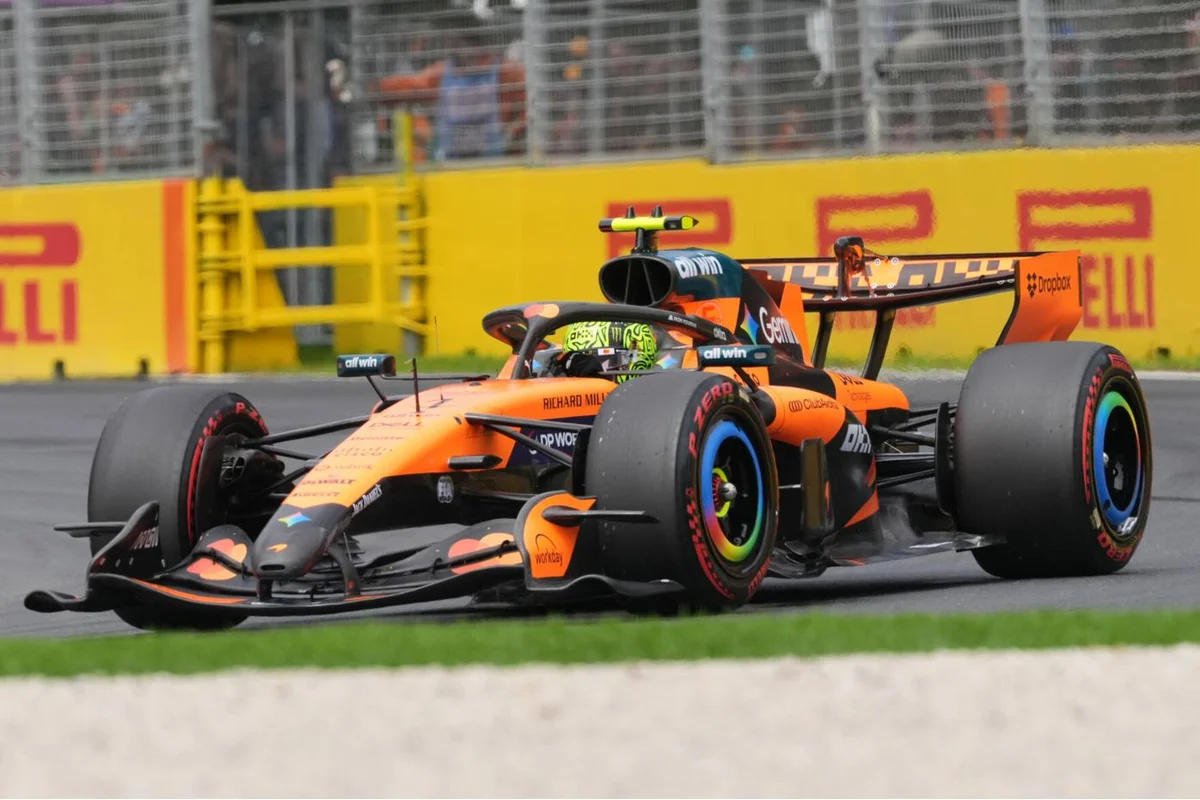
Lando Norris, the current Formula 1 champion, sharply criticized the new 2026 F1 cars, declaring they have shifted from the best in history to some of the worst following rule changes implemented this season. The concerns surfaced immediately after the opening qualifying session at the Australian Grand Prix held at Albert Park, where drivers reported significant challenges adapting to the new vehicle dynamics.
Technical Changes Hindering Performance and Driving Experience
The new regulations for Formula 1 cars in 2026 introduced hybrid engines powered equally by 50% sustainable fuels and 50% electric energy. This configuration requires drivers to carefully manage battery levels throughout the race, which often forces them to sacrifice outright cornering speed to preserve energy. Albert Park’s demanding layout has proven particularly difficult for energy management, with on-board cameras capturing moments where drivers experienced power drops on straights due to automatic switches into energy recovery modes.
Norris, who qualified sixth after encountering reliability problems during practice, expressed deep dissatisfaction with the performance and feel of the new cars.
We’ve come from the best cars ever made in Formula 1 and the nicest to drive to probably the worst,
he said.
He added,
“It sucks, but you have to live with it and just maximise what you get given. It’s certainly different. It’s certainly not like it was last year.”
Norris explained that unlike previous seasons, drivers can’t simply push harder through corners without risking battery depletion, which slows the car down.
It’s not like, yeah, push this corner more. Sometimes you push more, you lose the battery and just go slower. You have to understand how to do things.
Challenges During Qualifying Highlight Issues with New Car Setup
During qualifying, Norris encountered an unusual problem when debris from Kimi Antonelli’s Mercedes—specifically, a cooling fan—became lodged in his sidepod after leaving the pits. This incident caused him to spin out at Turn 2. Norris acknowledged that his focus on monitoring battery levels on his steering wheel prevented him from spotting the obstruction in time.
I’m looking at my steering wheel, that’s why I don’t see the debris, because I have to look at what speed I want to get at the end of the straight [did recharge the battery], and if I need to brake 30 metres earlier, 10 metres later,
he explained. So that’s also the problem.
Broad Driver Concerns Over Battery Management and Driving Limits
Norris indicated that many drivers share similar frustrations with the hybrid power split between fuel and electric energy, with the 50/50 balance proving a major obstacle to driving freedom and race pace. He singled out Mercedes’ George Russell, who earned pole position, as possibly adapting better and enjoying the new conditions more than most.
I think everyone knows what the issues are – it’s just the fact it’s a 50-50 split,
Norris remarked. “It just doesn’t work.”
“The fact, yeah, you just decelerate so much before corners, you have to lift everywhere to make sure the [battery] pack’s at the top. If the pack’s too high, you’re also screwed.”
It’s just difficult. But, yeah, it’s what we have. It doesn’t feel good as a driver, but I’m sure George is smiling, so it doesn’t really matter in the end of the day. You’ve just got to maximise what you’re going to give it.
Environmental Goals Shape Engine Regulations but Raise New Challenges
The new power unit regulations were introduced partly to enhance Formula 1’s sustainability by making hybrid engines reliant on green technology attractive to manufacturers. This initiative succeeded in bringing Audi into the sport and persuading Honda to remain as a key engine supplier. However, the compromise on performance and driving dynamics has triggered discontent among teams and drivers alike.
Norris Calls for Greater Consideration of Drivers’ Perspectives
Despite the intention to evolve the sport technologically, Norris believes that rulemakers have underestimated the importance of incorporating driver input, which aligns closely with fan interests and the essence of Formula 1 racing.
I think we have the interest of the sport in our minds better than others,
he stated.
“We also want the best for the sport. At the same time, we don’t try and do things to make it more fun for us.
“We try and do it so it’s cooler cars, looks better to watch, more exciting, all these different things.
The rules have been changed because that’s what manufacturers want. But if you have 20 other drivers complaining, I don’t know what’s better for the sport or not.
Implications for the Future of Formula 1 Vehicle Development
The introduction of hybrid engines with equal fuel and electric power offers both environmental advancements and new racing challenges, highlighting the tension between sustainability goals and maintaining driver engagement. Norris’s critique underscores the potential disconnect between manufacturer priorities and driver experience. How governing bodies will address these issues in future seasons remains to be seen, but the feedback from leading drivers like Norris may influence adjustments to regulations to preserve the sport’s competitive and entertainment value.
