
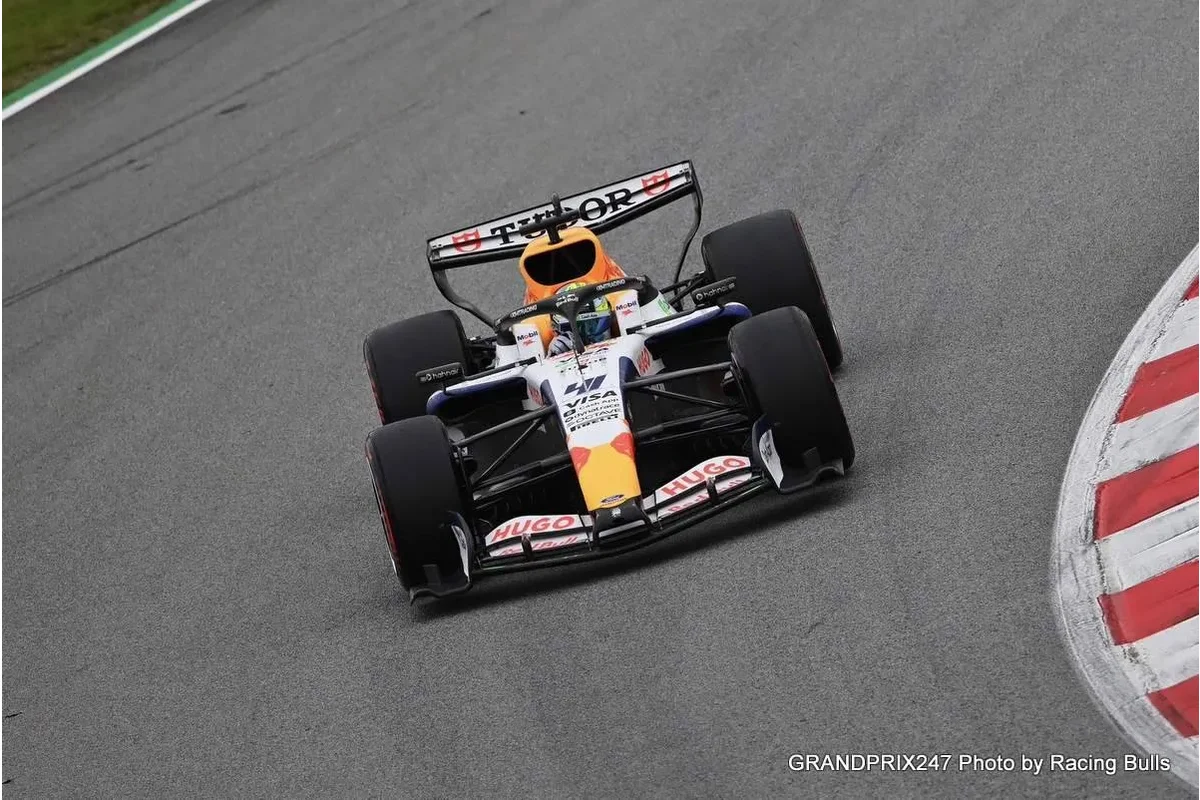
As the 2026 Formula 1 season approaches, Liam Lawson is harnessing advice from a leading Formula E driver to adapt to the sport’s fresh hybrid regulations. The New Zealander is aiming to bounce back strongly with Racing Bulls after a challenging debut year in F1.
Lawson, 23, endured a difficult start in 2024, being demoted from Max Verstappen’s teammate role to Red Bull’s junior program after just two races. His initial outings in Australia and China were marked by low grid placements and disappointing finishes, leaving him eager to improve under the new rules.
Challenges Faced in Initial Formula 1 Campaign
Lawson began his rookie season qualifying 18th in Australia and crashing out in wet conditions while running last. His races in China saw back-of-the-grid starts for both the sprint and the main event, where he finished 14th and 12th respectively. Despite this tough beginning, his mid-season return to Racing Bulls sparked progress, highlighted by a career-best fifth place at the Azerbaijan Grand Prix.
Still, Lawson wrapped up the year 14th in the standings, trailing teammate Isack Hadjar—who scored a podium finish—as they both gained valuable experience in the highly competitive field.
Adjusting to Hybrid Regulations with Expertise from Formula E
The introduction of 50-50 hybrid power units in the 2026 season will place significant emphasis on energy conservation, a skill where Formula E drivers already excel. Among them is fellow Kiwi Nick Cassidy, the 2023 Formula E World Championship runner-up, whose mastery in managing electric energy is well known to Lawson.
Nick Cassidy Recognized as Energy Management Role Model
Lawson described Cassidy as “probably the best” in energy management during an exclusive talkSPORT interview, citing his close following of Cassidy’s performance at the Mexico City E-Prix. He recalled watching Cassidy’s race while in New Zealand and praised his compatriot’s consistent excellence and willingness to share advice.
He’s obviously doing a really, really good job and somebody that over the years I’ve spoken to a lot, and I probably this year will be speaking to a lot more, asking for advice.
?Liam Lawson, Racing Bulls driver
Limitations on Collaborative Support Due to Team Affiliations
Despite Lawson’s enthusiasm for guidance from Cassidy, the Formula E star has tempered expectations regarding ongoing support. Cassidy, driving for a rival F1 team in a development role, acknowledged their shared nationality but explained the challenge of providing detailed assistance because of potential conflicts.
Yeah, I mean, it was super nice of him [Lawson] to say that,
Obviously, I wish him the best, just being a fellow Kiwi, but I’m affiliated with another F1 team myself and in a development role, so there’s very little I can probably help him with just because of a conflict of interest.
?Nick Cassidy, Formula E competitor
Racing Bulls’ Testing to Reveal Performance and Reliability Prospects
Looking ahead, Lawson expects that the team’s true potential will become clear shortly after initial preseason testing. He emphasized that while performance and reliability remain questions for many squads, testing will provide important insights to direct season strategy and development.
Immediately, to be honest, after testing,
I think obviously the question mark will also be reliability for a lot of teams as well going into the races.
But we’ll obviously try and figure that stuff out very quickly in testing. We’ll do a lot of different style sort of planned running.
I think obviously through the season, there’ll be development, and there’ll be teams finding their way, but I think very quickly after testing, we’ll have an idea of what sort of package we have.
?Liam Lawson, Racing Bulls driver
Implications of Hybrid Era for F1 and Lawson’s Prospects
As F1 transitions into a hybrid-focused era, the ability to efficiently manage energy will separate strong seasonal contenders from the rest. Liam Lawson’s collaboration with experienced Formula E talent like Cassidy signals a forward-thinking approach that could accelerate his growth in this evolving environment. Racing Bulls’ forthcoming testing outcomes will be pivotal, revealing whether their car matches top teams’ pace and reliability.
Lawson’s reflection on his rookie year, combined with strategic advice from an electric racing specialist, offers hope that the upcoming season could mark a turning point for the young driver. Success in adopting the new regulations may not only improve his standings but also help him secure a more stable position within the competitive Red Bull ecosystem.
