
Red Bull Racing is about to embark on its first full Formula 1 season without Christian Horner as team principal, yet his influence remains significant, particularly regarding this year’s car development. For the 2024 season, Red Bull will deploy their own power units in collaboration with Ford, marking a major shift from previous arrangements. Though Red Bull initially pursued a partnership with Porsche, under Horner’s leadership, the team instead finalized a deal with American car manufacturer Ford.
Before stepping down after last year’s British Grand Prix, Horner was instrumental in hiring numerous engineers from rival Mercedes to strengthen Red Bull Powertrains’ capabilities. His groundwork continues to shape the team’s preparations for 2026, as Max Verstappen and his new teammate Isack Hadjar ready themselves for the coming season.
Martin Brundle Supports Horner’s Forecast on Max Verstappen’s Future
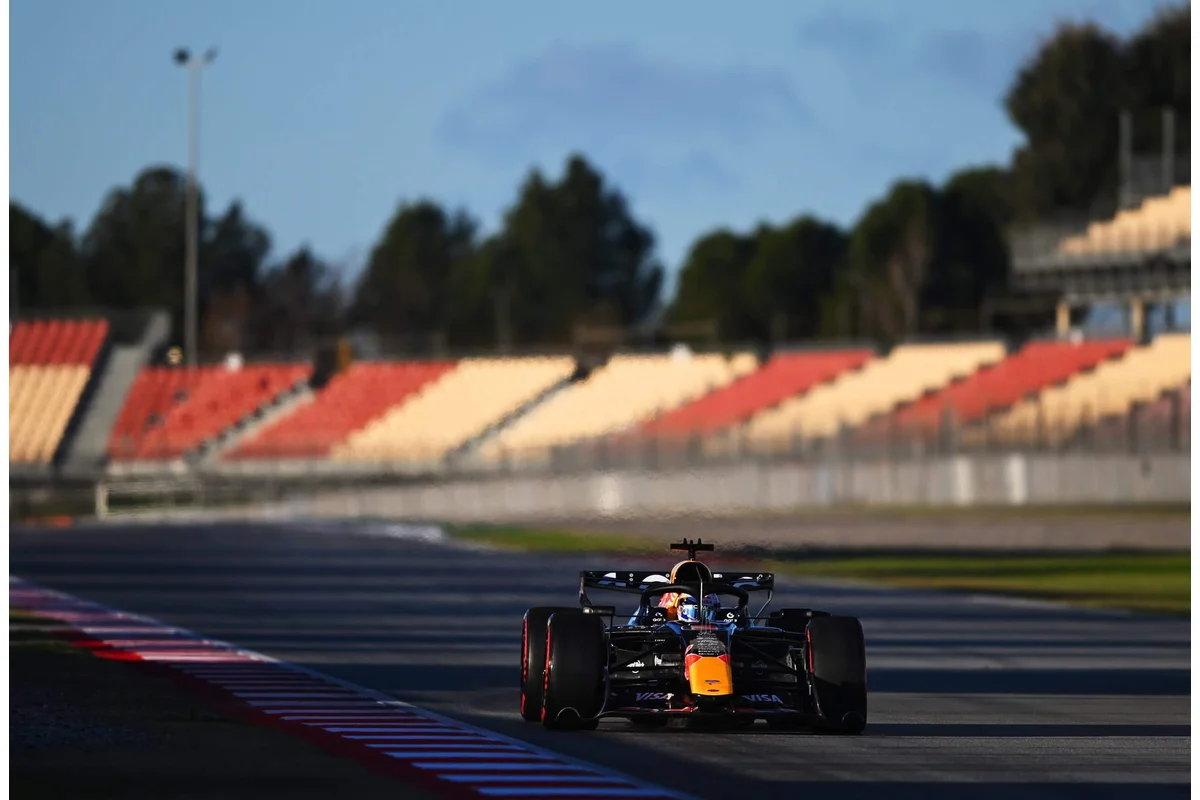
During a discussion on The F1 Show, broadcasters Martin Brundle and Ted Kravitz reflected on Red Bull’s initial week of testing in Barcelona and assessed whether Christian Horner’s assurances about the 2026 campaign hold true. Kravitz asked Brundle whether Horner’s confidence that Verstappen would remain with Red Bull, rather than move to Mercedes, was justified.
Brundle responded by highlighting the strong performance of Red Bull’s Powertrains engine, noting its reliability and innovative features like the compression ratio loophole, which the team has reportedly utilized despite official denials. He pointed out that the car’s design looks impressive and the power unit has been refined over several years and significant investments.
“Was Christian Horner right by reassuring Max that 2026 Red Bull will be OK?”
Martin Brundle stated,
“Well, it seems to be the way, doesn’t it? I think the power unit’s performed well in both teams, and it just looks like they’ve had a number of years now and huge amounts of money. Even going around the factory nearly two years ago, you’re like, oh my god, this is incredible.”
“So, we can’t be that surprised that they’ve actually put a decent product out, but we’ll see how it goes with the fuel, it’s going to be super important this year. The regeneration, the raceability of the cars.”
Insight into Red Bull’s Challenges During Early Testing
Max Verstappen completed two significant stints in the RB22 during testing in Barcelona, starting on the second day and then logging over 100 laps on the final day. Meanwhile, rookie driver Isack Hadjar impressed initially by setting the fastest time on day one at the Circuit de Catalunya. However, on the following day’s wet conditions, Hadjar crashed into the barriers, disrupting Red Bull’s preparation schedule.
Hadjar’s incident drew comparisons from F1 insiders to the early struggles of Pierre Gasly, another French driver who faced setbacks during his Red Bull testing phase. Martin Brundle expressed sympathy for Hadjar, suggesting that sudden torque spikes and erratic power delivery in these new cars could easily cause off-track excursions during challenging conditions.
“So, especially in wet conditions, I’d imagine the power delivery needs quite a lot of smoothing out yet on all of them.”
Brundle also cited Lewis Hamilton’s spin earlier in the testing week as an example of how difficult it is to handle these powerful cars under certain circumstances, reinforcing the idea that teams still need to refine engine and throttle responses.
Implications for Red Bull’s 2026 Prospects and What Lies Ahead
The groundwork laid by Christian Horner and his team appears to have positioned Red Bull strongly for the upcoming seasons, particularly with their transition to in-house power unit production alongside Ford. Martin Brundle’s endorsement of Horner’s prediction about Verstappen’s loyalty and the competitiveness of the Red Bull powertrain adds weight to the team’s confidence. However, ongoing issues like fuel management and power delivery smoothing remain critical to address, especially amid unpredictable weather and race conditions.
With Verstappen continuing as a central figure, supported by up-and-coming talent like Isack Hadjar, the team’s performance in 2026 will be closely watched. Early testing has revealed both promising advances and challenges that Red Bull will need to overcome to maintain its position at the front of Formula 1.
