
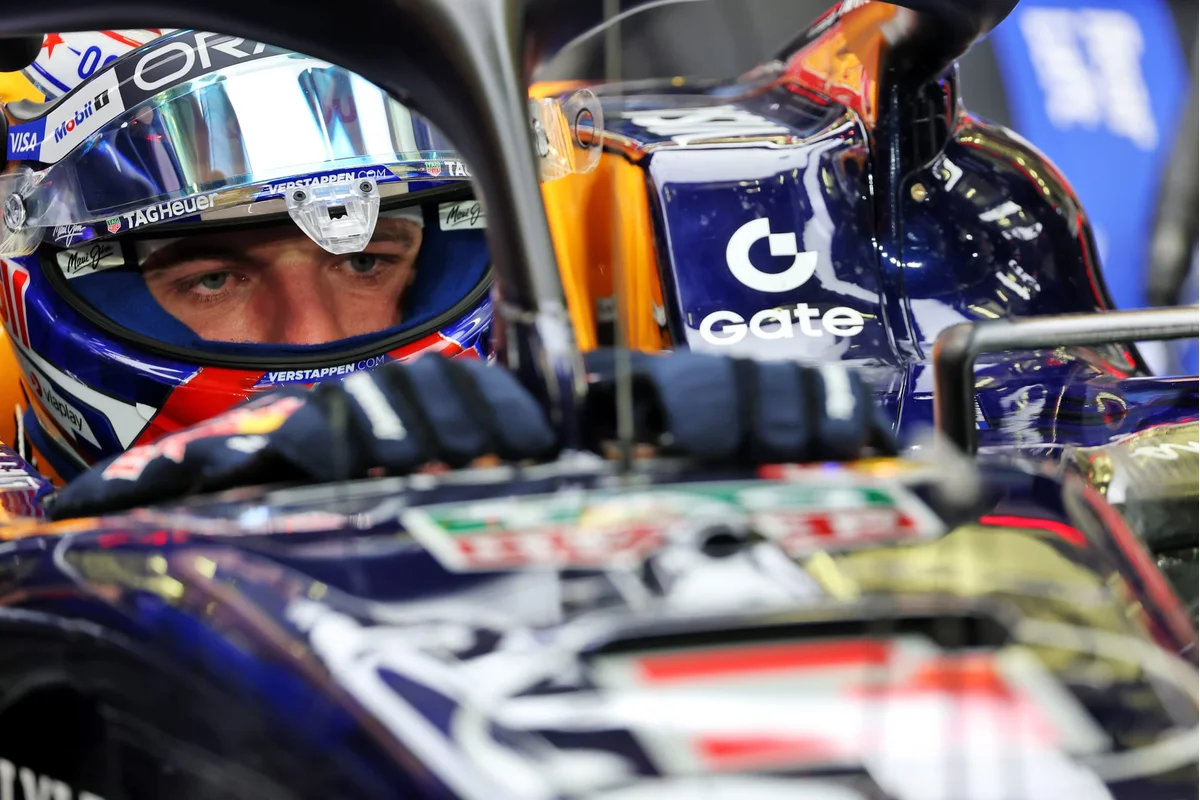
Max Verstappen has publicly condemned Formula 1’s upcoming 2026 technical regulations, calling the new machinery “anti-racing” during pre-season testing in Bahrain. The four-time world champion expressed deep frustration with the sweeping rule modifications, which he believes make driving less enjoyable and detract from the essence of Formula 1.
Speaking to journalists, Verstappen delivered harsh criticism of the regulations aimed at boosting the racing spectacle but which, in his view, undermine the sport’s competitive spirit.
Concerns Over New Power Unit Design and Driving Experience
Central to Verstappen’s criticism is the new power unit formula, which requires an almost equal split between electric battery power and internal combustion engine output. He explained that this shift drastically changes the driving dynamics, limiting drivers’ ability to push the cars to their full potential.
To drive, it’s not a lot of fun, to be honest,
Verstappen said.
I would say the right word is management. It’s not very Formula 1-like. It feels a bit more like Formula E on steroids.
He described the current cars as “energy poor,” where braking tactics and gear selection heavily affect straight-line speed, a departure from traditional high-speed racing. Verstappen elaborated,
As a pure driver, I enjoy driving flat out and at the moment, you cannot drive like that,
and noted that
there’s a lot going on. A lot of what you do as a driver, in terms of inputs, has a massive effect on the energy side of things.
Support from Lewis Hamilton and Technical Challenges Highlighted
Verstappen’s frustrations are shared by Lewis Hamilton, the seven-time world champion, who criticized the extensive “lift-and-coast” methods drivers must now use to conserve battery power during laps. Hamilton pointed out that in a qualifying session in Barcelona, drivers had to coast for approximately 600 meters, which he stated,
that’s not what racing is about,
criticizing the approach as detrimental to competitive driving.
Additionally, Ferrari’s drivers have detailed the complexities caused by the new rules, including the need to drive in low gears during parts of the race to maximize energy recovery. According to Hamilton,
we’re going down to second and first in some places just to try to recover that extra bit of power,
describing the technical regulations as ridiculously complicated.
Uncertainty Surrounding Verstappen’s Future in Formula 1
Verstappen went further by hinting that these new rules may influence his long-term commitment to Formula 1. While the regulations are set to remain until at least 2030, the prospect of continuing under such conditions has created doubt for the Dutch driver.
It needs to be fun to drive as well. I think, at this stage of my career, I am, of course, also exploring other things outside of Formula 1 to have fun at,
he admitted.
I know that we’re stuck with this regulation for quite a while. So, yeah, let’s see.
Implications for the Future of Formula 1 and Driver Experience
The concerns raised by Verstappen and Hamilton underscore growing unease among top drivers regarding the sport’s technological direction and its impact on racing quality. The shift toward energy management and technical complexity risks alienating drivers who prioritize high-adrenaline competition, potentially affecting Formula 1’s appeal.
As the sport prepares to implement these changes, the responses from the drivers highlight the tension between innovation and preserving the core thrill of racing. Officials have not yet publicly addressed the comments from Verstappen, who remains Formula 1’s most decorated current competitor.
