
This weekend’s Austrian Grand Prix represents a crucial moment for Formula 1 world champion Max Verstappen as he narrowly avoids triggering an automatic race ban due to penalty points. The incident involving George Russell at the recent Spanish Grand Prix added three penalty points to Verstappen’s super licence, pushing him to 11 points—just one point away from the 12-point threshold that results in a mandatory one-race suspension under F1 regulations.
Penalty points on F1 super licences accumulate over a rolling 12-month period, and Verstappen’s earliest penalty points will remain active until June 30, immediately following this weekend’s race in Spielberg. This timing means Verstappen is walking a fine line, with no room for errors if he aims to avoid missing upcoming races.
Details Behind Verstappen’s Penalty Point Accumulation
Verstappen’s current 11 penalty points stem from a series of incidents over the past year, illustrating how even a dominant driver can face severe consequences from repeated infractions. His penalty points history includes:
- June 30, 2024: Two points for causing a collision with Lando Norris at the Austrian GP
- October 27, 2024: Two points for forcing Norris off the track at the Mexico City GP
- November 2, 2024: One point for speeding under a Virtual Safety Car during the Sao Paulo Sprint
- November 30, 2024: One point for impeding George Russell during Qatar GP qualifying
- December 8, 2024: Two points for causing a collision with Oscar Piastri at the Abu Dhabi GP
- June 1, 2025: Three points for a collision with George Russell in the Spanish GP
The earliest points, from his Austria-Spanish GP incidents, remain on his licence through June 30, while others will expire later in the year. Even avoiding penalties this weekend, Verstappen would still carry nine points into multiple future races, maintaining pressure on his conduct on track.
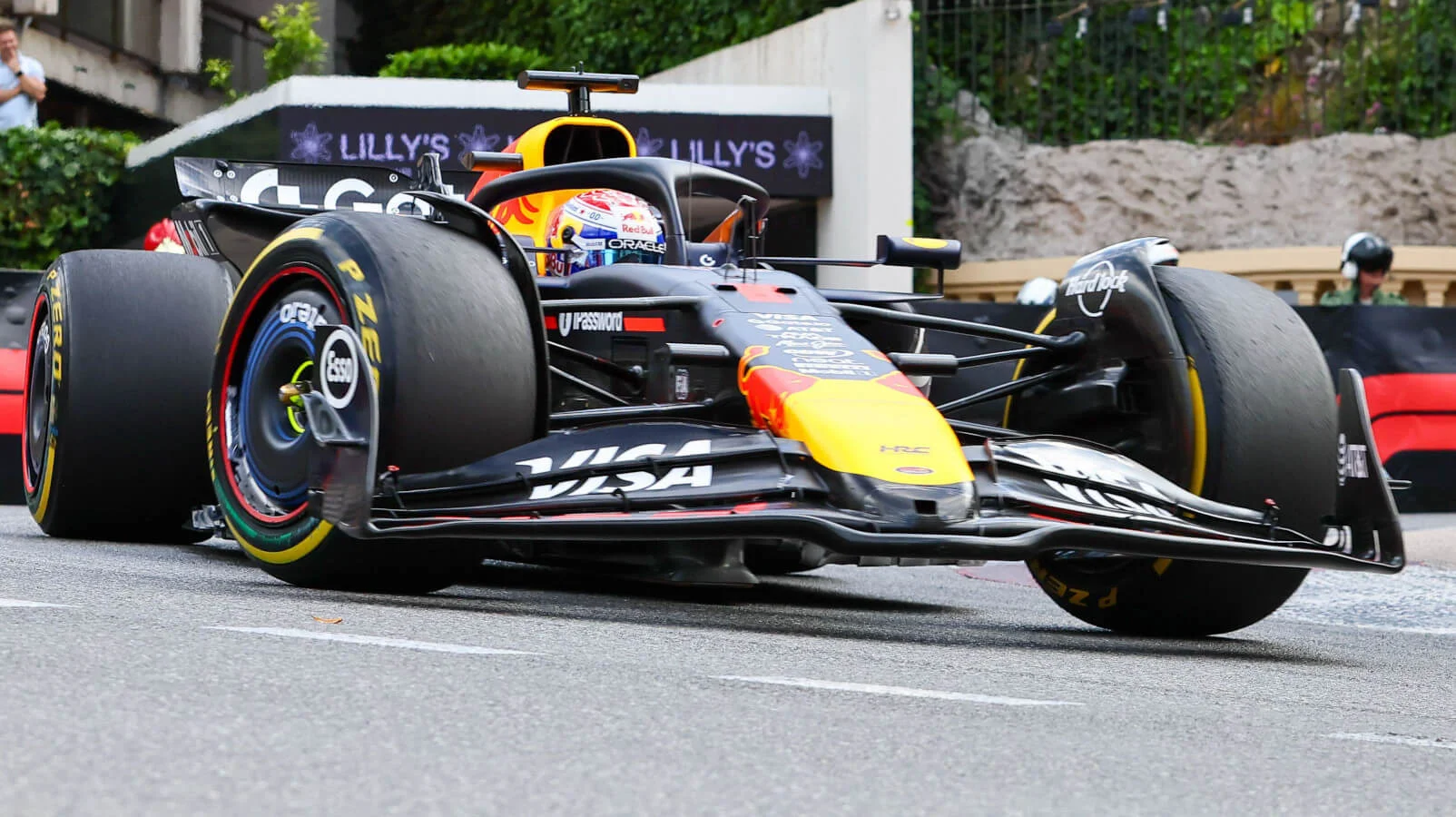
Mechanics of the F1 Penalty Points System
The penalty points system was introduced in 2014 as a measure to reinforce on-track discipline across Formula 1 drivers. Drivers who breach racing regulations are assigned penalty points onto their super licences, which function similarly to those on driver’s road licences, with a 12-point limit over a year leading to suspension.
Aside from sporting penalties like time and grid penalties, the authorities assign one to three penalty points per infraction depending on severity. These points accumulate, and once the 12-point maximum is reached within 12 months, the driver must sit out the following race weekend.
Penalty points will remain on a driver’s Super Licence for a period of twelve (12) months after which they will be respectively removed on the twelve (12) month anniversary of their imposition.
—Sporting Regulations
Types of Incidents That Lead to Penalty Points
Stewards evaluate each on-track infraction and assign penalty points varying from one for minor breaches to three for more serious offences. Verstappen’s record includes single-point offences such as speeding under the Virtual Safety Car and impeding other drivers during qualifying.
FIA recently released guidance documents detailing common infractions with recommended penalties, which though unofficial, help stewards maintain consistent standards. Typical reasons for single points include pit lane violations, unsafe releases, and minor collisions—examples shown by other drivers like Lance Stroll and Esteban Ocon in recent events.
A similar single-point penalty was applied to George Russell in Qatar for failing to maintain the required 10 car-length distance behind the Safety Car. Collisions involving lesser culpability have earned single points for drivers including Liam Lawson at Bahrain and Miami.
Precedents of Drivers Reaching the 12-Point Limit and Resulting Suspensions
Though many drivers have come close, only a few have hit the 12-point cap, triggering race bans. Most recently, Kevin Magnussen reached this limit in 2024 following a collision at the Italian Grand Prix, leading to his suspension for the next race in Azerbaijan.
Historically, suspensions also occurred before the formal penalty points system, such as Romain Grosjean missing a race after causing a major first-corner crash in Belgium in 2012. Other notable suspended drivers include Michael Schumacher, Eddie Irvine, Mika Hakkinen, and Nigel Mansell for various infractions dating back to the 1980s and 1990s.
Team Considerations: Who Would Replace Verstappen If Suspended?
Red Bull Racing hopes that Verstappen can avoid any further penalties in Austria, as highlighted by Christian Horner’s hope that Verstappen will “keep his nose clean.” However, if Verstappen does face a ban, Red Bull has ready options within its broader driver development program.
If needed, either Isack Hadjar or Liam Lawson, currently racing for Red Bull’s junior team Racing Bull, would likely step into Verstappen’s seat for a single race alongside Yuki Tsunoda. Their promotion would require a temporary reassignment in the junior series, with potential replacements including Japan’s Ayumu Iwasa, who has gained experience in Friday practice sessions, and British F2 driver Arvid Lindblad, whose super licence exemption was recently granted ahead of his 18th birthday.
Championship Stakes and Future Outlook After Austrian GP
The penalty points situation places Verstappen under intense scrutiny as he pursues his championship goals, especially with an F1 season where every incident can have significant consequences. The Austrian GP weekend will be closely watched to see if Verstappen can maintain a clean record, as the slightest misjudgment risks activating the automatic race ban rule ahead of the British Grand Prix.
Should Verstappen pick up an extra point or more, it would force Red Bull into a rapid contingency plan, reshuffling drivers and impacting championship dynamics. Alternatively, beyond Austria, the focus will shift to how soon Verstappen can shed penalty points from previous incidents as they expire in staggered intervals through the remainder of the season.
Schedule for the 2025 Austrian Grand Prix Weekend Broadcast
The Austrian Grand Prix weekend features a full slate of races and practices across different Formula series, airing live on Sky Sports F1. Below is the detailed schedule:
- Friday, June 27: F3 Practice at 8:50 AM, F2 Practice at 10:00 AM, Austrian GP Practice One at 12:30 PM, F3 Qualifying at 1:55 PM, F2 Qualifying at 2:50 PM, Austrian GP Practice Two at 4:00 PM, The F1 Show at 5:15 PM
- Saturday, June 28: F3 Sprint at 9:00 AM, Austrian GP Practice Three at 11:30 AM, F2 Sprint at 1:10 PM, Austrian GP Qualifying at 3:00 PM, Ted’s Qualifying Notebook at 5:00 PM
- Sunday, June 29: F3 Feature Race at 7:25 AM, F2 Feature Race at 8:55 AM, Porsche Supercup at 10:40 AM, Austrian GP build-up at 12:30 PM, The Austrian Grand Prix at 2:00 PM, Chequered Flag and reaction at 4:00 PM, Ted’s Notebook at 5:00 PM
All sessions will also be available on Sky Sports Main Event, with streaming accessible through Sky Sports NOW, allowing fans to watch live and stay updated throughout the weekend.
