
World champion Max Verstappen has voiced strong dissatisfaction with the new Formula 1 cars set for the 2026 season, highlighting several issues that make the vehicles unpleasant to drive. The redesigned cars incorporate a powertrain that relies heavily on electric energy, narrower tires, and more complex aerodynamics requiring drivers to manage energy deployment carefully. For Verstappen, who thrives on pure racing, these changes have diluted the thrill of the sport.
Energy Management Demands Undermine Pure Driving
The most significant complaint Verstappen raised concerns the intense energy management required by the 2026 cars. Drivers now have to harvest much more electrical energy when braking to power larger batteries onboard. On tracks with fewer braking points, they must perform “superclipping,” where the engine is used not to drive the wheels but to generate electricity to recharge the battery. This scenario forces drivers to strategically choose when to deploy electrical boosts during a lap. Verstappen, a racing purist, finds this shift away from straightforward, flat-out driving frustrating.
As a pure driver, I enjoy driving flat-out,
Verstappen said.
And at the moment, you cannot drive like that. A lot of what you do as a driver, in terms of inputs, has a massive effect on the energy side of things. For me, that’s just not Formula 1,
he told the BBC.
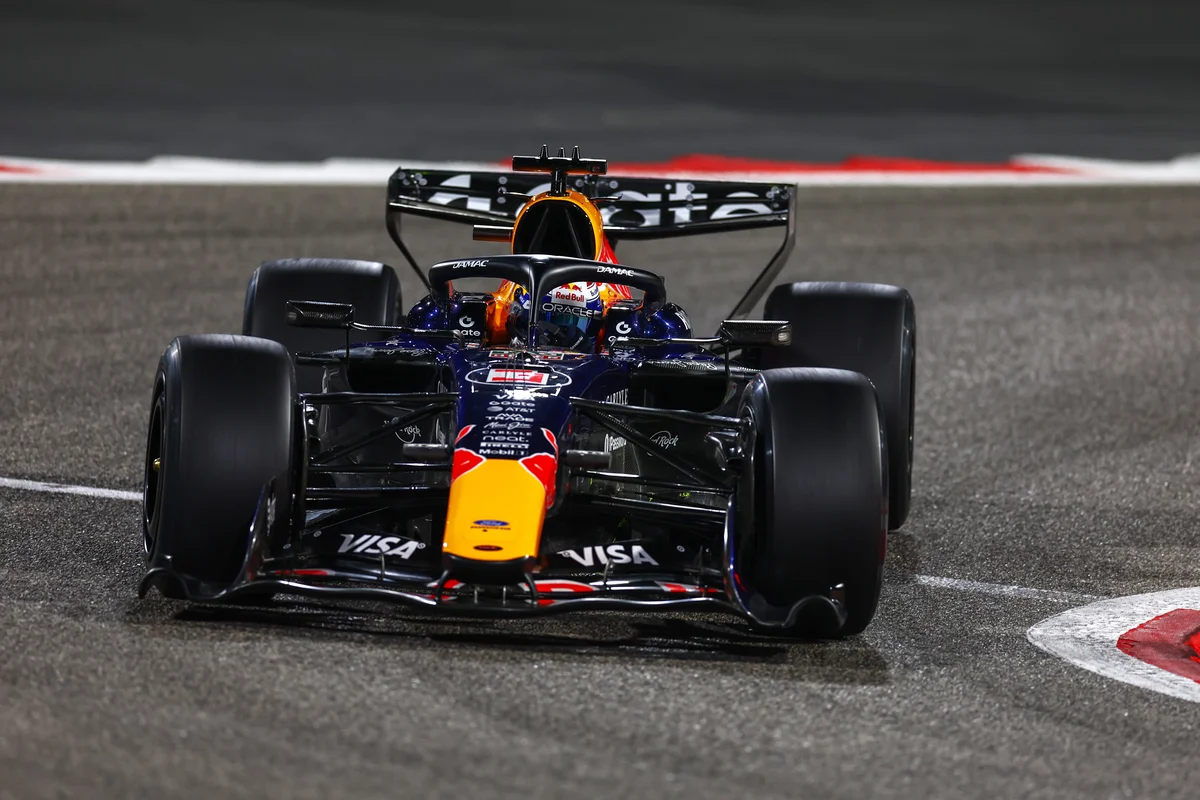
Sorry, but that belongs in Formula E.
Verstappen Finds the Current Car Difficult and Unenjoyable to Handle
Verstappen also expressed frustration with how the current Red Bull car feels both in real life and in simulations. He noted that the handling is so unpleasant that at one point last year, he deliberately avoided driving the simulator version of the new car, preferring to practice with the previous season’s model instead. He compared the new cars unfavorably, stating that even the unpopular ground-effect cars from recent seasons were much more enjoyable to drive.
For me personally, it’s not so enjoyable,
Verstappen remarked.
The feeling in real life is the same as in the simulator,
he added.
Sometimes certain things feel a bit better or worse in the simulator, but this time it was actually the same,
he said.
Last year at one point I deliberately said that I didn’t want to drive it in the simulator any more. It felt so bad compared to last year, so I thought ‘You know what, I’ll just focus on last year’s car in the sim, and we’ll see about the rest this year’. It’s just not good.
He went further: the prior ground-effect machines were
still 10 times better than this
, highlighting the extent of his disappointment.
Considering Options Beyond Formula 1 Because of Car Changes
Verstappen’s disappointment with the new cars is already influencing his plans for the future. Though he remains contracted with Red Bull until 2028, his deal includes break clauses, such as the option to exit if he isn’t among the top two drivers midway through a season. This flexibility suggests he is open to exploring other racing opportunities.
His secretive test at the Nürburgring in May 2025, reportedly under the alias Franz Hermann and driving a Ferrari, fueled speculation about potential entries in endurance racing events like the 24 Hours of Nürburgring. He has also shown interest in competing at Le Mans alongside fellow Red Bull champion Sebastian Vettel. These pursuits imply Verstappen is drawn toward racing formats that emphasize raw speed and driver skill over managing technical regulations.
We’re still racing in Formula 1 and that’s great, but once you’ve already won and achieved everything, then it’s not really necessary [to stay around] any more,
Verstappen said, as reported by Autosport.
There are a lot of other nice things you can do, and I’m definitely going to do those – maybe already this year and also in the coming years.
This certainly doesn’t help to keep going for a very long time.
Technical Rules Add Complexity and Unpredictability to Racing
Verstappen favors a merit-based competition where driver ability dictates the outcome. However, the 2026 regulations introduce new features that disrupt this ideal. One such element is Overtake Mode, which replaces the previous Drag Reduction System (DRS) by allowing drivers to activate a burst of extra electrical power. The cars also have a Straight Mode, which changes wing configurations on straights, altering aerodynamic characteristics mid-race.
These gimmicks, according to Verstappen, risk making racing more chaotic and less about skill. When asked about Overtake Mode, he responded to RacingNews365 by joking,
I don’t know how effective [it] will be … maybe we need some bananas and a red shell,
humorously referencing the chaos-inducing items from the Mario Kart video game series.
Red Bull’s Performance Lags Behind Rivals in the New Era
While Verstappen clinched his first championship in 2021 despite a faster rival Mercedes car, subsequent titles benefited from dominating machinery. However, in late 2024 and throughout 2025, McLaren showed superior pace, nearly clinching the championship and narrowly edging out Red Bull’s drivers. Despite that challenge, Verstappen almost achieved an extraordinary comeback, closing a points gap of over 100.
Pre-season testing in Bahrain hints that Mercedes-AMG and Ferrari may hold an advantage over the field, with McLaren close behind Red Bull. This situation contrasts with previous years when Red Bull often led the pack. The uncertainty about performance this season adds another layer of difficulty for Verstappen’s team.
He expressed his frustration with the car’s grip and overall driveability, emphasizing his desire for a straightforward racing experience.
I just want normal driving,
he told The Race.
How it should be, without having to [think] ‘Ooh, if I brake a bit longer, or less, or more, or one gear up or down’, stuff like that, that it so heavily impacts the performance on the straights.
Plus the grip, I think at the moment, is quite low with these tyres and the car configuration.
It is, I would say a big step back to how it was.
Implications for Formula 1 and Verstappen’s Future
Max Verstappen’s candid criticism of the 2026 Formula 1 cars underlines a broader tension between technological innovation and driver experience. His unease with the increasing complexity and restrictions suggests a potential shift in how top drivers view the sport’s direction. If the cars fail to provide the level of pure, skill-based racing he values, Verstappen may explore alternative racing disciplines more aligned with his preferences.
For Formula 1, balancing technological advancement, sustainability targets, and maintaining an exciting contest may prove challenging. As Mercedes-AMG and Ferrari appear strong in early tests, the championship fight could be highly competitive, but how drivers like Verstappen respond to changes will influence fan engagement and the sport’s future appeal.
With his contract allowing flexibility and his interest broadened by endurance racing tests, Verstappen is at a crossroads. Whether he perseveres in Formula 1 or pursues other racing avenues will become clear as the 2026 season unfolds.
