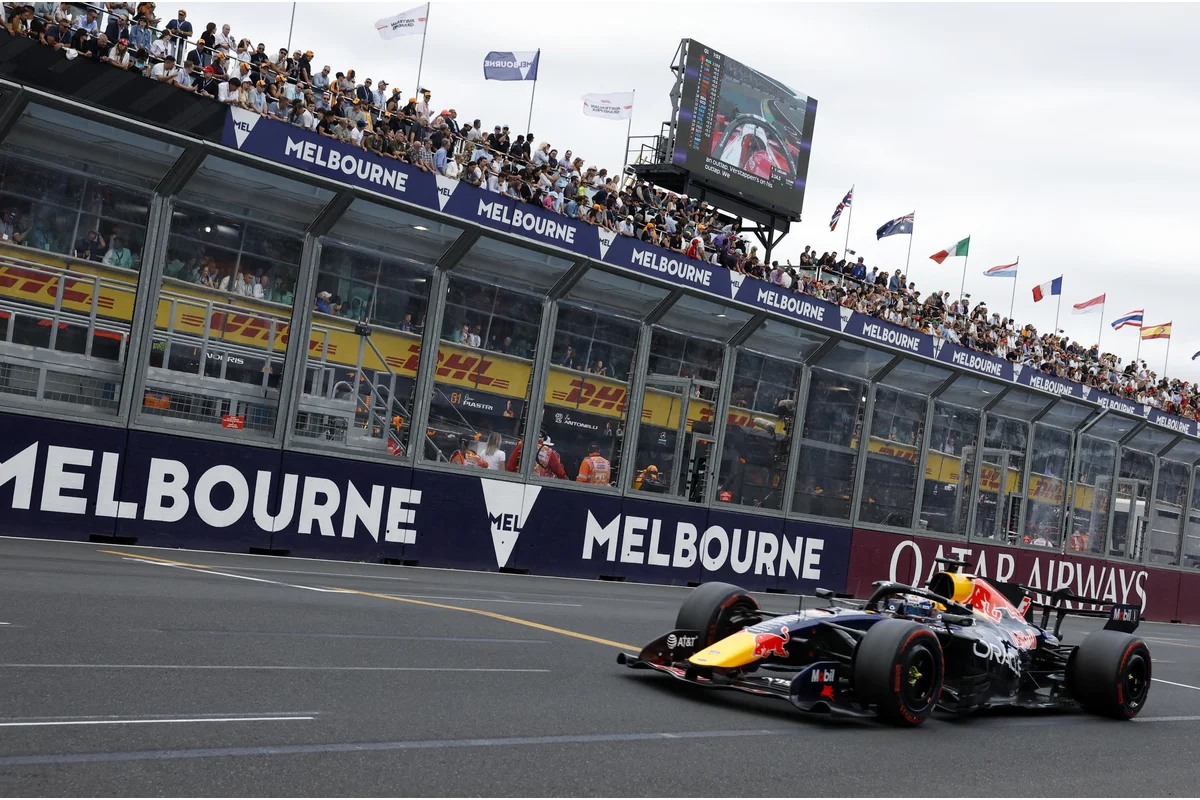
Max Verstappen expressed deep dissatisfaction with the 2026 Formula 1 regulations following his Q1crash at the Australian Grand Prix in Melbourne, stating he felt “completely empty” despite qualifying. The new regulations, introduced this season, emphasize a near-even split between internal combustion and electric power, leading to complex battery management challenges that have drawn criticism from multiple drivers, including Verstappen.
Shift Toward Electric Power Alters Racing Dynamics and Driver Experience
The 2026 rules incorporate about a 50:50 balance between traditional engines and electric power, requiring drivers to adapt to battery conservation techniques rarely seen before. This includes unconventional driving maneuvers such as downshifting on straights, which Verstappen labeled as “anti-racing” and likened to “Formula E on steroids” during pre-season tests. His critical stance remains unchanged after experiencing the new regulations firsthand in Melbourne, one of the circuits identified as ‘energy-poor’ due to its fast corners and extended straights, making battery harvesting difficult.
Verstappen Highlights Challenges of Melbourne Track Under New Rules
Verstappen explained how the 2026 car demands altered driving styles that conflict with natural racing instincts. He said,
“You just can’t drive naturally. Basically you have to be on the throttle as little as possible everywhere to save the battery. Certain corners you have to approach differently so that when you exit you can save battery again. For me that has very little to do with racing.”
The Dutchman also mentioned that the simulator experience last year gave a “really bad” feeling about the car, suggesting Melbourne may be the toughest venue to start the season under these new conditions.
Other Drivers Echo Concerns About the New Formula 1 Cars
Verstappen’s negative view is shared by several key competitors. Lando Norris, the reigning champion, remarked on the decline in car quality this season, stating,
Image of: Max Verstappen
“we’ve come from the best cars ever made in Formula 1”
to what he described as “probably the worst.”Charles Leclerc called the updated vehicles
George Russell Offers a More Measured Perspective on the 2026 Changes
Among drivers, George Russell stands out as relatively optimistic after securing Mercedes’ pole position at Melbourne. Speaking with Sky Sports, he commented,
“Once you get your head around it, it becomes like a new normal,”
comparing the adaptation needed to previous challenges such as porpoising. He acknowledged that the current style—featuring techniques like lifting and coasting—is not traditional racing but emphasized the importance of patience with the evolving regulations. Russell also noted,
“I think Melbourne’s probably going to be the worst track for these engines.”
Implications of the 2026 Regulations on F1 and What Lies Ahead
The widespread critique, particularly from champions like Verstappen and Norris, highlights a growing divide in driver opinions regarding the sport’s direction under the 2026 formula. The heavy reliance on electric power and the resulting necessity for battery management appear to diminish the natural racing feel many drivers value. Meanwhile, the FIA has indicated that they plan to introduce adjustments to address these issues. As the season progresses on circuits with varying energy profiles, both teams and drivers will continue adapting to these unfamiliar demands, shaping the future of Formula 1 competition and possibly prompting further refinements to the regulatory framework.