
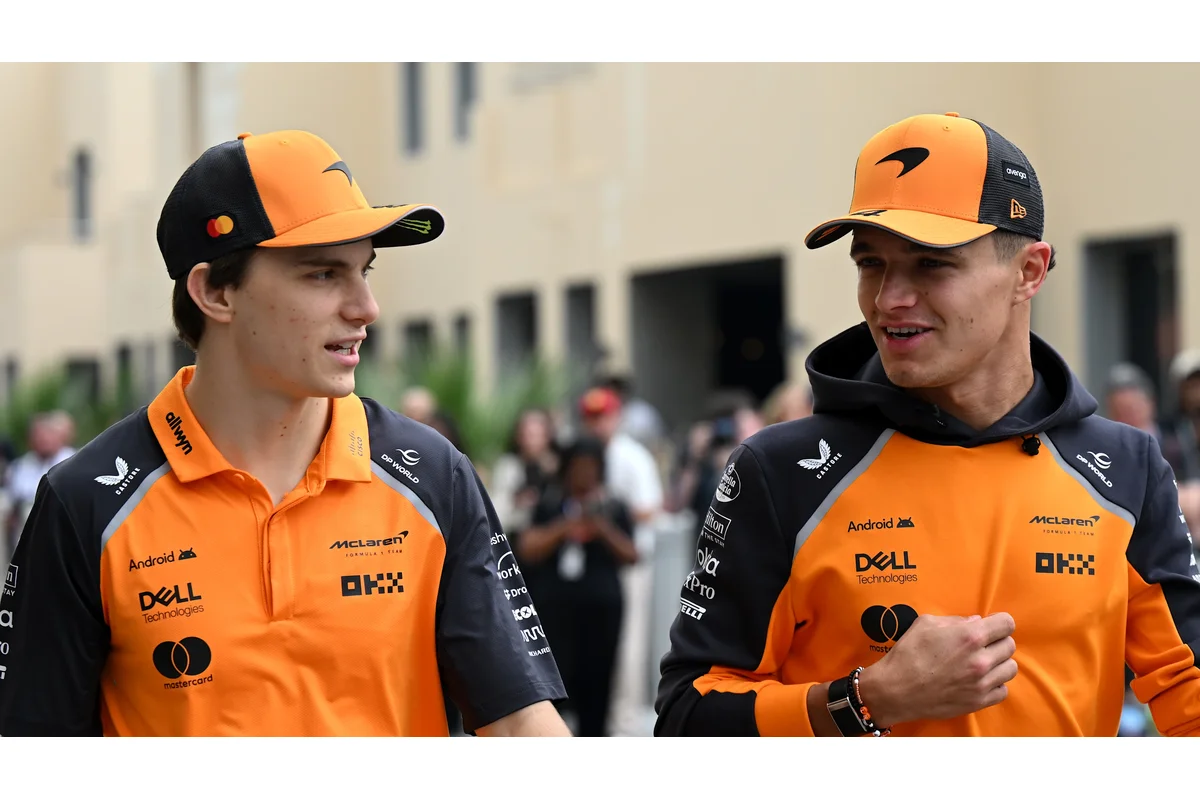
McLaren is facing a significant financial challenge as the team must pay over €2 million in super licence fees for Lando Norris and Oscar Piastri for the 2026 Formula 1 season. The sharp increase in expenses is driven by the FIA’s super licence system, heavily affected by the on-track achievements of both drivers, especially after Norris secured the 2025 world championship.
How Driver Success in 2025 Led to Soaring Costs
Lando Norris achieved his first world championship title in 2025, edging out Max Verstappen by just two points after a dramatic season. Norris dominated with eight grand prix wins, the most of any driver that year. Oscar Piastri was also a major contender, spending much of the season in the lead and finishing just 13 points behind his teammate. These standout performances reinforced McLaren’s presence among the top teams, but they came with an expensive tradeoff in the form of super licence fees.
The Structure of the FIA’s Super Licence System
Participation in Formula 1 requires every driver to obtain a super licence, with high costs for those who collect championship points. The standard base cost is €11,842, but for every point a driver earns in the previous season, there’s an additional charge of €2,392. As a result, Norris and Max Verstappen each face bills exceeding €1 million, and Oscar Piastri now has a fee close to €1 million at €992,562. This fee system highlights the direct financial impact of sporting excellence in F1.
Financial Burden Falls on McLaren’s Team Budget
While these super licence expenses are calculated from the drivers’ achievements, it is McLaren, not the drivers themselves, that bears the financial responsibility. The team, already committed to substantial driver salaries, will now have to accommodate these additional charges. Despite the size of the bill, McLaren is expected to manage the increased costs, but the scale of the expense has unsettled the normally stable team finances.
A Stark Contrast for Pointless Drivers and Their Teams
For drivers who didn’t score championship points last season, like Sergio Perez, Valtteri Bottas, and Arvid Lindblad, only the basic super licence fee of €11,842 applies. This stark difference underscores the financial gap between elite performers and those who struggled, amplifying the pressure on successful teams such as McLaren.
The Essentials of an FIA Super Licence
The FIA super licence is mandatory for racing in Formula 1 and is regulated by the sport’s governing body. Prospective F1 drivers must meet stringent requirements, including being at least 18 years old (with rare exceptions), passing a knowledge exam, and collecting 40 super licence points through FIA-approved competitions. This system is designed to ensure both skill and experience, but its financial mechanism leaves top teams exposed to hefty charges after successful seasons.
Uncertainty Looms for McLaren as 2026 Approaches
With the new season drawing near, McLaren must now address the unexpected economic reality imposed by the Oscar Piastri super licence fee and the associated expenses for Norris. As rival teams like Haas, Red Bull, and Alpine make their own plans—such as preparing for vital test sessions in Barcelona—the spotlight will stay fixed on McLaren’s ability to weather this fiscal setback. The balance between on-track triumph and off-track costs has rarely been so stark, making the true price of Formula 1 glory more apparent than ever before.
