
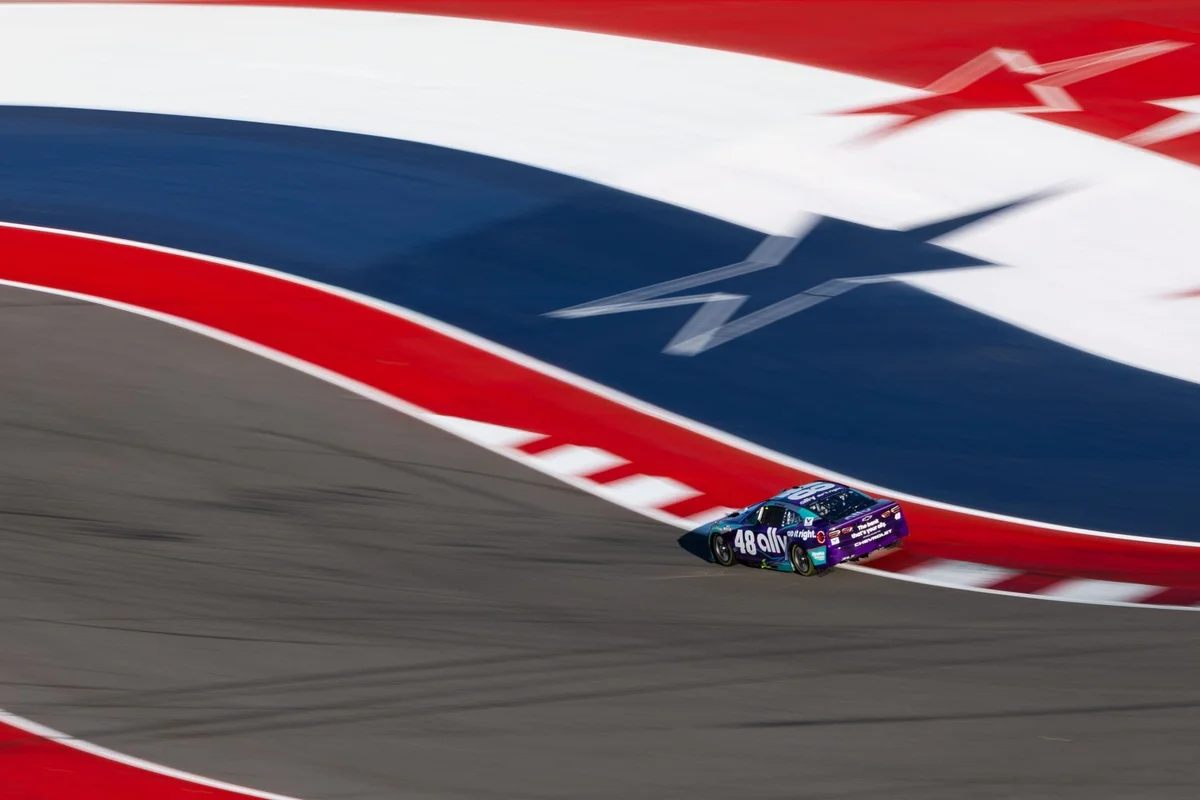
NASCAR quickly authorized Hendrick Motorsports to replace an ailing Alex Bowman with Myatt Snider in the No. 48 Chevrolet during the Circuit of The Americas (COTA) race, finalizing the decision in roughly 15 minutes. This unprecedented swiftness was driven by Bowman’s sudden illness mid-race, leaving little time for the typical, more thorough approval procedures.
The need for speed was essential as the Hendrick Motorsports team urgently sought a qualified relief driver to get Bowman off the track and keep the team competitive, prompting NASCAR to deviate from its normal, slower vetting process.
How the Emergency Replacement Came Together
The urgent substitution request originated from Chad Knaus, Hendrick Motorsports’ vice president of competition, who reached out to NASCAR executives demanding an expedited decision. Snider was at COTA in his role as a spotter for Fox Sports pit reporter Jamie Little but had never been approved to race in the Cup Series before despite his extensive background in other NASCAR divisions.
With 112 starts in the NASCAR O’Reilly Auto Parts Series and a 2021 win at Homestead-Miami Speedway, Snider’s racing experience was solid, although he had never driven a Cup car in competition. His license for the O’Reilly Auto Parts Series, valid through 2026, qualified him for consideration in Cup racing.
In an impromptu meeting at race control, NASCAR officials including Chad Little, John Probst, Brad Moran, and Elton Sawyer convened using the Riedel intercom system to swiftly review Snider’s credentials and reach a decision. Mike Forde, NASCAR managing director of communications, explained,
“We could pretty much have a meeting on the spot with all the key decision-makers. The four people that needed to weigh in were all in the same room, all wearing these Riedel headsets and could break down and look up what needed to be discussed as far as Myatt Snider’s resume, which is pretty robust.”
Why Snider Was Deemed Suitable for the Road Course Race
Snider’s background extends beyond the O’Reilly series; he has made 11 starts and secured one victory in the ARCA Menards Series and competed in the NASCAR Euro Series, which primarily features road courses, with 13 starts in 2019. His experience on similar track types proved critical in the decision to approve him specifically for road courses and short tracks in the Cup Series.
Forde clarified the stepwise approach NASCAR follows in approving drivers for races:
“Looking at his resume, we decided in race control that he would be OK to race a road course in the NASCAR Cup Series. When you’re going through each of the series, the first approval typically is for road courses, next is short tracks, then intermediates and then superspeedways.”
Considering this was a road course at COTA, the approval was simpler, especially compared to faster tracks or superspeedways like Daytona, where safety and experience requirements are much more stringent.
Forde noted,
“If this was anywhere but COTA or Martinsville or maybe even Phoenix, he probably would not be qualified to run. If this was Darlington or Homestead, certainly Daytona or Talladega, we would probably would have had to tell Hendrick Motorsports that they needed to find someone else.”
The Crucial Role of Safety Checks During the Driver Swap
David Green, a NASCAR technical inspector with significant experience overseeing safety compliance, was instrumental in ensuring Snider met all necessary equipment standards before stepping into the car. Green verified that Snider had the appropriate firesuit, helmet, and head-and-neck restraint device, critical for driver protection during the race.
Green described the process on-site at COTA:
“So all those boxes were checked before Myatt ever got to the car.”
Once Snider was ready to enter the cockpit, further assessments focused on his field of vision and seat fit. Green examined Snider’s sightline relative to the headrest and the angle of his shoulder harness to confirm safety standards were met. He explained the contingency plans in case adjustments were necessary:
“Now, the big question would be what happens if none of this lines up, and we’re in a bad spot? Then we start digging a little bit deeper (on) do we really need to change the insert to get Myatt lower in the seat. But we didn’t have to go that path because he almost looked perfect sitting in that car. HMS and all the teams do a great job on the Cup side of making sure the i’s are dotted and the t’s are crossed. I really had no concerns with Myatt getting in the car other than the simple height of Myatt vs. Alex. He fit right in there like a glove and it was really a smooth transition.”
Green reflected on the rarity of such spur-of-the-moment approvals during a race:
“We have a plan in place, but hope we don’t have to use that plan, and the teams obviously do the same thing. The 48 situation was probably the most spur-of-the-moment deal that we ever got thrown at us.”
Additional NASCAR Competition Insights from the Hauler Talk Podcast
During the latest episode of the Hauler Talk podcast, hosted by NASCAR, Mike Forde and Amanda Ellis, senior director of racing communications, discussed other pressing issues encountered during the COTA race. These included problems with multiple cool suit failures, the use of special inserts to enhance driver comfort and safety, and the upcoming events at Phoenix Raceway, where NASCAR will share the oval with the IndyCar Series for the first time.
The podcast serves as a platform to delve into ongoing competition challenges, offering fans and industry professionals a behind-the-scenes look at NASCAR operations and decisions.
Why This Incident Matters for NASCAR and Future Racing Scenarios
The quick decision to approve Myatt Snider during the COTA race highlights NASCAR’s flexibility in responding to unforeseen circumstances, balancing safety protocols with competitive integrity. It also sheds light on the complexity involved when drivers are replaced mid-race, emphasizing the importance of a strong safety checklist and swift communication among decision-makers like Chad Little, John Probst, Brad Moran, and Elton Sawyer.
This episode may set a precedent for how NASCAR handles emergency driver changes in the future, particularly as the sport continues to integrate new drivers who may have more experience in supporting series than in the Cup Series itself. Ensuring that subsequent approvals remain swift yet thoroughly vetted will be crucial to maintaining the sport’s safety and competitiveness.
The incident also increases exposure for Myatt Snider, who has now officially gained the NASCAR Cup approval needed to compete on road courses and short tracks, potentially opening more opportunities within Hendrick Motorsports and the wider NASCAR paddock.
