
Oliver Bearman described the 2026 Formula 1 cars as resembling a “video game” following his experience at the Australian Grand Prix held at Albert Park Circuit. Starting his first full F1 season with Haas, Bearman secured a seventh-place finish in the 58-lap race on Sunday, but expressed frustration over how challenging these new-generation cars felt to drive during competitive battles.
Despite being proud of his result, Bearman voiced concerns about the racing dynamics compared to previous Formula 1 eras. His close contest with Arvid Lindblad for seventh place highlighted the contrast between today’s F1 cars and the older ground effect models in terms of overtaking difficulty and racing flow.
Bearman Highlights Difficulty of Overtaking in Current F1 Machines
Reflecting on his duel with Lindblad, Bearman outlined the steep learning curve required to execute overtakes with the latest cars. He said it took him about 10 laps to find the pace needed to pass, unlike last year when a smaller speed advantage could enable sweeping overtakes in fewer laps.
“It took me 10 laps. If you were a bit faster, you had the chance to overtake. Now it’s 1 tenth with the same overtaking delta,”
Bearman explained to Motorsport Week.
He added,
“It took me 30 laps almost to get faster, or 20 laps, you know. And I had a delta that would have taken me 3 laps probably to overtake him last year, so that sucked a little bit.”
Bearman also jokingly described his initial attempts to understand new systems on the car, stating,
“But at the start, I was having some good moves, like on Lap 1 and Lap 2. I don’t really know what’s happening, I was just like, I guess I’ll try this boost button, see how it works.”
He added,
“I was just flying past everyone on the straight, so it was quite funny.”
Strong Criticism of F1 Regulations Compared to Formula E
After completing his first Grand Prix with the new regulations, Bearman further criticized the current Formula 1 cars, questioning whether his race felt more like a video game than a traditional motor race. He admitted the technical complexity, including managing battery boosts, made driving less enjoyable.
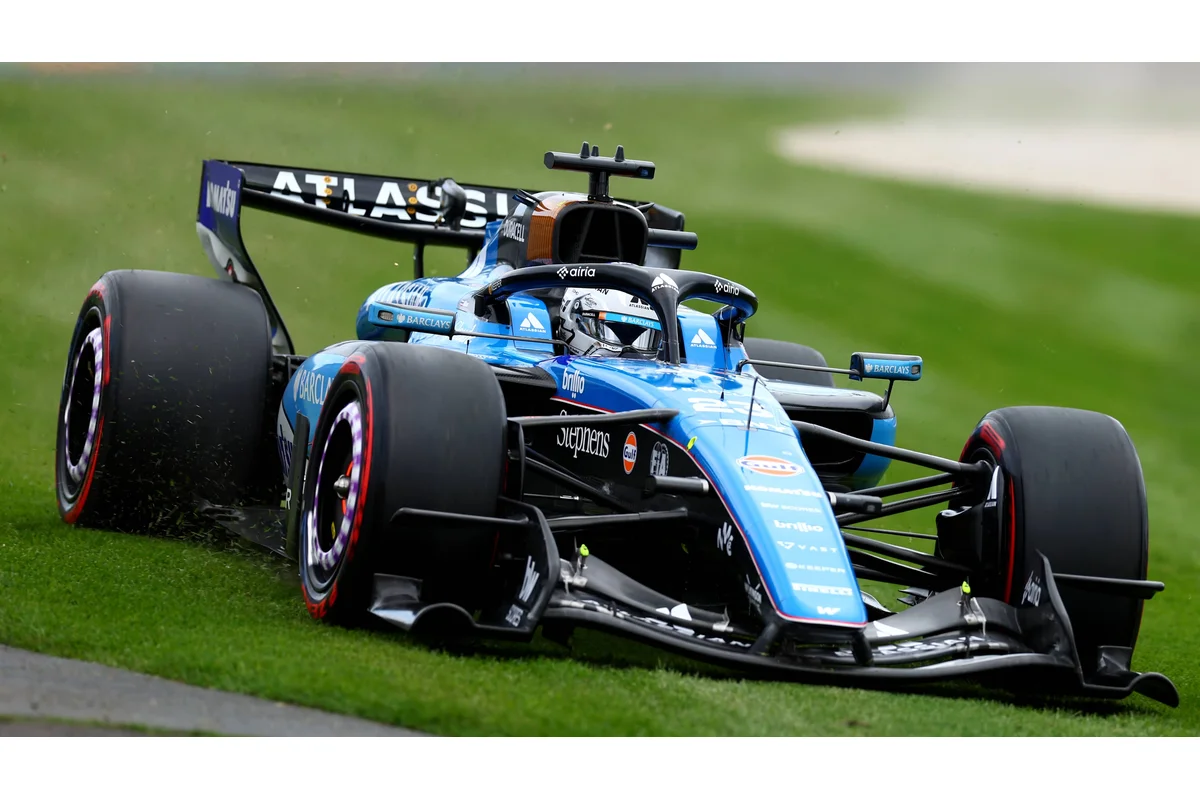
“Yeah, a little bit. It was like I was in F1 and everyone else was in F2,”
Bearman remarked.
“But then of course you have to recharge the battery again, because otherwise you’re dead into the next straight.”
While acknowledging the challenge, Bearman expressed satisfaction with finishing seventh despite the frustrations, saying,
“So, it’s a lot of stuff to think about, which is complicated, but the fact that I finished P7 means that I’m happy. Even if the car has not been the most fun to drive this weekend.”
The British driver echoed similar views previously voiced by Lando Norris and Max Verstappen, emphasizing the unnatural feel of using power boosts that create sharp speed deltas.
“It’s a bit ridiculous, to be honest, to have that much delta in a button and to lose that much on the next straight,”
he stated.
Bearman explained the non-linear effects of the boost system:
“It’s also very non-linear, so what you gain on the straight where you use the boost is a quarter as much as what you lose on the next straight. So, unless you basically complete the move at the start of the straight, as in you exit the corner, you complete the move, and then you harvest, harvest, harvest, the next straight they’re going to get you back.”
Concluding his critique, he asserted,
“That’s not racing, that’s Formula E.”
Implications for the Future of F1 Racing and Drivers’ Experience
Bearman’s candid comments underline growing concerns among drivers regarding the impact of 2026 regulations on racing quality and driver engagement. As teams like Haas and top competitors such as Max Verstappen and Lando Norris voice similar frustrations, it remains to be seen how Formula 1 will balance technological advancements with on-track competitiveness.
With the Australian Grand Prix marking the start of this new era, feedback from talents like Bearman could influence future rule adjustments aimed at improving overtaking opportunities and restoring the thrill of wheel-to-wheel battles. The evolution of these cars and strategies employed to manage battery boosts will likely play a key role in shaping fan and driver satisfaction in upcoming races.
