
Oscar Piastri, driving for McLaren, disclosed the combination of factors that led to his dramatic crash shortly before the Australian Grand Prix began. The incident happened at the Albert Park circuit during his initial formation lap from the garage, forcing him out of the race a full 35 minutes before the start.
The McLaren driver lost control at Turn 4, mounting the kerb as he exited the left-hander before slamming heavily into a concrete barrier approaching Turn 5. This collision severely damaged the right side of his car and brought his run to an abrupt halt on the grass inside the corner, leaving Piastri visibly disappointed.
Piastri Calls the Incident Unacceptable Amid Early Race Crashes
This crash marked the second consecutive year that a driver had retired before racing started at the Albert Park venue, recalling last year’s incident when now-Red Bull driver Isack Hadjar crashed on his formation lap’s second corner. The unexpected pre-race accidents have raised concerns about the demands of the circuit and the complexities of the current F1 setup.
“We had a bit of an issue out of the pits with no battery,”
Piastri explained to Sky Sports UK, highlighting the technical difficulties that contributed to the mishap.
“But I also had 100 kilowatts more power than I expected, so you put all of those together and unfortunately it ends in the result we got. It’s obviously just disappointing and a scenario that shouldn’t be happening.”
His words captured the frustration and disbelief at the unusual circumstances surrounding the accident.
Technical Challenges Behind the Power Unit System
Teams and drivers have been grappling with the new Formula 1 technical regulations introduced this season, especially those affecting the updated power units. The increased significance of battery performance has been cited as a major point of difficulty, with Piastri’s incident underlining the complexity of managing these systems properly during critical moments.
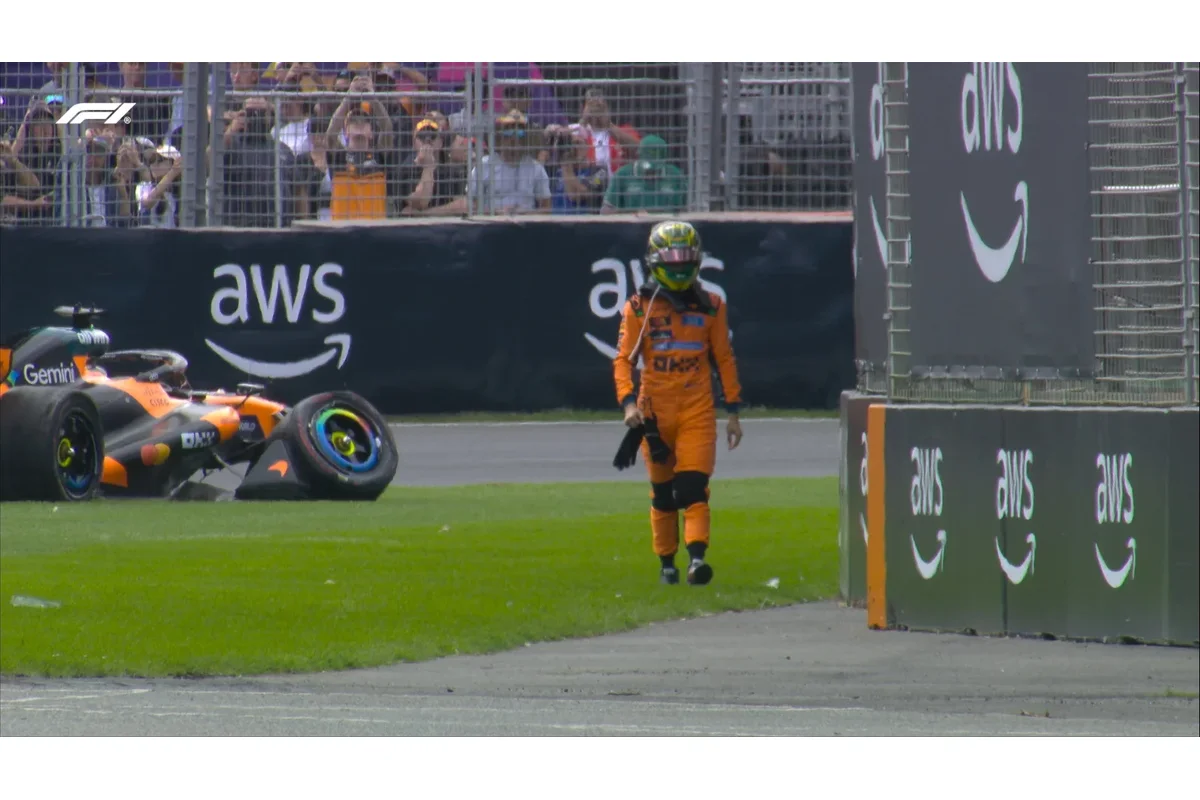
He further explained,
“I was at less throttle than what I was in qualifying and the way the rules kind of stipulate how the torque demand has to work, I actually got 100 kilowatts more power than if I would have been at full throttle.”
This mismatch in expected power delivery contributed directly to the loss of control.
Impact on McLaren and Race Standings
Before his early exit, Piastri was set to start the race from fifth place, having edged out his teammate and reigning world champion Lando Norris in qualifying. Despite this strong showing, the McLaren drivers found themselves far behind the dominant front-row competitors.
Norris finished the race in fifth, trailing the winner George Russell from Mercedes by about 50 seconds as Mercedes and Ferrari demonstrated superior race pace. The performance gap highlighted the significant effort McLaren must invest to rejoin the championship fight the reigning constructors’ champions are leading.
Significance of the Incident and What Lies Ahead
Piastri’s pre-race crash serves as a stark reminder of how new technical regulations have complicated car control and power management within Formula 1. The integration of higher battery reliance demands precision from both drivers and teams, as unexpected power surges can have immediate and costly consequences.
For McLaren, understanding and overcoming these challenges will be essential to improving reliability and competitiveness in upcoming races. Meanwhile, Piastri’s setback provides valuable lessons about adapting to the evolving performance parameters under the current F1 rules.
https://twitter.com/F1/status/2030486559372218682
