
Oscar Piastri, McLaren’s promising Australian driver, faces significant challenges as Formula 1 prepares to introduce new regulations in the 2026 season. At recent testing in Bahrain, Piastri displayed strong pace but experts suggest the changes to car design, notably reduced grip levels, could hinder his ability to contend for the championship.
During the first day of Bahrain testing, Piastri and teammate Lando Norris shared driving duties, with Norris setting the fastest time and Piastri close behind. Despite the encouraging performance, Piastri’s hopes of avenging last season’s narrow title miss appear clouded by looming technical hurdles.
Reduced Grip in Next Gen Cars May Undermine Piastri’s Driving Style
Formula 1 journalist Ted Kravitz highlighted issues surrounding McLaren’s adaptation to 2026 technical rules. Speaking live from testing, Kravitz emphasized how all-around lower grip levels in new cars might not suit Piastri’s driving preferences.
“Piastri, up against Lando Norris, high on confidence,”
Kravitz remarked,
“but I think what will happen to Piastri will be about whether these new cars suit his style.”
He further warned,
If the cars all around have low grip, that might be an issue that Piastri has to deal with.
?Ted Kravitz, Formula 1 Journalist
Last year, Piastri struggled particularly on low-grip circuits, where the McLaren car lacked performance compared to rivals. As the upcoming cars are set to generate less mechanical grip overall, replicating pace under these conditions remains a serious concern.
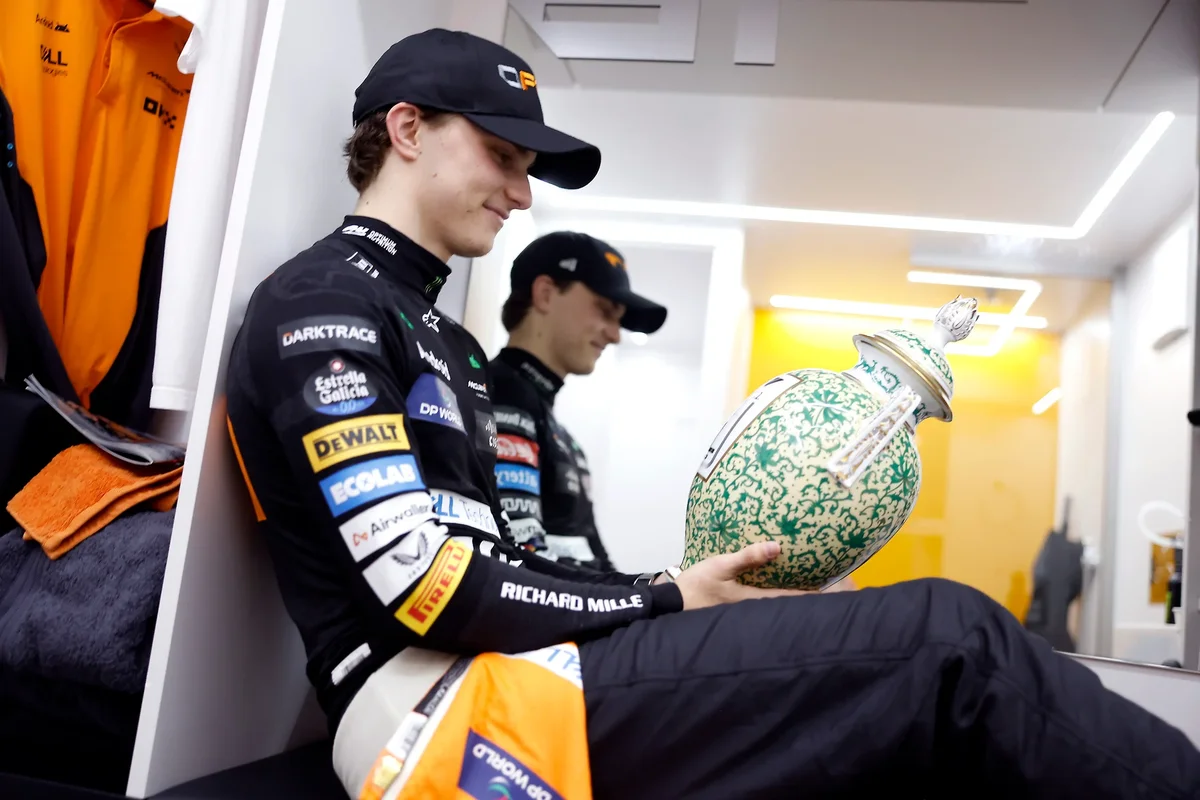
McLaren’s Unique Testing Strategy Raises Doubts About Early Adaptation
McLaren adopted an unusual testing approach by delaying the introduction of their primary race aero package, contrasting with teams such as Ferrari, Mercedes, and Aston Martin who plan to update their cars sooner. Kravitz noted this strategy may affect how quickly Piastri and McLaren can optimize for the new formula.
“McLaren have done something different, in that they’ve waited as late as they can to put what’s pretty much their first race aero package on their car,”
he said.
Whereas others, like the Ferrari and the Mercedes and the Aston Martin are going to change.
?Ted Kravitz, Formula 1 Journalist
This decision to delay upgrades could either give McLaren more time to understand their baseline or risk lagging behind competitors able to fine-tune earlier in the pre-season.
Engine Controversy Adds Uncertainty to McLaren’s 2026 Prospects
Beyond aerodynamic and grip challenges, McLaren is embroiled in a dispute over Mercedes’ power unit. The controversy involves interpretations of technical regulations that affect engine performance, with rival teams pressing to restrict perceived advantages granted to Mercedes.
Kravitz explained the complexity:
“It comes down to interpretations in Formula 1, and whoever benefits from a clever interpretation, let’s say a clever double diffuser in Jenson Button winning a championship with Brawn in 2009, or even some of Adrian Newey’s designs have had clever interpretations.”
The situation requires votes from Formula 1 stakeholders and the FIA to determine if rule changes will be made before the Australian Grand Prix in March. Teams including McLaren hope no alterations are forced, as that could cast doubt over their competitiveness early in the season.
On the issue of possible technical policing creating further controversy, Kravitz warned,
How are we going to measure front wing deflection on track? How are we going to measure rear wing deflection on track? Mercedes could go quite aggressively with that and cause issues that Formula 1 and the FIA don’t want to have. So I imagine a compromise will be met.
?Ted Kravitz, Formula 1 Journalist
The Road Ahead: Balancing Technical Challenges with Title Ambitions
Oscar Piastri enters 2026 with a refreshed backroom team and personal determination to overcome last year’s losses, but the transition to new technical rules threatens to complicate his path. Reduced car grip and delayed aerodynamic updates could hamper his ability to extract peak performance, especially against seasoned rivals like Lando Norris.
Additionally, the unresolved power unit debate around Mercedes injects further uncertainty into McLaren’s campaign. How quickly the team can adapt to these hurdles will be crucial to Piastri’s title chase.
If McLaren can navigate these challenges successfully, Piastri could still emerge as a dark horse for the championship. However, the combination of low grip conditions and potential regulatory turbulence creates a tense and unpredictable start to the upcoming F1 season.
