
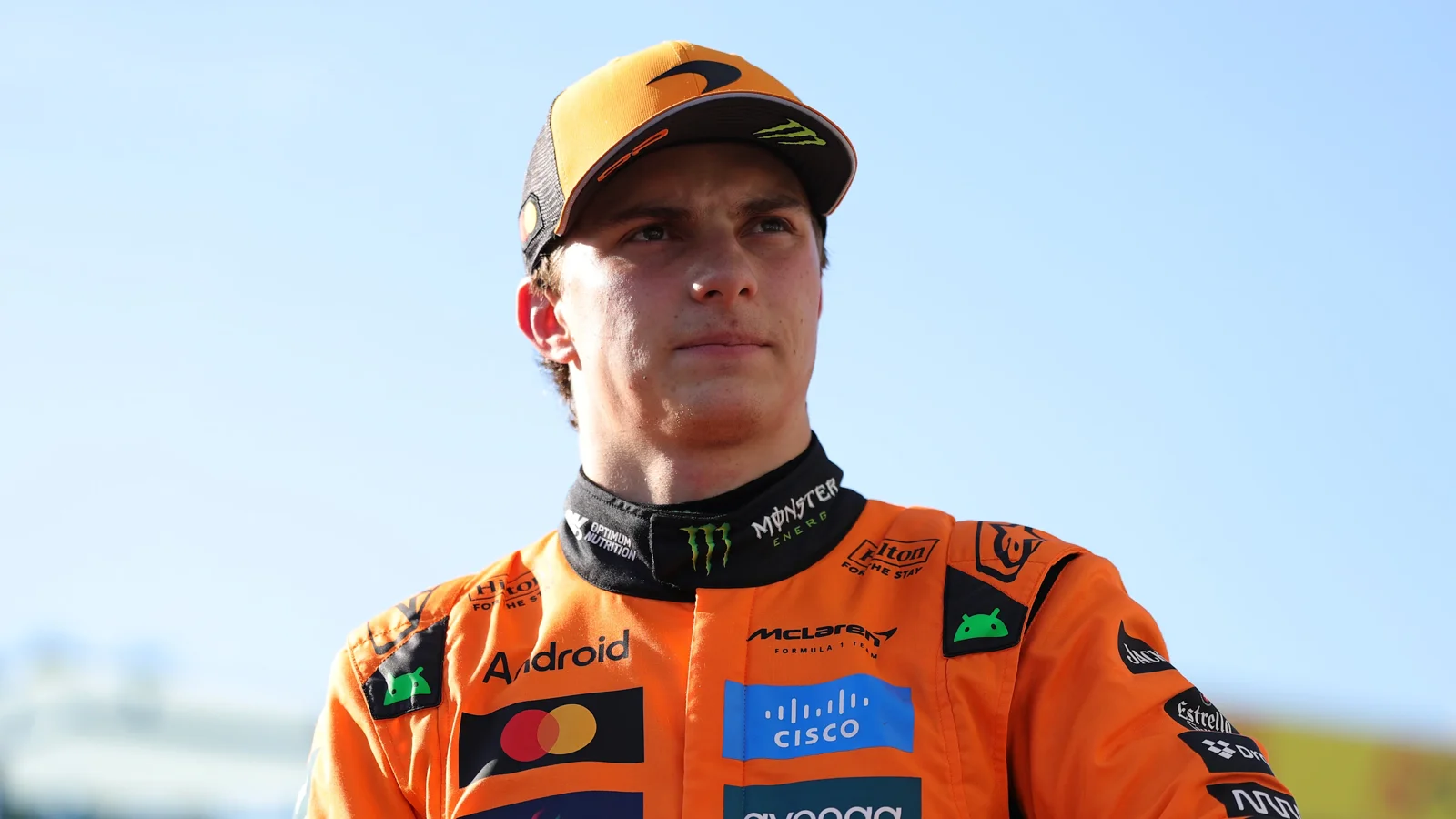
Oscar Piastri has quickly become known as Lando Norris‘ primary teammate rival in Formula 1, marking a significant shift in the competitive dynamic within McLaren. This Oscar Piastri teammate rivalry reflects a broader trend in motorsport where the fiercest competition often exists between drivers sharing the same team. As Formula 1 teams increasingly produce two equally competitive cars, clashes between teammates grow more intense and impactful.
Formula 1’s evolution now enables drivers like Piastri and Norris to challenge each other head-to-head more than ever before, thanks to advancements in technology and manufacturing that have heightened parity between team cars. This intensifying competition adds a fresh layer of tension within teams, as each driver not only battles rivals on the grid but also fights for supremacy within their own garage.
The Shift from Team Orders to Genuine Internal Competition
Formula 1 has long been a team sport, underscored by the constructors’ championship introduced in 1958, which rewards teams for collective performance. Despite this, the drivers themselves have typically been the public faces of success. Historically, teams often designated a clear lead driver, limiting intra-team rivalry to preserve resources and maximize chances of victory. This was due in part to limitations in car production, mechanical variation, and strategic preferences.
Before the widespread use of computer-aided manufacturing in the early 1980s, teams struggled to produce two equally competitive cars. Differences in individual components such as engines or gearboxes meant teammates rarely competed on an equal footing. For example, Ayrton Senna once prevented Lotus from signing Derek Warwick because the team lacked the capacity to supply two race-winning cars.
While there were occasional exceptions with teammates vying for championships—such as Juan Manuel Fangio and Stirling Moss in 1955 or Denny Hulme and Jack Brabham in 1967—these were rare. The prevailing environment favored one dominant driver per team, reducing direct rivalry between teammates for top honors.
Technological Progress Drives Closer Team Competition
The introduction of computer-aided design and manufacturing revolutionized car production in Formula 1, greatly reducing variation between vehicles. This technological progress has allowed teams to build cars of nearly identical spec, enabling teammates to race on equal terms. Still, rapid prototyping and resource limitations can occasionally result in subtle differences in car parts or setups, but these are no longer major obstacles to fairness.
Modern Formula 1, with its meticulous data analysis and precise setups, has created an environment where teammates compete more directly than ever. The 2023 Italian Grand Prix in Monza offered a vivid example, where McLaren’s management had to carefully handle the on-track battle between Norris and Piastri, two drivers in near-identical cars and closely matched form.
This development challenges teams to balance internal competition with preserving harmony and maximizing points, making team management decisions more scrutinized and sometimes controversial.
Why The Intense Focus on Teammate Rivalries?
The spotlight often falls on individual drivers rather than teams because fans and media connect more easily with personalities than with organizations. Drivers’ championships capture attention through the heroics of individual performance and narrative drama, while the constructors’ championship, despite offering significant financial rewards, tends to attract less fanfare.
This tendency elevates the significance of battles between teammates, as they embody the dual nature of Formula 1: a team-supported, individual-driven sport. The Oscar Piastri teammate rivalry with Norris embodies this tension, reflecting the drivers’ personal ambitions amid the team framework.
Historical Context of Teammate Dynamics in F1
In earlier decades, the concept of teammates competing equally was almost unheard of. Limited technology and production capabilities meant teams leaned towards a hierarchy, assigning resources primarily to a lead driver. Legends like Jackie Stewart dominated, supported by secondary drivers such as Francois Cevert, while teams like Ferrari and Lotus similarly maintained clear pecking orders.
Such structures were practical at the time since providing equal equipment was difficult. Human craftsmanship and uneven parts quality meant performance differences between cars were common and significant. It was not merely a matter of team orders or driver ability, but mechanical realities that shaped team strategies and driver rivalries.
Piastri and Norris: A Rivalry Rooted in Modern Formula 1
Oscar Piastri stepping onto the F1 stage with McLaren coincides with a period when teammates truly match each other’s pace and potential. Their rivalry is unlike previous eras where one driver often shielded the other from fully contesting the championship. Instead, both drivers genuinely compete for race wins and career advancement.
The increased pressure from such rivalries demands mental resilience, as teammates often fight not just for points but also for long-term contracts and sponsorship opportunities. This was evident in the Monza race, where McLaren’s handling of Piastri and Norris’s battle became a talking point, highlighting how deeply personal and team-wide consequences intertwine.
This situation signals a potentially transformative phase for McLaren and the sport as a whole, reflecting how evolving technology and competitive balance change the narrative from teamwork to intense intra-team rivalry.
The Evolving Landscape: What Comes Next in F1 Teammate Rivalries?
As the capacity to produce two equally competitive cars becomes the norm rather than the exception, the Oscar Piastri teammate rivalry will likely set the blueprint for future teammate dynamics in Formula 1. Teams must now navigate the delicate balance between fostering strong competition and maintaining team cohesion.
For McLaren, the internal battle between Piastri and Norris may push both drivers to new heights while challenging management to make tough calls about race strategy and team orders. This scenario encapsulates the sport’s evolving challenges, where technology enables tighter competition, but psychological and political complexities intensify.
Monitoring how this rivalry develops will offer insights into the broader transformation of motorsport, where the concept of teammate rivalry can shift from uneasy truce to fiercely contested duel, shaping careers and championship outcomes alike.
